CM Dhami Wraps Gairsain Session, Defends ₹7,844 Cr Budget
Synopsis
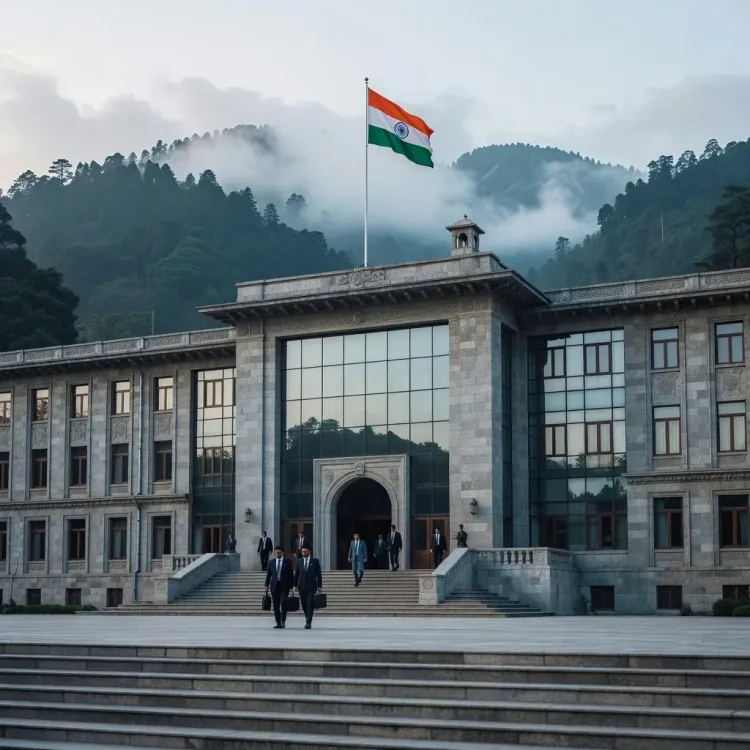
Chief Minister Pushkar Singh Dhami concluded Uttarakhand's Gairsain assembly session on October 28, 2026, citing two sittings this year, a ₹7,844.18 crore supplementary budget, UCC enactment, and calling out Congress for legislative disruption and opposition leaders for insensitive remarks on the statehood movement.
Key Takeaways
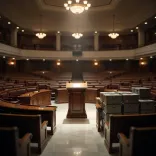
Two assembly sessions were held in Gairsain (Bhararisain) in the current year, which CM Dhami cited as a concrete sign of the state government's commitment to hill-region aspirations.
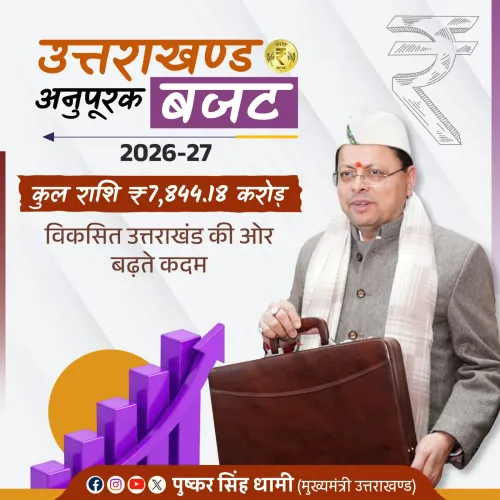
The legislature passed a supplementary budget of ₹7,844.18 crore for FY 2026-27 , covering infrastructure, health, education, drinking water, and agriculture.
Uttarakhand remains the first Indian state to implement a Uniform Civil Code , enacted in 2024 as part of the government's 2022 vision document commitments.
CM Dhami accused Congress of disrupting legislative proceedings and demanded constructive opposition, while dismissing corruption allegations against his government as baseless.
Dhami objected to remarks by SP president Akhilesh Yadav on the Uttarakhand statehood movement and defended NSA Ajit Doval against political commentary, calling for civil public discourse.
The government reiterated its goal of extending welfare schemes and employment to remote and mountainous areas across the state.
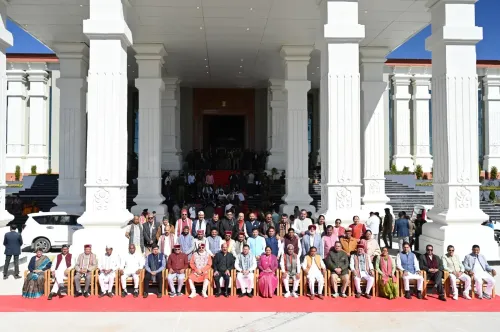
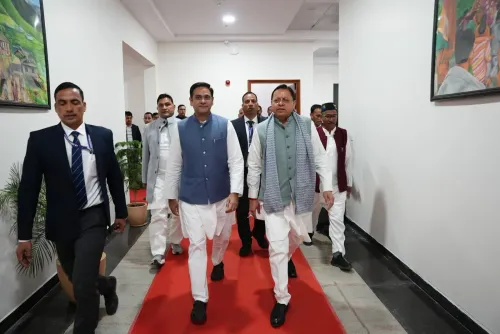
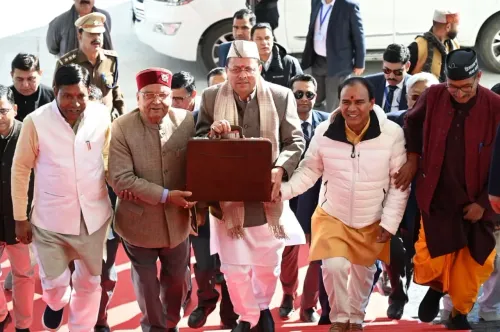
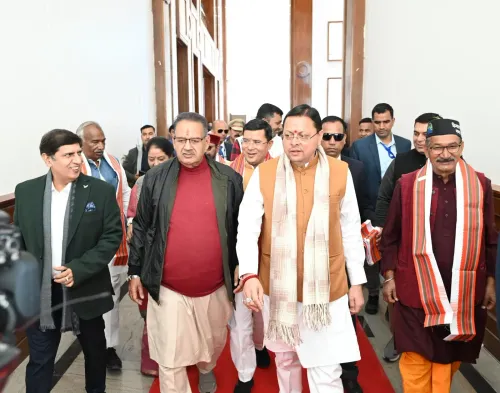
Two assembly sessions held in a single year at Gairsain (Bhararisain) — that is the headline Chief Minister Pushkar Singh Dhami chose to lead with as he addressed journalists after the conclusion of the Uttarakhand assembly session on Wednesday, October 28, 2026. Speaking at the hill town that has come to symbolise the state's decentralisation aspirations, Dhami framed the double sitting as proof that his government takes the region's emotional and political weight seriously.
Gairsain's twin sessions and what they signal
Gairsain, nestled in Chamoli district, has been a contested symbol since the state was carved out of Uttar Pradesh in November 2000. Hill activists had long demanded it as a permanent capital; periodic assembly sittings there became a compromise gesture starting around 2020. Dhami's point — that two sessions were held in the current year alone — is a deliberate signal of continuity with that demand. Janbhavnaon ka samman ('respect for popular sentiment'), as he put it, runs through every line of the statement.
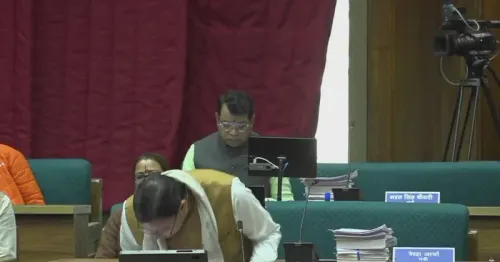
The sessions did substantive work. The legislature passed a supplementary budget of ₹7,844.18 crore for financial year 2026-27, channelling additional provisions into infrastructure, health, education, drinking water, and agriculture — sectors where hill districts have historically lagged.
The UCC, land laws, and a 2022 vision document
Dhami used the post-session briefing to recap the government's reform scoreboard. Uttarakhand made national history in 2024 when it became the first Indian state to enact a Uniform Civil Code, applying a common personal-law framework regardless of religion. The Chief Minister acknowledged that the law had attracted 'many apprehensions' before its passage, but insisted the government acted with broad public interest in mind. Stricter land laws and changes to the minority education system were also cited as deliverables matching the 2022 vision document placed before voters. The message was unambiguous: what the BJP promised, it did.
Congress in the crosshairs — and a call for decorum
The news conference turned sharper when Dhami turned to the opposition. He accused the Indian National Congress of prioritising walkouts and political point-scoring over meaningful floor debate, arguing that disrupting proceedings harms ordinary citizens whose issues go undiscussed. 'The right to protest belongs to everyone,' he said, 'but protest must stay within democratic limits.' He called on Congress to play a 'positive and constructive role' on public-interest matters rather than trading allegations of corruption — allegations he dismissed as baseless, reiterating the government's commitment to transparency and good governance.
Rampur Tiraha, Akhilesh Yadav, and Ajit Doval
The sharpest moments came when Dhami invoked history and national security. He recalled the Rampur Tiraha incident of 1994 — when agitators demanding a separate Uttarakhand state were fired upon, an episode the Chief Minister described as 'extremely painful' and 'unforgettable' for the people of the state. He then took aim at Samajwadi Party president Akhilesh Yadav, objecting to what he characterised as insensitive remarks on the statehood movement, and urged that janbhavnaon ka samman be maintained when commenting on Uttarakhand's founding struggle.
Dhami also defended National Security Advisor Ajit Doval against recent political commentary, saying that individuals who have dedicated their lives to national security deserve respect, and that all political parties share a responsibility to maintain 'dignity of dialogue and civility of language' in public life.
What the budget provisions point to next
The ₹7,844.18 crore supplementary allocation — paired with several bills passed during the session — now moves to implementation. Dhami framed the government's overarching goal as extending development to remote and mountainous areas, expanding employment, and ensuring welfare schemes reach the last village. Whether that ambition translates on the ground will be the test the opposition is already sharpening its critique around.
For now, Uttarakhand's hill capital experiment has notched another chapter — two sessions, one financial year, and a Chief Minister determined to make Gairsain mean something more than a symbolic detour.
Point of View
The BJP is reinforcing its claim as the authentic custodian of the Uttarakhand statehood movement's unfulfilled demands — a legacy Congress also claims. The simultaneous invocation of UCC, land laws, and the 2022 vision document signals that the party intends to fight the next electoral cycle on a delivery-vs-disruption frame rather than on ideological grounds alone. Calling out Akhilesh Yadav and defending Ajit Doval in the same breath extends the messaging beyond state boundaries, tying Uttarakhand politics to national BJP narratives around statehood sacrifice and security credibility. The ₹7,844 crore supplementary budget gives the government a tangible, quantifiable answer to corruption charges — though its actual utilisation in remote hill districts will determine whether the political narrative holds.
NationPress
28 Oct 2026
Frequently Asked Questions
Why does Uttarakhand hold assembly sessions in Gairsain?
Gairsain in Chamoli district has been a long-standing demand of the Uttarakhand statehood movement as a permanent or alternate capital for the hill state. Since around 2020, periodic assembly sessions have been held there as a gesture of decentralisation and respect for hill-region aspirations.
What is the Uttarakhand supplementary budget for 2026-27?
Chief Minister Dhami stated that a supplementary budget of ₹7,844.18 crore was presented and passed during the Gairsain session for FY 2026-27, with provisions for infrastructure, health, education, drinking water, and agriculture.
What is the Uniform Civil Code in Uttarakhand?
Uttarakhand enacted a Uniform Civil Code in 2024 , making it the first Indian state to apply a common personal-law framework across religious communities. CM Dhami cited it as a key delivery from the government's 2022 vision document.
What is the Rampur Tiraha incident?
The Rampur Tiraha incident of 1994 was a violent episode in which activists demanding a separate Uttarakhand state were fired upon, making it one of the most traumatic events in the state's founding struggle. CM Dhami described it as 'extremely painful' and invoked it while objecting to Akhilesh Yadav's remarks on the statehood movement.
Why did CM Dhami criticise Congress at the Gairsain session?
Dhami accused Congress of disrupting legislative proceedings, indulging in walkouts, and prioritising political allegations over constructive debate on public issues. He called on the opposition to adopt a 'positive and constructive role' and dismissed its corruption charges against his government as baseless.