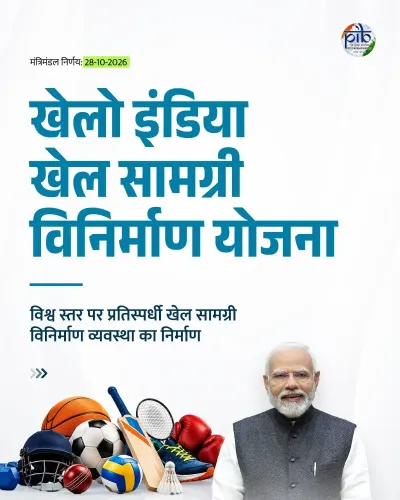
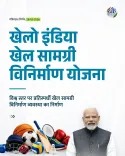
PM Modi unveils Khelo India Sports Goods Manufacturing Scheme
Synopsis
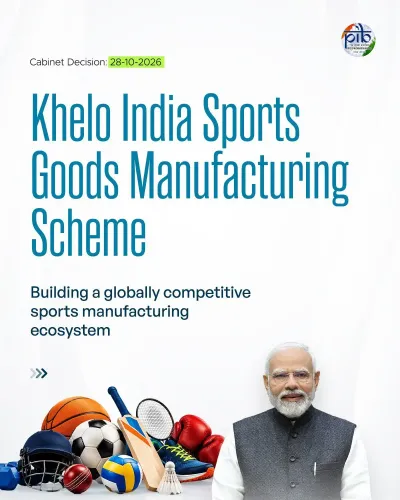
The Union Cabinet has cleared the Khelo India Sports Goods Manufacturing Scheme, PM Modi announced on 28 October 2026. The scheme establishes dedicated manufacturing zones, MSME support, R&D investment, and export pathways — linking India's sporting ambitions to a domestic industrial strategy under Make in India and Aatmanirbhar Bharat.
Key Takeaways
The Khelo India Sports Goods Manufacturing Scheme has received Union Cabinet clearance as of 28 October 2026 .
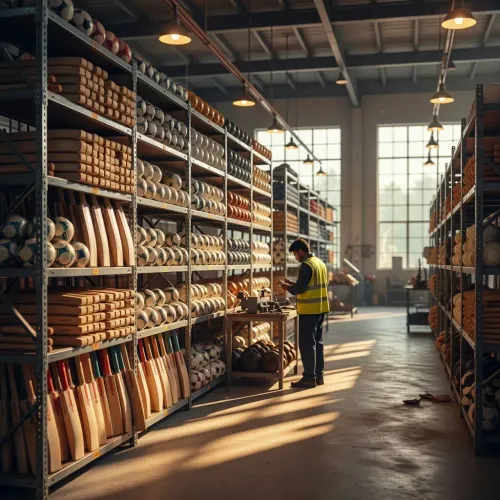
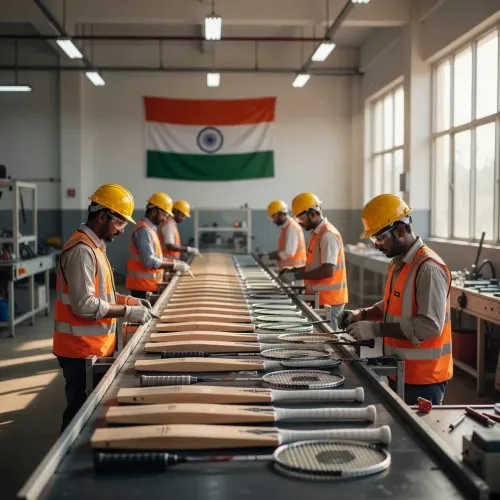
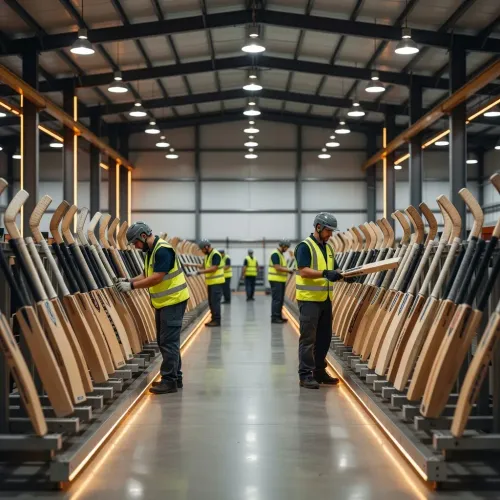
The scheme creates dedicated manufacturing zones specifically for sports goods production.
MSMEs are a primary target beneficiary, with dedicated investment support and skill development components.
The policy is positioned as a convergence of Make in India (2014) and Aatmanirbhar Bharat (2020) with the Khelo India programme (2017).
Objectives include job creation , quality improvement , and building India's sports goods export capacity .
Implementation milestones to watch include Cabinet-notified zone guidelines, budget allocations, and state-level rollout announcements.
India's sporting ambition just got an industrial backbone. Prime Minister Narendra Modi on Wednesday, 28 October 2026, announced that the Khelo India Sports Goods Manufacturing Scheme has been cleared by the Union Cabinet — a policy move designed to transform India from a sports goods importer into a global manufacturing and export powerhouse.
What the Cabinet cleared — and why it matters
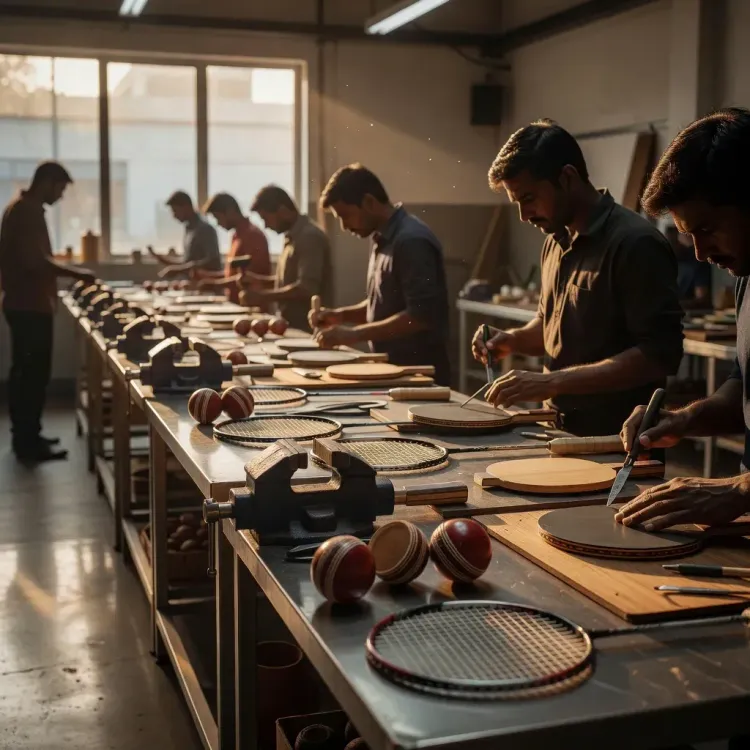
The scheme rests on five pillars: dedicated manufacturing zones for sports goods production, investment incentives and MSME support, research and skill development, a quality focus, and expanded job creation alongside export opportunities. Together, they sketch a production ecosystem rather than a one-off subsidy — the difference between planting a seed and pouring water on concrete.
PM Modi framed the clearance explicitly as 'a major push for Make in India, Aatmanirbhar Bharat and India's global sporting ambitions,' tying domestic manufacturing to the country's on-field aspirations in a single policy frame.
Khelo India's evolution from grassroots to factory floor
The Khelo India programme, launched in 2017, began as a grassroots talent-identification and infrastructure drive. Nine years on, the new scheme extends its logic downstream — into the supply chains, workshops, and export terminals that determine whether Indian athletes compete with Indian-made equipment or remain dependent on foreign imports.
That dependency has been the quiet contradiction at the heart of Indian sports promotion: billions spent on stadiums and scholarships while the javelins, boxing gloves, and hockey sticks often arrived from abroad. The manufacturing scheme is a direct answer to that gap.
Make in India and Aatmanirbhar Bharat enter the sports sector
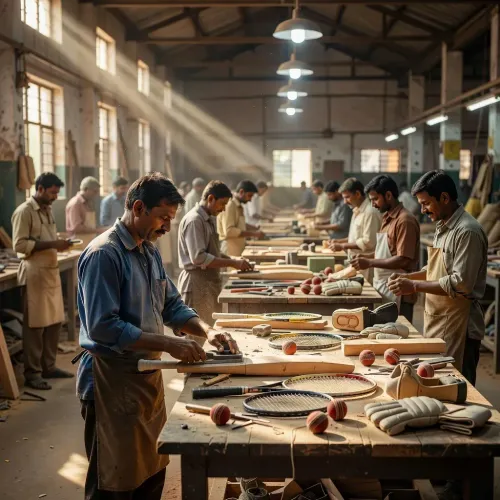
Both flagship economic programmes now have a sports-sector chapter. Make in India, launched in 2014, opened manufacturing to global investment across industries; Aatmanirbhar Bharat, announced in 2020, sharpened the focus on reducing import dependence and building export capacity. Applying that twin logic to sports goods — a sector with established clusters in cities like Jalandhar and Meerut — gives existing MSMEs a policy architecture they have long lobbied for: dedicated zones, access to capital, and a quality-certification push that can open European and North American markets.
The MSME angle is significant. Sports goods manufacturing in India is dominated by small and mid-scale units whose growth has historically been constrained by fragmented supply chains and limited R&D investment. Channelling scheme support toward these units could generate meaningful employment numbers in manufacturing belts that are politically and economically important.
Watch: manufacturing zones and export figures in the months ahead
The real test will be in implementation — Cabinet-notified guidelines for the manufacturing zones, follow-up budget allocations, and state-level uptake will determine whether the scheme delivers its job-creation and export targets. Economic surveys in the next two cycles should offer the first hard numbers on whether the policy converts ambition into assembly lines.
India is building for the next Olympic cycle with one eye on the podium and the other on the production floor. If the Khelo India Sports Goods Manufacturing Scheme delivers, the country may yet stamp its name on both.
Point of View
The policy attempts to close the long-standing gap between India's growing athletics ambition and its dependence on imported equipment. The dedicated manufacturing zone model mirrors approaches used in textiles and electronics, suggesting the government sees sports goods as a viable export-growth vertical rather than a niche. Whether the scheme produces measurable results in employment and export earnings will depend heavily on state-level implementation and the speed of zone notification.
NationPress
28 Oct 2026
Frequently Asked Questions
What is the Khelo India Sports Goods Manufacturing Scheme?
It is a Union Cabinet-cleared scheme that establishes dedicated manufacturing zones for sports goods, provides MSME investment support, funds research and skill development, and aims to boost India's sports goods exports and job creation.
When was the Khelo India Sports Goods Manufacturing Scheme approved?
The scheme was cleared by the Union Cabinet and announced by PM Narendra Modi on 28 October 2026 .
How does this scheme connect to Make in India and Aatmanirbhar Bharat?
Make in India (launched 2014) promotes domestic manufacturing and global investment, while Aatmanirbhar Bharat (2020) focuses on reducing import dependence. The sports goods scheme applies both frameworks to the sports sector, targeting self-reliant production and export growth.
Who benefits from the Khelo India Sports Goods Manufacturing Scheme?
Sports goods manufacturers and MSMEs in the sector are the primary beneficiaries, with support covering investment, skill development, quality improvement, and access to dedicated manufacturing zones.
What is the Khelo India programme?
Khelo India was launched in 2017 as a national programme to promote grassroots sports, identify talent, and develop sports infrastructure across India. The new manufacturing scheme extends its scope into the industrial supply chain.