CM Bhajan Lal Backs ₹1,856 Cr Sports Goods Manufacturing Scheme
Synopsis
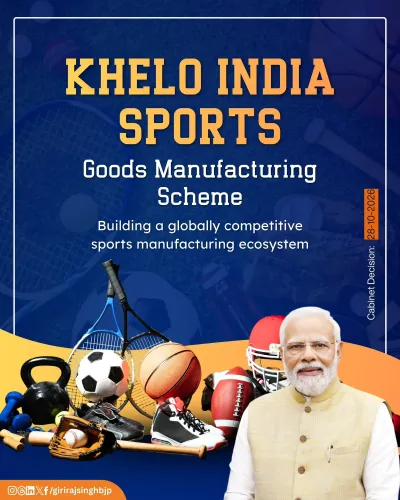
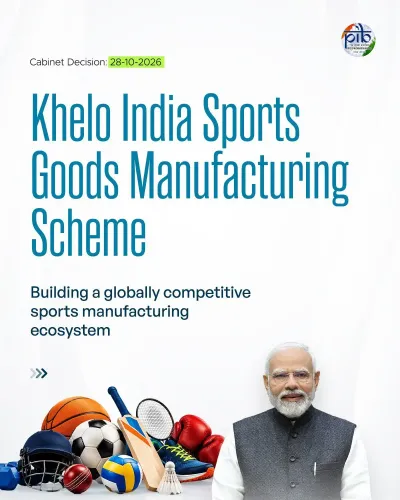
The Union Cabinet has approved the Khelo India Sports Goods Manufacturing Scheme with a ₹1,856.67 crore outlay from 2026 to FY 2033-34, aiming to build a comprehensive domestic manufacturing ecosystem and position India as a global sports equipment hub.
Key Takeaways
The Union Cabinet approved the Khelo India Sports Goods Manufacturing Scheme under PM Narendra Modi .
The scheme carries a financial outlay of ₹1,856.67 crore over the period 2026 to FY 2033-34 .
Its core aim is to build a comprehensive ecosystem for sports equipment manufacturing, covering supply chains, innovation and investment.
The initiative links the Khelo India sports development programme — launched in 2017 — to India's broader Make in India industrial policy.
MSMEs and manufacturers in established clusters such as Jalandhar are among the primary intended beneficiaries.
Detailed scheme guidelines and identification of manufacturing clusters are expected once the formal rollout begins in 2026 .
India's cabinet has cleared a dedicated manufacturing push for the sports goods sector — and Rajasthan Chief Minister Bhajan Lal Sharma is among the first to amplify the message. On Wednesday, 28 October 2026, Sharma took to X to welcome the Union Cabinet's approval of the Khelo India Sports Goods Manufacturing Scheme, a ₹1,856.67 crore initiative designed to fundamentally reshape how India builds — and sells — its sporting equipment to the world.
What the ₹1,856.67 Crore Scheme Actually Does
The scheme runs from 2026 through the financial year 2033-34, giving manufacturers, MSMEs and investors a long, stable runway to plan capacity expansion. Its stated goal is not just subsidy — it is ecosystem-building: developing the supply chains, skilling pipelines and innovation infrastructure that Indian sports goods clusters currently lack.
Sharma's post, originally in Hindi, put it plainly: the scheme will 'khel upkaran udyog ke liye ek vyapak ecosystem viksit' — 'develop a comprehensive ecosystem for the sports equipment industry' — and will open 'new opportunities for innovation and investment in this sector'. The language is deliberate. This is import substitution framed as industrial ambition, not mere protectionism.
Khelo India's Pivot From Playfield to Factory Floor
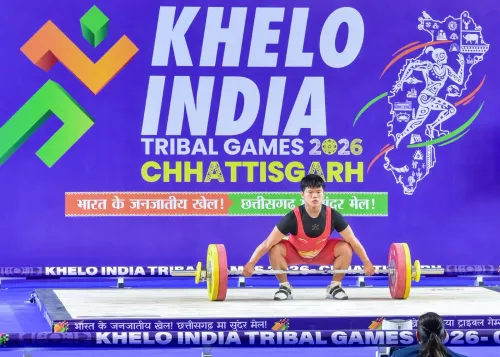
The Khelo India programme was first launched in 2017 as a grassroots sports development mission — talent hunts, infrastructure grants, scholarship athletes. Nearly a decade on, its newest avatar targets the upstream end of the sports economy: who makes the equipment, where, and at what scale. That pivot is significant. It signals that the government now sees sports not merely as a social welfare or soft-power tool, but as a manufacturing vertical with export potential.
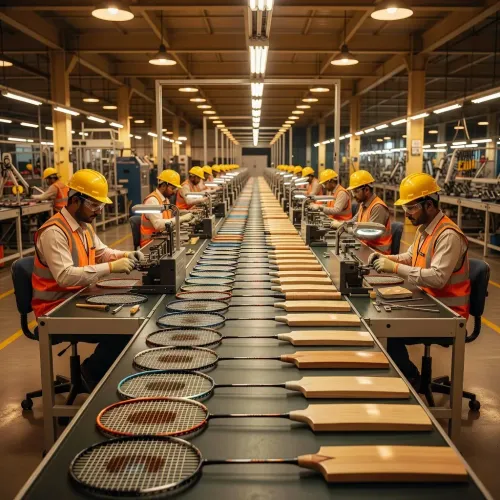
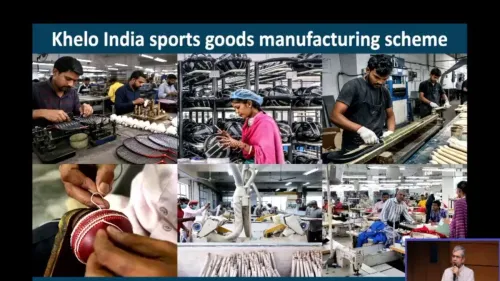
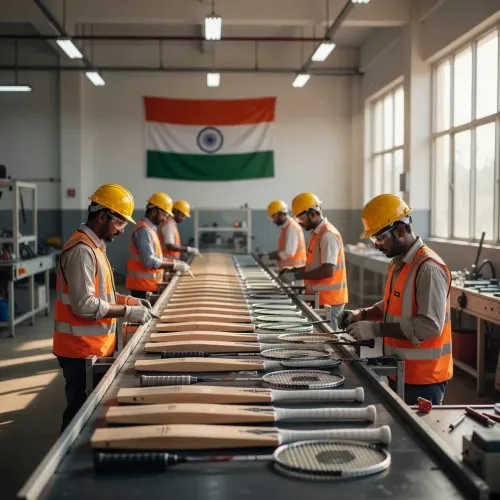
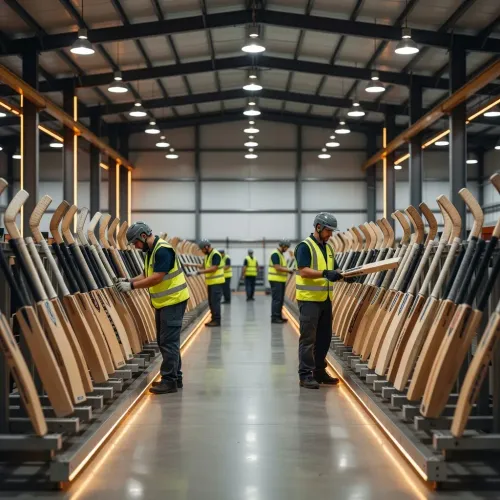
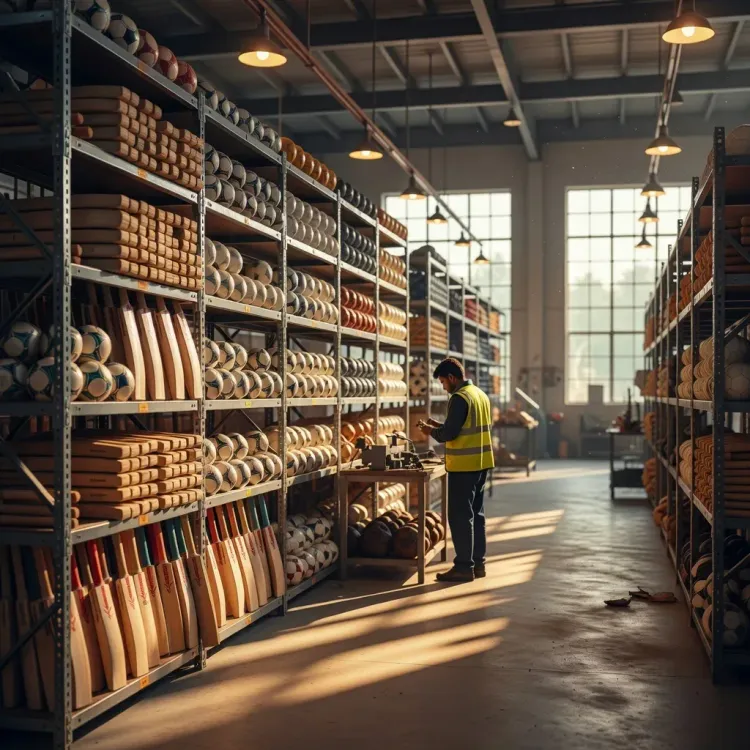
India already has established sports goods clusters — Jalandhar in Punjab is among the best known globally, producing everything from cricket bats to inflatable balls for export. The new scheme aims to deepen those strengths, attract fresh investment into untapped regions and close the quality gap that still pushes premium sporting brands to source abroad.
Make in India Meets the Sports Economy
The broader policy logic is familiar: link sectoral promotion to domestic production, reduce import dependence, and generate employment. What makes sports goods distinctive is the dual demand driver — India's booming domestic sports consumption and a growing global market hungry for cost-competitive, quality-certified equipment. A well-executed scheme could position Indian manufacturers as credible suppliers to international federations and retail chains, not just low-cost OEM factories.
Scheme guidelines, identification of priority manufacturing clusters and state-level implementation partnerships are expected once the rollout formally begins in 2026. States with existing industrial infrastructure — and political leaders like Sharma keen to attract investment — will likely compete to become anchor hubs under the programme.
If the Khelo India journey so far is a guide, the real test will be in the execution details — but a committed eight-year financial horizon is exactly the kind of signal serious investors have been waiting for.
Point of View
The Centre is signalling continuity and scale to cautious private investors. The timing is also shrewd: with India hosting marquee international sporting events and domestic sports consumption rising sharply, demand-side conditions for a manufacturing scale-up are unusually favourable. The real political dividend, however, will flow to whichever states move fastest to claim cluster status and attract anchor investments under the scheme.
NationPress
28 Oct 2026
Frequently Asked Questions
What is the Khelo India Sports Goods Manufacturing Scheme?
It is a newly approved central government scheme with a ₹1,856.67 crore outlay, running from 2026 to FY 2033-34, designed to incentivise domestic sports equipment manufacturing and build a comprehensive industry ecosystem in India.
How much money has the government approved for the sports goods scheme?
The Union Cabinet approved a financial outlay of ₹1,856.67 crore for the scheme, covering the period from 2026 through the financial year 2033-34.
How is the Khelo India sports scheme related to Make in India?
The scheme extends the Make in India framework to the sports goods sector, aiming to reduce import dependence, strengthen domestic production capacity, and attract fresh investment and innovation in sports equipment manufacturing.
Who will benefit from the Khelo India Sports Goods Manufacturing Scheme?
The primary beneficiaries are sports goods manufacturers and MSMEs, particularly those in established production clusters, along with investors and workers in the broader sports equipment supply chain.
When was the Khelo India programme first launched?
The Khelo India programme was first launched in 2017 to promote grassroots sports participation, talent identification and infrastructure development across India.