CM Shivakumar Chairs Karnataka Irrigation Board Meet
Synopsis
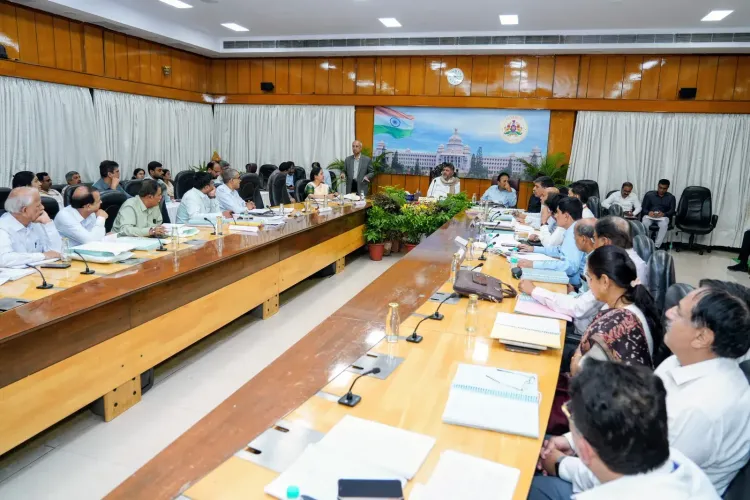
Chief Minister D.K. Shivakumar chaired a Karnataka Neeravari Nigam Limited board meeting at his official residence Krishna on 28 October 2026, deliberating on major irrigation matters alongside the Irrigation Minister, Chief Secretary, and senior officials.
Key Takeaways
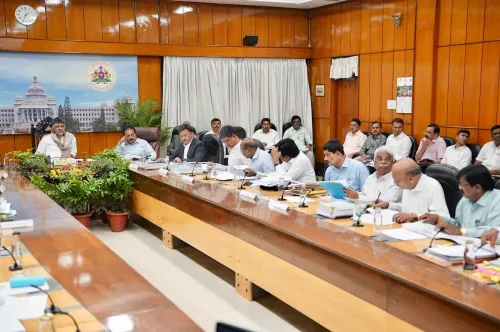
Shivakumar chaired the Karnataka Neeravari Nigam Limited (KNNL) board meeting on 28 October 2026 at residence Krishna , Bengaluru.
Irrigation Minister N.
Chaluvarayaswami and Chief Secretary Dr.
Shalini Rajneesh were among the senior attendees.
CM's Economic Adviser L.K.
Ateek and Additional Chief Secretary for Water Resources Gaurav Gupta participated, signalling attention to both fiscal and technical dimensions.
KNNL Managing Director B.R.
Rathod was present, indicating operational-level briefings on project progress.
Specific decisions from the meeting — including any fund releases or new project sanctions — are yet to be officially communicated.
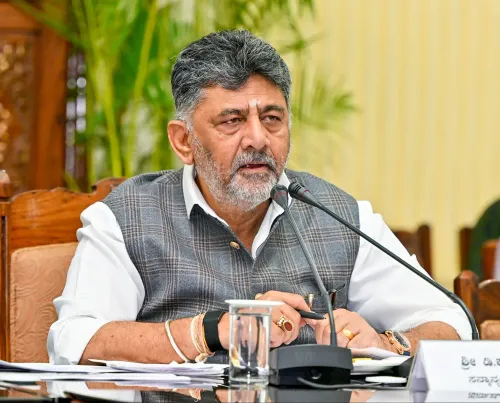
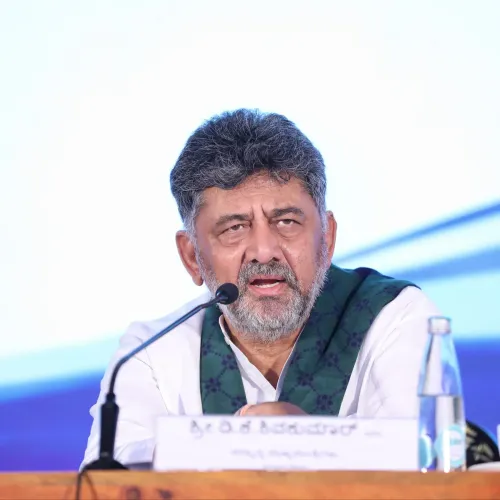
Water and governance converged at Krishna, the Chief Minister's official residence in Bengaluru, on Wednesday, 28 October 2026, as Chief Minister D.K. Shivakumar convened a board meeting of the Karnataka Neeravari Nigam Limited (KNNL) to take stock of the state's irrigation agenda. The Chief Minister's Office of Karnataka confirmed the meeting through an official post, signalling the administration's continued focus on water infrastructure delivery.
The meeting, held at the home office Krishna, brought together a cross-section of senior officials to deliberate on 'several important matters' relating to irrigation development across Karnataka. The gathering underlined just how seriously the state treats water management — a resource that shapes livelihoods for millions of farmers in drought-prone districts.
Who was in the room — and why it matters
The attendance list reads like a who's who of Karnataka's water-policy machinery. N. Chaluvarayaswami, Minister for Major and Medium Irrigation, anchored the political side of the table. Chief Secretary Dr. Shalini Rajneesh represented the highest tier of the state's civil service, while CM's Economic Adviser L.K. Ateek ensured fiscal considerations stayed front and centre.
On the technical and administrative side, Additional Chief Secretary for Water Resources and Energy Gaurav Gupta, Additional Chief Secretary for Finance Riteish Kumar Singh, CM's Secretary S.S. Nakul, Technical Adviser K. Jayaprakash, and KNNL Managing Director B.R. Rathod were all present. When a state deploys this breadth of expertise around a single table, the agenda invariably stretches beyond routine updates.
KNNL's role in Karnataka's irrigation story
Karnataka Neeravari Nigam Limited is the state-owned corporation entrusted with executing and managing major and medium irrigation projects. Its mandate covers everything from dam construction and canal networks to fund utilisation and project timelines — the unglamorous but vital plumbing that determines whether rainwater reaches fields or runs off into rivers.
Karnataka has historically convened periodic board reviews of its irrigation corporations to monitor implementation, unlock stalled projects, and manage allocations from shared river basins. Drought-prone northern and central districts of the state remain the sharpest pressure points, where a delayed canal or an un-released project tranche can translate directly into crop failure.
What to watch after the closed-door deliberations
The official communication did not detail which specific projects or funding decisions were discussed. Any follow-up announcements on project timelines, fund releases, or new irrigation works sanctioned by the board will signal how ambitious this particular review turned out to be.
For Karnataka's farming communities, every board meeting of this kind is a reminder that the pipes, canals, and reservoirs connecting rain to rootstock are ultimately governed by decisions taken in rooms like Krishna — and the pressure to accelerate delivery is only growing.
Point of View
Not just administrative updates. Karnataka's irrigation backlog has long been a governance liability, and periodic board reviews are the primary tool available to the CM to push projects through bureaucratic inertia. Whether this meeting produces concrete fund-release orders or project-completion deadlines will determine its real policy weight.
NationPress
28 Oct 2026
Frequently Asked Questions
What is the Karnataka Neeravari Nigam Limited (KNNL)?
KNNL is a state-owned corporation responsible for executing and managing major and medium irrigation projects in Karnataka, covering dam construction, canal networks, and project fund utilisation.
Why did CM Shivakumar hold a KNNL board meeting?
CM D.K. Shivakumar chaired the meeting to review and discuss several important matters related to Karnataka's irrigation projects, with key ministers and senior officials present.
Who attended the KNNL board meeting on 28 October 2026?
Irrigation Minister N. Chaluvarayaswami, Chief Secretary Dr. Shalini Rajneesh, Economic Adviser L.K. Ateek, Additional Chief Secretaries Gaurav Gupta and Riteish Kumar Singh, CM's Secretary S.S. Nakul, Technical Adviser K. Jayaprakash, and KNNL MD B.R. Rathod attended.
Where was the KNNL board meeting held?
The meeting was held at Krishna, the Chief Minister's official home office in Bengaluru.
What decisions were taken at the KNNL board meeting?
Specific decisions have not been officially announced yet. Any follow-up on project timelines, fund releases, or new irrigation works sanctioned is awaited.