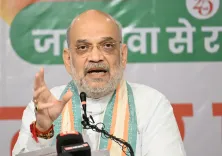
CM Siddaramaiah Calls All-Party Meet on Cauvery Crisis
Synopsis
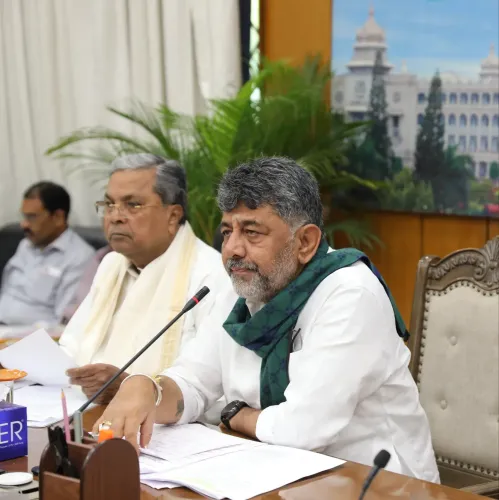
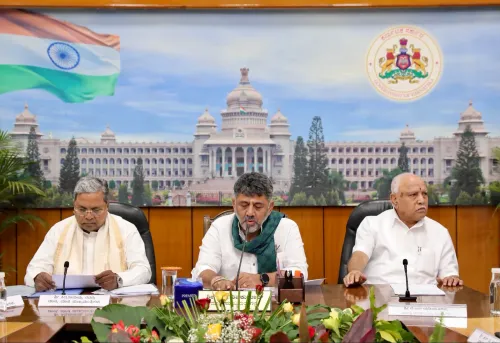
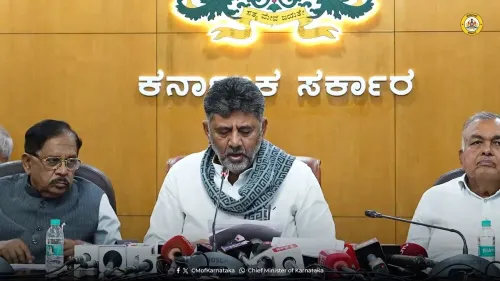
Chief Minister D.K. Shivakumar has called an all-party meeting on August 2 at Home Office Krishna, Bengaluru, inviting former CMs, basin MPs and MLAs to build a unified Karnataka position on the Cauvery water dispute ahead of the water release season.
Key Takeaways
Shivakumar has convened an all-party meeting on Sunday, August 2, 2026 .
The meeting will be held at Home Office Krishna , Bengaluru.
Invitees include former Chief Ministers , Cauvery basin MPs , and basin MLAs from across party lines.
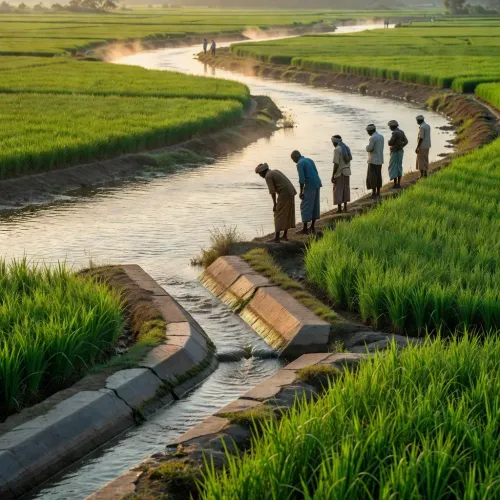
The agenda is the Cauvery river water dispute , one of India's longest-running interstate water conflicts.
The Cauvery Water Disputes Tribunal issued its award in 1991 ; the Supreme Court revised allocations in 2018 .
The all-party format is intended to project a unified Karnataka position ahead of the water release season.
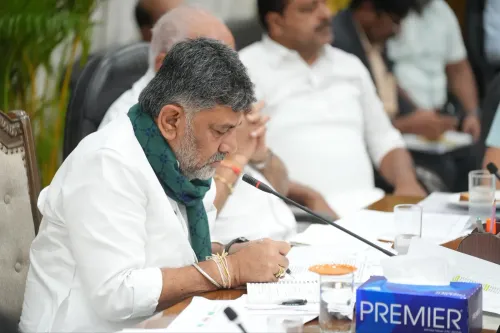
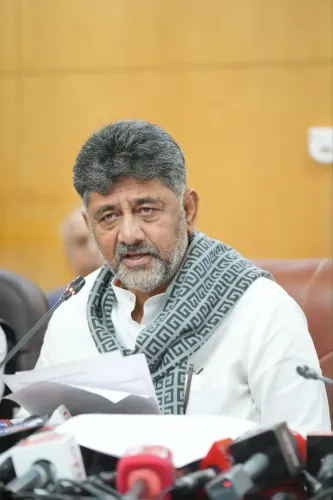
With Karnataka's water season approaching and political stakes running high, Chief Minister D.K. Shivakumar has called an all-party meeting on Sunday, August 2, to forge a unified state position on the Cauvery river water dispute — one of India's most combustible interstate conflicts.
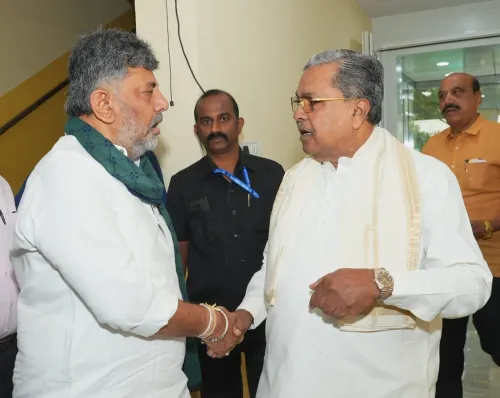
The meeting will be held at the Home Office Krishna in Bengaluru. Invitations have gone out to former Chief Ministers of Karnataka, Members of Parliament, and MLAs from the Cauvery basin — a deliberate cross-party, cross-constituency gathering designed to signal that Karnataka speaks with one voice on the river.
Why Karnataka is pulling every party into the same room
Indian states have long used the all-party format as a strategic instrument ahead of sensitive interstate water negotiations or Supreme Court proceedings. Bringing former Chief Ministers — who have themselves navigated Cauvery crises — alongside sitting legislators from the basin districts signals that this is not a Congress government initiative alone, but a Karnataka-wide stance.
The Cauvery dispute has roots going back decades. The Cauvery Water Disputes Tribunal, constituted in 1990, issued its final award in 1991 fixing annual water allocations among Karnataka, Tamil Nadu, Kerala, and Pondicherry. In 2018, the Supreme Court revised those numbers — reducing Tamil Nadu's share and increasing Karnataka's allocation — while also directing the formation of a new management board. Despite that order, periodic flare-ups over release schedules, especially during weak monsoon years, have kept the dispute alive and politically charged.
The basin legislators who hold the political temperature
The explicit inclusion of Cauvery basin MPs and MLAs is telling. These are the representatives whose constituencies feel the dispute most acutely — farmers waiting on irrigation water, towns dependent on reservoir levels, and electorates that have historically punished governments seen as yielding too much to Tamil Nadu. Their presence in the room on August 2 is as much about political optics as it is about policy coordination.
Cauvery disputes tend to intensify precisely during the neeravari (irrigation) season, when release schedules become concrete demands rather than abstract legal positions. An all-party consensus built now gives the Karnataka government stronger ground — in New Delhi and in any court proceedings — to defend the state's position.
What August 2 must deliver
The meeting's real test will be whether it produces a clear, unified resolution that the Shivakumar government can carry to the central government and, if necessary, back to the Supreme Court. A fractured or inconclusive gathering would hand political opponents a ready-made line of attack. A unified declaration, by contrast, would pressure New Delhi to act as an honest broker before the water release season peaks.
Karnataka's farmers, and its political class, will be watching every word that comes out of Home Office Krishna on Sunday.
Point of View
While also giving the CM political cover if the outcome of any negotiation falls short of public expectations. More broadly, it signals that the Cauvery dispute is entering an active phase in 2026, likely tied to monsoon performance and impending release-schedule demands from Tamil Nadu. How much genuine cross-party unity emerges from August 2 will determine whether this is a durable political shield or a one-day photo opportunity.
NationPress
14 Sept 2026
Frequently Asked Questions
Why has CM DK Shivakumar called an all-party meeting on Cauvery?
Chief Minister D.K. Shivakumar called the all-party meeting to build a unified Karnataka position on the Cauvery water dispute ahead of the water release season, ensuring all parties and basin representatives back a common state stance.
When and where is the Cauvery all-party meeting in Karnataka?
The meeting is scheduled for Sunday, August 2, 2026 , at the Home Office Krishna in Bengaluru.
Who has been invited to the Karnataka Cauvery all-party meeting?
Former Chief Ministers of Karnataka, Members of Parliament representing Cauvery basin constituencies, and MLAs from the Cauvery basin have been invited.
What is the Cauvery water dispute between Karnataka and Tamil Nadu?
The Cauvery dispute is a decades-old conflict over sharing the river's waters. The Cauvery Water Disputes Tribunal issued an award in 1991, and the Supreme Court revised allocations in 2018, but periodic disagreements over release schedules continue.
What is the significance of an all-party meeting on Cauvery?
All-party meetings allow a state government to present a cross-party consensus to the central government and courts, strengthening Karnataka's negotiating position and insulating the ruling party from political criticism over the dispute's outcome.