Karnataka CM Calls All-Party Meet on Cauvery Water Dispute
Synopsis
Karnataka's Chief Minister DK Shivakumar addressed an all-party meeting on Cauvery river water sharing on August 3, 2026. The CMO shared highlights of his address, signalling a unified state front on one of India's most enduring interstate water disputes.
Key Takeaways
The Chief Minister's Office of Karnataka convened an all-party meeting on Cauvery river water sharing on August 3, 2026 .
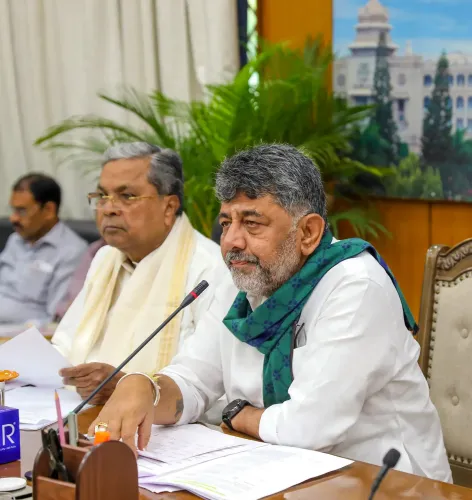
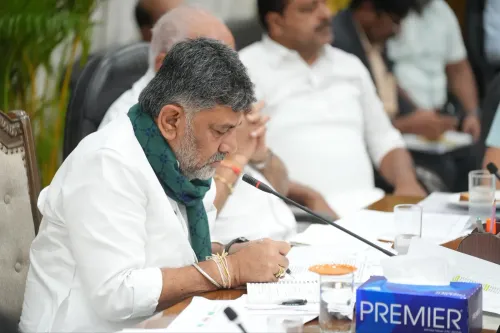
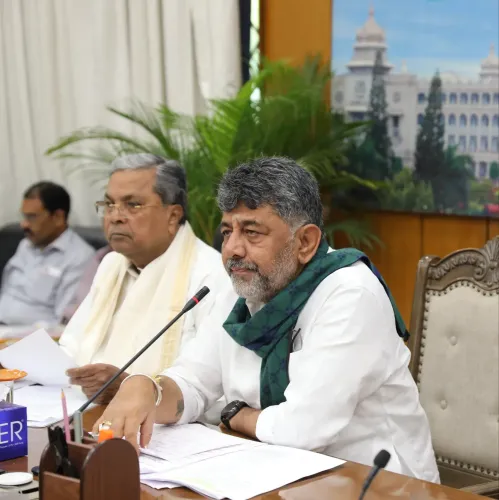
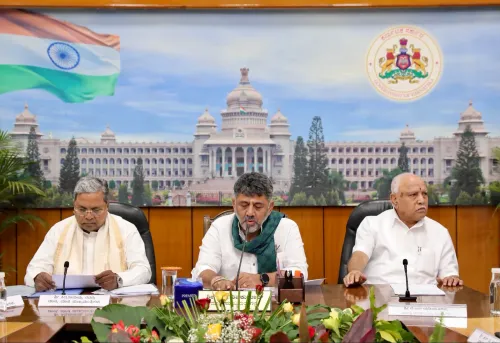
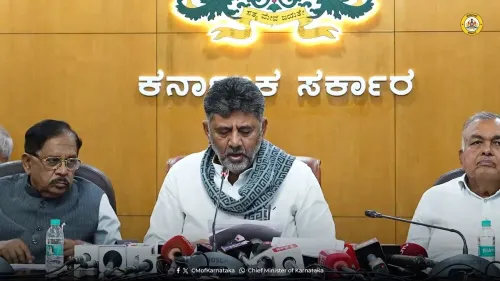
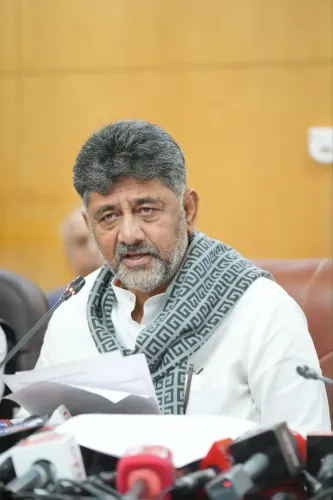
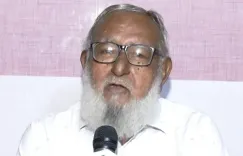
Chief Minister DK Shivakumar addressed the meeting; key highlights were shared by the CMO on X along with four images.
The Cauvery dispute involves Karnataka, Tamil Nadu, Kerala and Puducherry , with the Supreme Court's 2018 ruling setting current water-release obligations.
The all-party format is designed to present Karnataka's position as a state consensus, not merely a ruling-party stance.
The Cauvery River Management Authority 's role and upcoming monsoon water-release schedules remain key pressure points.
The Cauvery question — one of India's most combustible interstate water battles — was back in a Karnataka conference room on Monday, August 3, 2026, as the state government convened an all-party meeting to forge a unified front on river water sharing. The Chief Minister's Office of Karnataka shared key highlights from the address delivered by the Chief Minister, Shri DK Shivakumar, following the session.
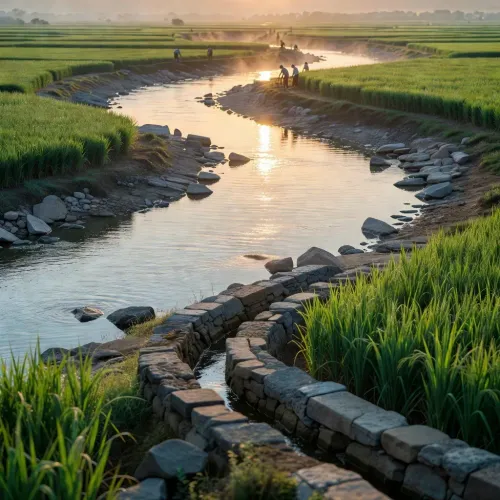
The Kannada post reads: 'ಕಾವೇರಿ ನದಿ ನೀರಿನ ಹಂಚಿಕೆ ಕುರಿತು ಸರ್ವಪಕ್ಷ ಸಭೆಯ ನಂತರ...' — 'Key highlights from the address by Hon'ble Chief Minister Shri DK Shivakumar after the all-party meeting on Cauvery river water sharing.' Four images from the meeting were shared alongside the post.
Why Cauvery Never Stays Quiet
The Cauvery River drains roughly 81,155 square kilometres across Karnataka, Tamil Nadu, Kerala and Puducherry, and its waters have been disputed for well over a century. The Cauvery Water Disputes Tribunal, constituted under the Inter-State River Water Disputes Act, issued its award in 2007, only for the Supreme Court to modify it in 2018 — fixing annual release obligations from Karnataka to Tamil Nadu and setting the current legal baseline that both states continue to contest in practice.
For Karnataka's farmers, especially in the Cauvery basin districts of Mandya, Mysuru and Kodagu, every monsoon season rekindles anxiety about whether the state can meet its own irrigation needs before releasing water downstream. Tamil Nadu's delta farmers are equally dependent on predictable flows. That tension is structural — no single meeting resolves it — which is precisely why state governments reach for the all-party format: it signals consensus, not just government policy.
The All-Party Format and What It Signals
Convening a sarvapaksha sabhe (all-party meeting) on an interstate river dispute is a well-worn political instrument in Karnataka. It allows the ruling party to demonstrate that its position on Cauvery is a state position, not a partisan one — useful insulation when negotiations with the Centre or the Cauvery River Management Authority turn contentious. DK Shivakumar, who holds significant sway over state administration, addressing the gathering personally underscores how seriously the government is treating the current moment.
The meeting comes as water-release schedules for the upcoming monsoon period come under scrutiny, and as the Cauvery River Management Authority's oversight role remains a live point of friction between the basin states and the central government.
Karnataka's next move — whether in the courts, in negotiations with Tamil Nadu, or before the Centre — will be watched closely by millions of farmers whose cropping cycles depend on what gets decided in rooms like the one that met today.
Point of View
Reducing the ruling Congress's exposure on a perennially sensitive issue. The timing, ahead of monsoon water-release decisions, suggests the government is bracing for pressure from the Cauvery River Management Authority. How opposition parties respond to the consensus framing will reveal whether Karnataka's political class is genuinely unified or merely performing unity for the cameras.
NationPress
17 Sept 2026
Frequently Asked Questions
Why did Karnataka hold an all-party meeting on Cauvery in August 2026?
Karnataka convened the all-party meeting to build cross-party consensus on the state's position regarding Cauvery river water sharing, particularly ahead of monsoon-season water-release decisions and ongoing oversight by the Cauvery River Management Authority.
What is the current legal status of the Cauvery water dispute?
The Supreme Court modified the Cauvery Water Disputes Tribunal's 2007 award in 2018, fixing annual water-release obligations from Karnataka to Tamil Nadu. This ruling forms the current legal baseline, though disputes over implementation continue.
Who attended the all-party Cauvery meeting in Karnataka?
The Chief Minister's Office did not specify individual attendees in the post; the format of an all-party meeting typically includes representatives from all major political parties in the state legislature.
What is the Cauvery River Management Authority?
The Cauvery River Management Authority is a central body responsible for supervising the implementation of the Supreme Court's 2018 Cauvery water-sharing order among the basin states of Karnataka, Tamil Nadu, Kerala and Puducherry.
How does the Cauvery dispute affect farmers in Karnataka and Tamil Nadu?
Farmers in Karnataka's Cauvery basin districts such as Mandya and Mysuru depend on retaining enough water for local irrigation, while Tamil Nadu's delta farmers rely on scheduled releases from Karnataka. The balance between these competing needs is the core of the dispute.