PM Modi taunts Congress over MLC results in 4 states
Synopsis
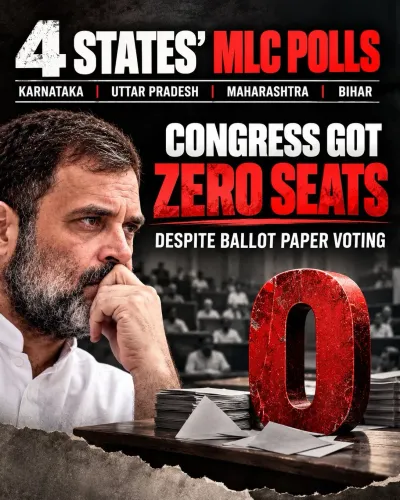
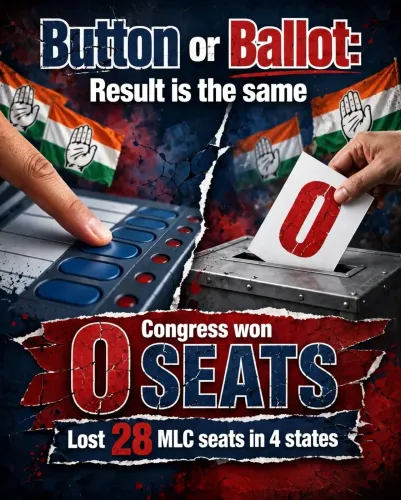
Prime Minister Narendra Modi posted a pointed rhetorical challenge on X, asking how many of the 28 MLC seats contested across Uttar Pradesh, Maharashtra, Bihar and Karnataka the Congress party had managed to win — implying a near-zero haul for the principal opposition.
Key Takeaways
28 MLC seats were contested across Uttar Pradesh, Maharashtra, Bihar and Karnataka .
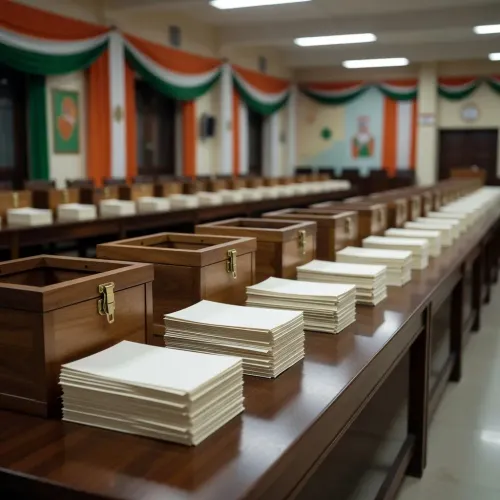
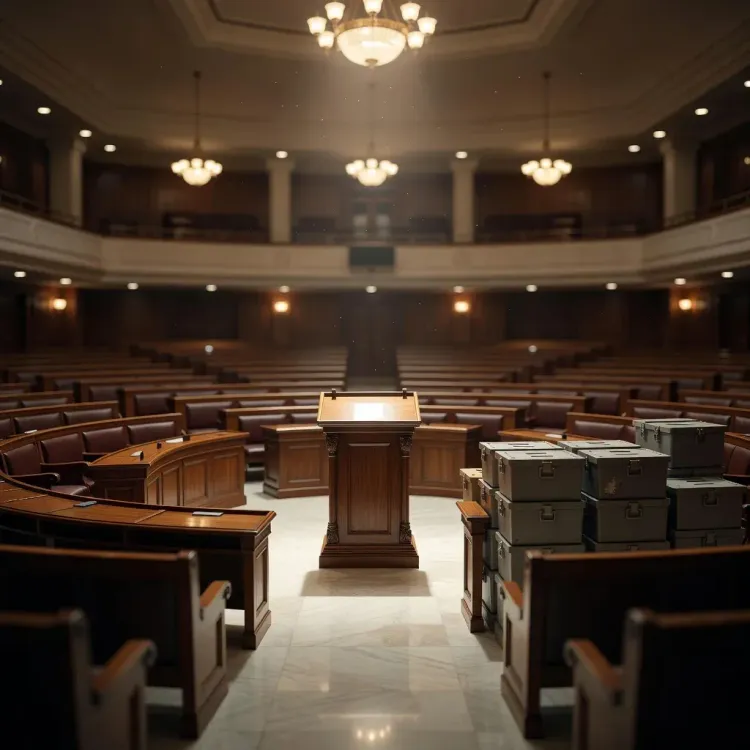
Elections were conducted using ballot papers through indirect voting by MLAs and local body representatives.
PM Modi posted a rhetorical question on X implying Congress won few or no seats.
MLC elections serve as a proxy measure of party strength between assembly elections.
The BJP has steadily expanded its Legislative Council presence in these states since 2014 .
Congress is not in government in Uttar Pradesh or Bihar , limiting its indirect-vote pool in both states.
A sharp political jab landed on Wednesday, 28 October 2026, when Prime Minister Narendra Modi turned to X to mock the Congress party's performance in Legislative Council (MLC) elections spread across 28 seats in four of India's most electorally consequential states — Uttar Pradesh, Maharashtra, Bihar and Karnataka.
The taunt: 28 seats, four states, one loaded question
Modi's post did not announce a number. It asked a question — 'Guess how many seats Congress won?' — punctuated with a magnifying-glass emoji that telegraphed the answer before anyone had to look it up. The rhetorical device, brief and deliberate, was designed to let the silence speak louder than any statistic. The elections were conducted using ballot papers, the traditional method for MLC contests, where voting is indirect — carried out by sitting MLAs and local body representatives rather than the general public.
Why MLC elections carry political weight between cycles
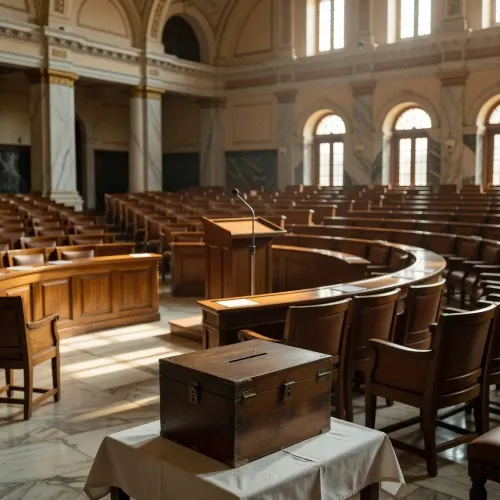
Legislative Council elections in states with bicameral legislatures are fought without the spectacle of a general election but carry real strategic value. A party's MLC strength shapes its ability to pass or delay legislation in the upper house of a state assembly. In Uttar Pradesh — India's most populous state — the Council has historically mirrored the political dominance of whichever party controls the assembly. Maharashtra, Bihar and Karnataka follow a similar arithmetic: assemble enough MLAs and local-body councillors behind your candidate, and the upper house tilts your way.
Since 2014, the BJP has steadily expanded its footprint in these indirect elections, leveraging assembly majorities won in successive state elections into Council seats that were previously out of reach. Congress, once the default occupant of these chambers in many states, has seen that ground erode cycle by cycle.
The opposition's structural problem, on display
Modi's post is less a policy statement than a political temperature-check — and a pointed one. Across the four states in question, Congress finds itself in structurally weak positions: it is not in government in Uttar Pradesh or Bihar, holds a junior role in coalition politics in Maharashtra, and has faced pressure in Karnataka where it does govern but contests Council seats against a disciplined BJP ground operation. MLC contests, won by the parties that control legislative numbers, tend to ratify and amplify the existing balance of power rather than disrupt it.
The Prime Minister's choice to highlight these results — with a teasing rather than triumphant framing — is itself a signal: the BJP reads the current opposition arithmetic as so unfavourable to Congress that the numbers need no elaboration. The question mark does the work.
With assembly by-elections and the next general election cycle already on the political horizon, every data point from indirect elections feeds the larger narrative war over which party represents a credible national alternative. Today's post is one more entry in that ledger.
Point of View
He invites the public to arrive at the embarrassing number themselves — a more devastating rhetorical move than simply announcing it. The choice of four large, diverse states amplifies the point, suggesting Congress's weakness is not regional but systemic. Historically, Legislative Council results track assembly-level strength closely, so a poor MLC showing signals organisational erosion that could compound ahead of the next general election. The BJP's strategy of converting assembly majorities into upper-house dominance is now a well-worn playbook, and today's post signals confidence that the playbook is working.
NationPress
28 Oct 2026
Frequently Asked Questions
What are MLC elections in India?
MLC stands for Member of the Legislative Council — the upper house of a state legislature in states that have a bicameral assembly. MLC elections are indirect contests where sitting MLAs, local body representatives, and other designated electors vote using ballot papers, rather than the general public voting directly.
Which states had MLC elections in October 2026?
According to PM Modi's post, MLC elections covering 28 seats were held across Uttar Pradesh, Maharashtra, Bihar and Karnataka .
Why did PM Modi post about the MLC election results?
PM Modi used the results to highlight the Congress party's poor performance, framing it as a rhetorical question — 'Guess how many seats Congress won?' — to draw public attention to what he implied was a near-total defeat for the opposition.
Why are MLC elections seen as politically significant?
Legislative Council seats determine a party's ability to pass or delay legislation in a state's upper house. Strong MLC numbers reflect organisational depth and serve as a barometer of party strength between general assembly elections.
How are MLC elections different from assembly elections?
Unlike assembly elections where ordinary voters cast ballots, MLC elections are conducted through an indirect system — MLAs and representatives of local bodies, graduates' constituencies, or teachers' constituencies vote using ballot papers for Council seats.