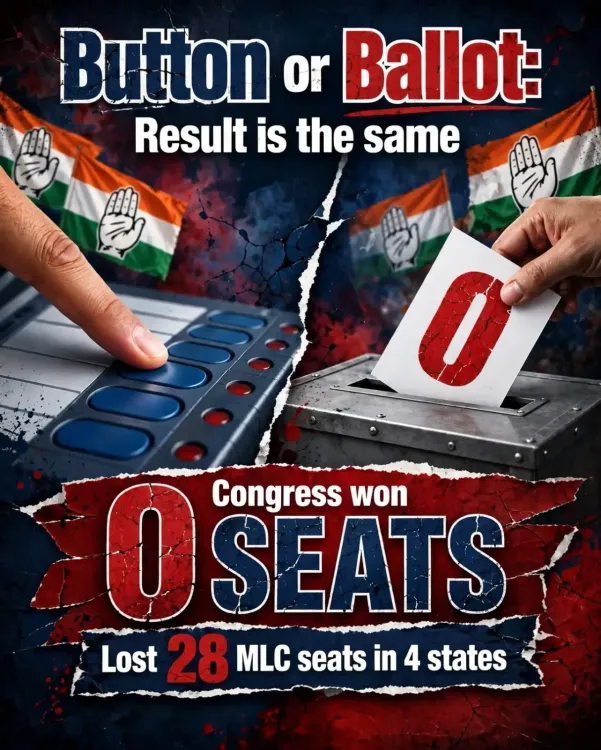
Congress wins zero of 28 MLC seats on ballot papers, BJP turns EVM argument around
Synopsis
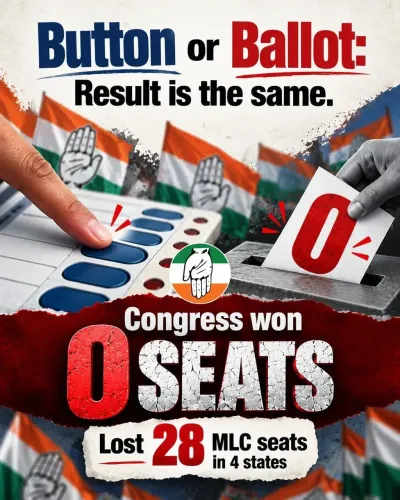
Congress fought 28 MLC seats on ballot papers — the voting method it has loudly demanded — and won none. The zero-from-28 record, including all four seats in BJP-rival Karnataka where Congress governs, arrives days before the INDIA bloc's 1 November EVM rally and could be the most damaging self-inflicted blow to the party's electoral credibility in recent months.
Key Takeaways
Congress failed to win a single seat across all 28 MLC constituencies that used ballot papers instead of EVMs.
Losses span Uttar Pradesh , Bihar , Maharashtra , and Karnataka .
In Karnataka , where Congress holds power, the party lost all four MLC seats it contested, including one held by a sitting member .
The BJP has used the results to directly challenge Congress' sustained campaign against Electronic Voting Machines (EVMs) .
Results come days before the INDIA bloc's 1 November rally against EVMs and alleged 'vote chori'.
Analysts argue Congress must address deep organisational weaknesses rather than focus solely on electoral-mechanism grievances.
Congress failed to win a single seat across 28 MLC constituencies that went to the polls via ballot papers — the very mechanism the party has long demanded as a more trustworthy alternative to Electronic Voting Machines — handing the Bharatiya Janata Party (BJP) a sharp political counter ahead of the INDIA bloc's proposed 1 November rally against EVMs and alleged 'vote chori'. The results span legislative council elections across Uttar Pradesh, Bihar, Maharashtra, and Karnataka, and have triggered a fresh round of scrutiny over Congress' organisational depth and electoral strategy.
Karnataka blow: Power without influence
The most stinging setback came from Karnataka, where Congress is the ruling party yet lost all four MLC seats it contested — including the seat of a sitting member. Political observers argue this is the most damaging result of the lot: an incumbent state government that could not convert administrative presence into electoral mobilisation. The losses raise uncomfortable questions about candidate selection, internal coordination, and the party's ability to consolidate its own support base at the council level.
The EVM argument flips
For months, Congress and its allies within the INDIA bloc have pressed for a return to ballot papers, arguing that EVMs are susceptible to manipulation. The MLC results — conducted entirely on paper — undercut that line of attack in unmistakable fashion. The BJP has wasted no time seizing the moment, arguing that electoral outcomes are determined by public confidence in a party and its ground-level organisation, not by the voting mechanism. As one political observer put it: 'Ballot papers do not guarantee victories, just as EVMs do not guarantee defeats.'
Organisational questions resurface
The Congress' inability to open its account across 28 contests has reignited a recurring debate about the party's structural health. Analysts note the results expose weaknesses in voter mobilisation, candidate vetting, and on-the-ground coordination — vulnerabilities that persist regardless of whether votes are cast electronically or on paper. The question analysts are asking is whether the party will undertake serious organisational introspection or continue to focus primarily on alleged flaws in electoral systems. As one analyst observed: 'Ultimately, a party must win the confidence of the electorate. For Congress, the real challenge is not explaining why it lost without EVMs, but demonstrating that it can still win.'
Political implications ahead of 1 November rally
The timing of these results is particularly awkward for Congress. The INDIA bloc is scheduled to hold a major rally on 1 November centred on EVM credibility and 'vote chori'. Arriving at that rally with a zero-from-28 record on ballot papers hands critics — and the BJP's communications machinery — ready-made ammunition. Whether INDIA bloc partners recalibrate their framing ahead of the event remains to be seen. The broader credibility of Congress within the coalition could also face quiet pressure, given the scale of the sweep against it.
What comes next
Congress is yet to issue a formal response to the aggregate results. Internal post-mortems on the Karnataka losses, in particular, are expected to generate leadership-level discussion. Whether those conversations translate into structural reforms — or remain contained as a local electoral review — will be a defining signal about the party's institutional capacity to self-correct ahead of upcoming state elections.
Frequently Asked Questions
How many MLC seats did Congress win on ballot papers?
Congress won zero seats out of 28 MLC constituencies that used ballot papers across Uttar Pradesh, Bihar, Maharashtra, and Karnataka. The clean sweep against the party has intensified scrutiny of its organisational strength and electoral strategy.
Why is the Karnataka result considered especially damaging for Congress?
Congress is the ruling party in Karnataka, yet it lost all four MLC seats it contested in the state, including the seat of a sitting member. Analysts say an incumbent government failing to mobilise voters at the council level signals serious weaknesses in internal coordination and candidate selection.
How does this result affect Congress' EVM criticism?
Congress has long demanded a return to ballot papers, arguing EVMs are unreliable. The MLC results — conducted entirely on ballot papers — produced a zero-from-28 outcome for the party, allowing the BJP to argue that electoral defeats reflect voter sentiment rather than voting-machine flaws.
What is the INDIA bloc's 1 November rally about?
The INDIA bloc has proposed a rally on 1 November centred on demands for greater scrutiny of Electronic Voting Machines and allegations of 'vote chori' (vote theft). The Congress MLC results on ballot papers have complicated the messaging ahead of that event.
What should Congress do next, according to analysts?
Analysts argue Congress needs to undertake serious organisational introspection — addressing weaknesses in voter mobilisation, candidate selection, and ground-level coordination — rather than focusing primarily on grievances about electoral mechanisms. One observer noted the party's core challenge is 'demonstrating that it can still win', not explaining losses.