CM Sai Hails Surajpur's Top State Rank in Jal Sanchay Campaign
Synopsis
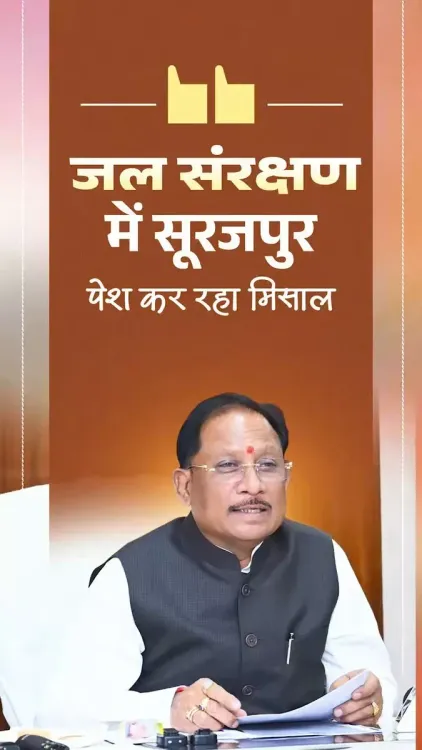
Chhattisgarh CM Vishnu Deo Sai praised Surajpur district for finishing first in the state and fourth in India in the Jal Sanchay Janbhagidari Abhiyan, calling it an inspirational model of community-driven water conservation.
Key Takeaways
Surajpur district secured first rank in Chhattisgarh in the Jal Sanchay Janbhagidari Abhiyan water conservation campaign.
The district also finished fourth nationally , placing it among the top performers in India on this metric.
CM Vishnu Deo Sai described the result as a matter of pride for the entire state and an inspirational example of public participation.
The Jal Sanchay Janbhagidari Abhiyan emphasises community-led water harvesting and groundwater recharge, not just administrative spending.
The campaign aligns with the national Jal Shakti Abhiyan framework launched in 2019 to combat groundwater depletion across India.
Surajpur's performance sets a benchmark for other Chhattisgarh districts ahead of future campaign cycles.
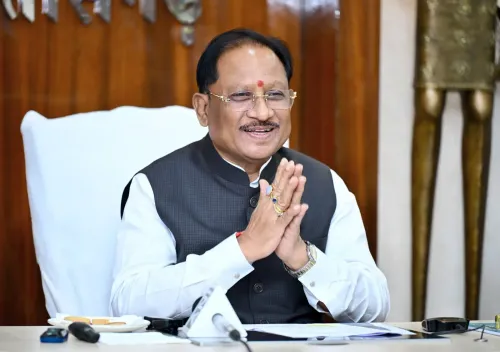
Water conservation rarely makes headlines — until a single district rewrites what community action can achieve. Chhattisgarh Chief Minister Vishnu Deo Sai on Wednesday, October 28, 2026, publicly lauded Surajpur district for securing the first rank in Chhattisgarh and the fourth rank nationally in the Jal Sanchay Janbhagidari Abhiyan — a public-participation campaign centred on water storage and conservation.
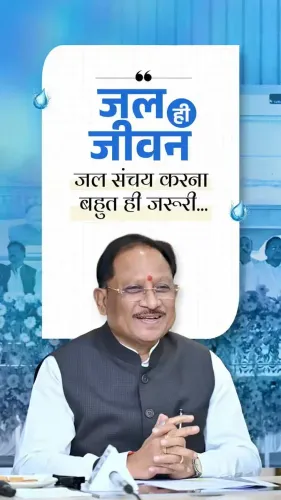
Posting in Hindi, CM Sai framed the achievement in generational terms: 'Water conservation is today's necessity and also the foundation of a secure future for generations to come.' He called Surajpur's performance a matter of pride for the entire state and described it as an prernadayi misal — an inspirational example — of what citizen-driven conservation can accomplish.
Surajpur Rises: What the Jal Sanchay Campaign Demands
The Jal Sanchay Janbhagidari Abhiyan is designed to mobilise communities around water-harvesting structures, groundwater recharge, and local storage solutions — moving conservation out of government offices and into village squares. Districts are ranked on the depth and breadth of grassroots participation, making Surajpur's national fourth-place finish a measure of organised civic effort, not merely administrative spending.
The campaign sits within a broader national framework that traces its lineage to the Jal Shakti Abhiyan, launched by the central government in 2019, which sought to address India's chronic groundwater depletion and seasonal water scarcity through coordinated community action across states. Chhattisgarh, with its mix of forested highlands and rain-dependent agriculture, has particular stakes in getting water storage right.
Why a Northern Chhattisgarh District Is Now a Statewide Template
Surajpur, located in northern Chhattisgarh, is not among the state's most urbanised or administratively dense districts — which makes its ranking more striking. The district's top finish signals that rural communities, when engaged directly, can outperform larger counterparts on conservation metrics. For district administrations across the state watching these rankings, Surajpur just became the benchmark.
CM Sai's public acknowledgement also carries a quiet policy signal: state government attention follows demonstrated community performance, and other districts have every incentive to replicate Surajpur's model ahead of the next cycle of rankings.
The next question is whether Chhattisgarh uses Surajpur's playbook to push more districts into the national top ten — and whether that fourth-place national ranking becomes a floor, not a ceiling.
Point of View
The BJP-led state government links a campaign ranking to a larger narrative of future-proof governance, an increasingly central pitch in climate-anxious rural constituencies. The Surajpur result, however impressive, also tests whether community mobilisation translates into durable infrastructure or remains a ranking exercise. If the state converts this recognition into sustained investment in Surajpur and a scalable district model, it could genuinely shift Chhattisgarh's position in national water-security conversations.
NationPress
28 Oct 2026
Frequently Asked Questions
What is the Jal Sanchay Janbhagidari Abhiyan?
The Jal Sanchay Janbhagidari Abhiyan is a public participation campaign that mobilises communities around water harvesting, storage, and groundwater recharge. Districts are ranked based on the depth of grassroots involvement in conservation activities.
What rank did Surajpur get in the Jal Sanchay campaign?
Surajpur district secured first rank in Chhattisgarh and fourth rank nationally in the Jal Sanchay Janbhagidari Abhiyan, according to CM Vishnu Deo Sai's post on October 28, 2026.
What is the Jal Shakti Abhiyan and how is it related?
The Jal Shakti Abhiyan was launched by the central government in 2019 to promote water conservation through community action across Indian states. The Jal Sanchay Janbhagidari Abhiyan operates within this broader national framework.
Where is Surajpur district located?
Surajpur is a district in northern Chhattisgarh. Its top finish in the national campaign rankings is notable given that it is not among the state's most urbanised districts.
Why did CM Vishnu Deo Sai praise Surajpur publicly?
CM Sai praised Surajpur for ranking first in Chhattisgarh and fourth in India in the Jal Sanchay Janbhagidari Abhiyan, calling it an inspirational model of citizen-driven water conservation and a matter of pride for the whole state.