CM Sai: Surajpur tops Chhattisgarh in Jal Sanchay drive
Synopsis
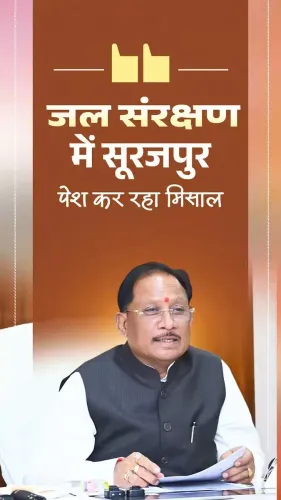
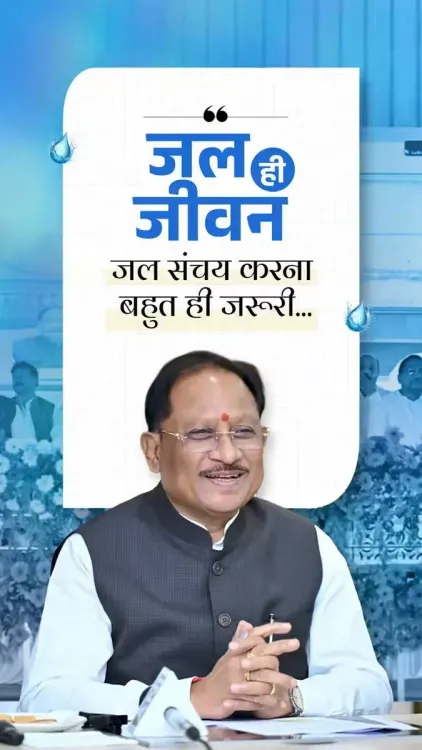
Chief Minister Vishnu Deo Sai has praised Surajpur district for ranking first in Chhattisgarh and fourth nationally in the Jal Sanchay Janbhagidari Abhiyan water conservation campaign, calling water harvesting the foundation of future generations' security.
Key Takeaways
Surajpur district ranked first in Chhattisgarh and fourth in India in the Jal Sanchay Janbhagidari Abhiyan campaign.
CM Vishnu Deo Sai personally congratulated Surajpur's residents and district administration at a public event in Premnagar on 28 October 2026 .
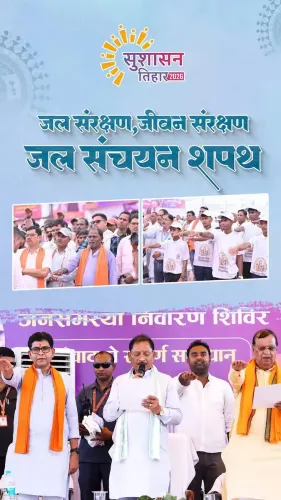
The Jal Sanchay Janbhagidari Abhiyan is a Chhattisgarh state campaign mobilising community participation in water storage and groundwater recharge.
The campaign aligns with the national Jal Shakti Abhiyan launched by the Government of India in 2019 .
Surajpur is a northern Chhattisgarh district with large rural and tribal communities highly dependent on water security.
District-level rankings in such campaigns are designed to drive competitive accountability among local administrations.
A district from the forested north of Chhattisgarh just punched well above its weight on a national stage. Surajpur district has secured first place in Chhattisgarh and fourth place across India in the Jal Sanchay Janbhagidari Abhiyan — the state's public-participation water conservation campaign — earning a personal commendation from Chief Minister Vishnu Deo Sai on Wednesday, 28 October 2026.
Speaking at a development inauguration and foundation-laying programme at Middle School Ground, Premnagar, Surajpur district, CM Sai said: 'Jal Sanchay Janbhagidari Abhiyan mein Surajpur jile ka utkrishta pradarshan sarahaniya hai' ('Surajpur district's outstanding performance in the Jal Sanchay public-participation campaign is praiseworthy'). He extended 'heartfelt congratulations and thanks' to the district's residents and administrative team, and underscored that water conservation 'is not just a necessity of today, but also the foundation of a secure future for coming generations.'
What the Jal Sanchay Janbhagidari Abhiyan actually does
The Jal Sanchay Janbhagidari Abhiyan is a Chhattisgarh state initiative designed to mobilise communities — not just government machinery — in water harvesting, storage, and groundwater recharge. It sits within the broader national architecture established by the Jal Shakti Abhiyan, which the Government of India launched in 2019 to push states toward accelerated conservation targets, especially in water-stressed and monsoon-dependent districts.
District-level rankings are a deliberate design feature of such campaigns: they create competitive accountability among local administrations, turning what could be a bureaucratic checklist into a race worth winning. Surajpur's leap to the national top five signals that its district administration translated that incentive into on-ground action.
Surajpur's geography and why this ranking matters
Surajpur sits in the northern belt of Chhattisgarh, a region characterised by significant rural and tribal populations and an economy closely tied to land and water cycles. Groundwater depletion and monsoon variability are chronic pressures here, making community-rooted conservation infrastructure not a policy trophy but a practical lifeline.
Chhattisgarh has progressively embedded water conservation into its rural development agenda, particularly across northern districts like Surajpur. A fourth-place national ranking — in a country of hundreds of competing districts — suggests the model being run here is delivering measurable results, and sets a benchmark other Chhattisgarh districts will now be measured against.
CM Sai, who has led the state since December 2023, has made sustainable development a visible strand of his governance narrative. The Premnagar event, combining development inaugurations with this public recognition, frames the campaign achievement as an integrated part of the state's delivery story — not a standalone prize.
With national rankings now on Surajpur's ledger, the question moves forward: can the model scale, and will other northern Chhattisgarh districts follow its lead before the next monsoon cycle tests the infrastructure in full?
Point of View
A structural feature of both state and central water programmes, can unlock grassroots mobilisation in tribal and rural belts. For CM Sai, publicly anchoring this achievement to his governance record at an on-ground development event is a deliberate move: it connects the abstract goal of water security to a concrete, verifiable outcome in a region that votes on delivery. The broader arc here is Chhattisgarh's effort to demonstrate that states in central India can be frontrunners — not laggards — in the national water conservation agenda. Whether Surajpur's model becomes a replicable template across the state's northern districts will be the real test of programme depth.
NationPress
28 Oct 2026
Frequently Asked Questions
What is the Jal Sanchay Janbhagidari Abhiyan in Chhattisgarh?
The Jal Sanchay Janbhagidari Abhiyan is a Chhattisgarh government campaign that mobilises public participation in water harvesting, storage, and groundwater recharge. It is aligned with the national Jal Shakti Abhiyan launched by the Government of India in 2019.
What rank did Surajpur get in the Jal Sanchay campaign?
Surajpur district secured first place in Chhattisgarh and fourth place across India in the Jal Sanchay Janbhagidari Abhiyan, as announced by Chief Minister Vishnu Deo Sai on 28 October 2026.
Who is Vishnu Deo Sai?
Vishnu Deo Sai is the Chief Minister of Chhattisgarh, serving since December 2023. He has emphasised sustainable development and governance delivery as central themes of his administration.
Where is Surajpur district located?
Surajpur is a district in northern Chhattisgarh, characterised by significant rural and tribal populations and an economy closely linked to land and water resources.
What is the Jal Shakti Abhiyan and how does it relate to Chhattisgarh?
The Jal Shakti Abhiyan is a Government of India initiative launched in 2019 to accelerate water conservation and groundwater recharge across states. Chhattisgarh's state-level Jal Sanchay campaign operates within this broader national framework.