MP CMO: Over 2 Lakh Water Structures Built Under Jal Ganga Abhiyan
Synopsis
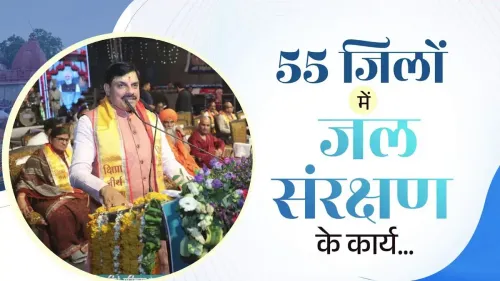
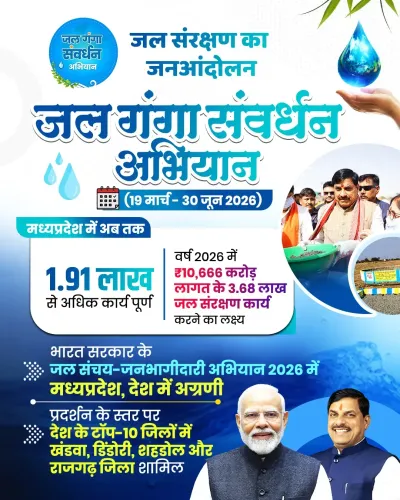
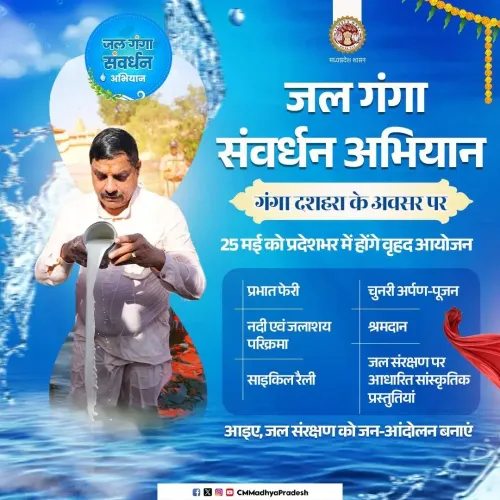
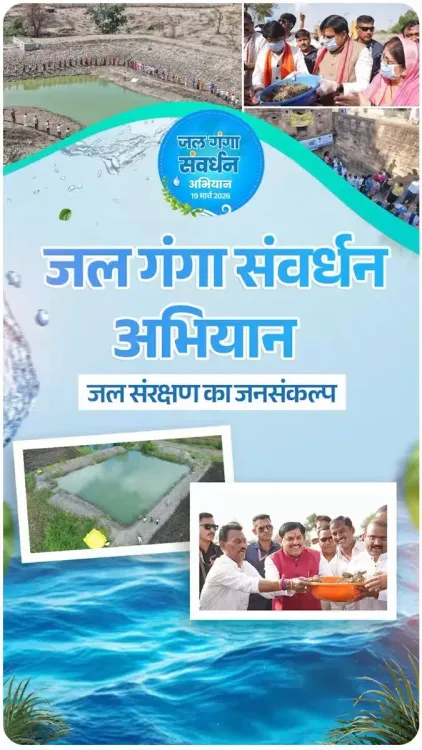
The Madhya Pradesh Chief Minister's Office announced that more than two lakh water structures have been built or rejuvenated under the Jal Ganga Sanvardhan Abhiyan. The update, tagging CM Mohan Yadav and the state Water Resources Department, frames the milestone as a step from water conservation to rural prosperity ahead of the monsoon.
Key Takeaways
The MP CMO announced over 2 lakh water structures built or restored under the Jal Ganga Sanvardhan Abhiyan .
The post tagged CM Dr Mohan Yadav and the state Water Resources Department .
The campaign focuses on small, decentralised assets like check dams, ponds and recharge units.
It complements central programmes such as Jal Shakti Abhiyan , Atal Bhujal Yojana and Jal Jeevan Mission .
Primary beneficiaries are farmers and rural households dependent on monsoon and groundwater.
Next markers to watch: groundwater data releases and any Phase-II budget allocation.
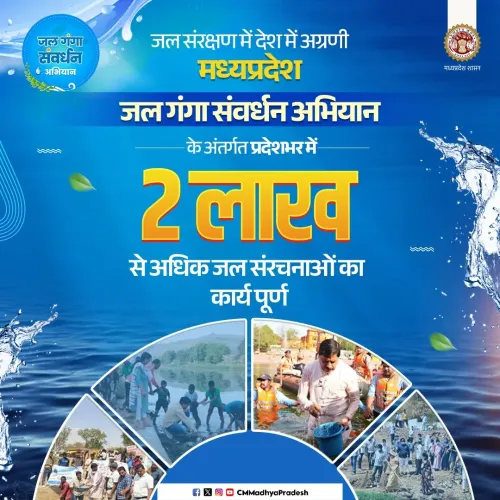
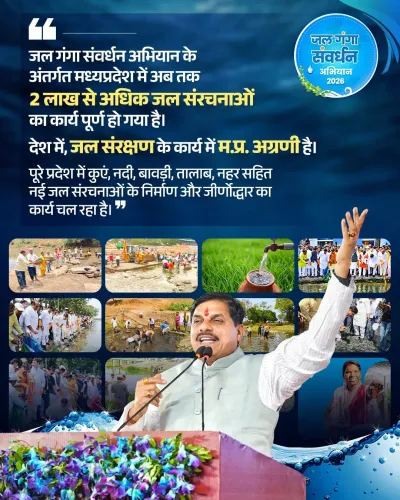
The Chief Minister's Office of Madhya Pradesh on 4 June 2026 announced that more than two lakh water structures have been constructed or rejuvenated under the state's flagship Jal Ganga Sanvardhan Abhiyan. The update, posted from the official handle, framed the milestone as a step in Madhya Pradesh's transition from water conservation to broader rural prosperity.
The post, headlined 'Jal sanrakshan se samriddhi ki ore badhta Madhyapradesh' ('Madhya Pradesh moving from water conservation towards prosperity'), tagged Chief Minister Dr Mohan Yadav and the state Water Resources Department. It was accompanied by a short video and used the campaign hashtag #Jal_Ganga_Sanvardhan_Abhiyan_MP.
Context
The Jal Ganga Sanvardhan Abhiyan is a state-led water conservation campaign that focuses on creating and reviving small, decentralised structures such as check dams, farm ponds, stop dams, percolation tanks and recharge shafts. The campaign sits within Madhya Pradesh's wider push to address groundwater stress in its central plateau districts, where rainfed agriculture dominates and the water table has been declining for over a decade.
According to the post, the state has now crossed the two lakh mark in structures either freshly built or restored under the abhiyan, a number the government is positioning as evidence of on-ground execution. The CMO described the works as the foundation for rural income gains tied to assured irrigation and recharged wells.
Policy backdrop
The state campaign builds on the Union government's Jal Shakti Abhiyan, launched in 2019 to drive rainwater harvesting and groundwater recharge in water-stressed districts. It also dovetails with the Atal Bhujal Yojana, which incentivises community-led groundwater management, and the Jal Jeevan Mission, which seeks tap connections for every rural household.
Madhya Pradesh's approach has leaned on micro-watershed works rather than relying solely on large reservoirs. The thinking, shared by several central Indian states, is that thousands of small structures distributed across catchments can capture monsoon runoff closer to where it falls, reducing both flood peaks and post-monsoon scarcity.
Stakeholders and impact
The primary beneficiaries are farmers and rural households, particularly in tribal-majority districts where kharif crops depend on a narrow monsoon window. Recharged structures can extend irrigation into the rabi season, support a second crop, and stabilise drinking water sources during summer months.
Panchayati raj institutions, the state Water Resources Department, the rural development department and line agencies running watershed and employment-guarantee works are typically involved in delivery. Convergence with the Mahatma Gandhi National Rural Employment Guarantee Scheme has been a common funding model for such structures across Indian states, allowing wage employment to be paired with asset creation.
For Chief Minister Mohan Yadav, who took charge in December 2023, water security has emerged as a recurring theme alongside investment promotion and industrial corridors. Foregrounding a two-lakh figure on social media is consistent with the administration's preference for measurable, scheme-linked communication.
What's next
Attention will now turn to whether the state releases structure-wise audit data, district-level dashboards and post-monsoon groundwater readings to substantiate the headline number. Independent observers tend to look for trends in block-level water table data, area under rabi irrigation and changes in drinking-water tanker dependence as the more durable indicators of impact.
A potential Phase-II of the abhiyan, along with budgetary outlays in the next state financial cycle, will signal how central a plank water conservation remains in Madhya Pradesh's development pitch. With the southwest monsoon approaching at the time of the post, the immediate test for the newly built and renovated assets will be how much runoff they capture this season.
Point of View
Water security doubles as both a rural welfare pitch and a hedge against monsoon volatility that shapes electoral mood in agrarian belts. The credibility of the two-lakh figure will ultimately rest on transparent third-party audits and visible improvements in block-level groundwater data. Until then, the messaging is as much political signalling as it is hydrology.
NationPress
18 Oct 2026
Frequently Asked Questions
What is the Jal Ganga Sanvardhan Abhiyan in Madhya Pradesh?
It is a Madhya Pradesh state campaign focused on water conservation through the construction and renovation of structures such as check dams, ponds, stop dams and groundwater recharge units, aimed at improving irrigation and rural water security.
How many water structures has Madhya Pradesh built under the campaign?
The Chief Minister's Office said more than two lakh water structures have been constructed or rejuvenated under the Jal Ganga Sanvardhan Abhiyan, according to its post on 4 June 2026.
Who is leading the Jal Ganga Sanvardhan Abhiyan?
The campaign is being driven by the Madhya Pradesh government under Chief Minister Dr Mohan Yadav, with implementation led by the state Water Resources Department along with other line agencies.
How is this campaign linked to central water schemes?
It complements Union government initiatives like the Jal Shakti Abhiyan launched in 2019, the Atal Bhujal Yojana for community groundwater management, and the Jal Jeevan Mission for rural tap water connections.
Who benefits the most from these water structures?
Farmers and rural households are the primary beneficiaries, particularly in rainfed and tribal districts, as the structures support irrigation, recharge wells and stabilise drinking water sources through the year.