CM Mohan Yadav flags 1.91 lakh water works done under Jal Ganga Abhiyan
Synopsis
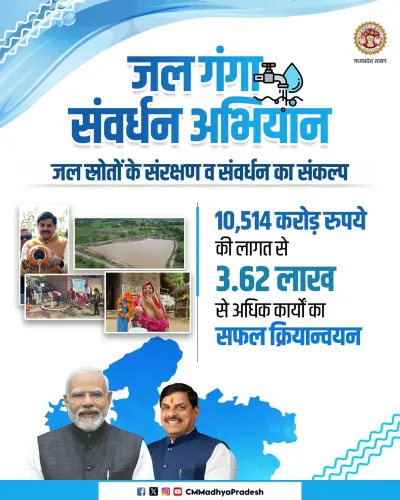
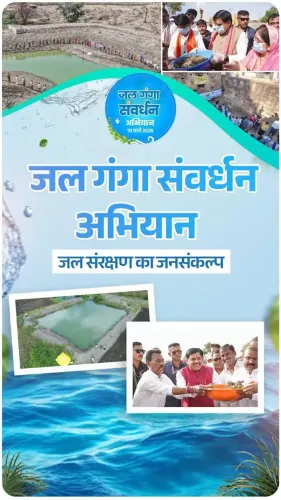
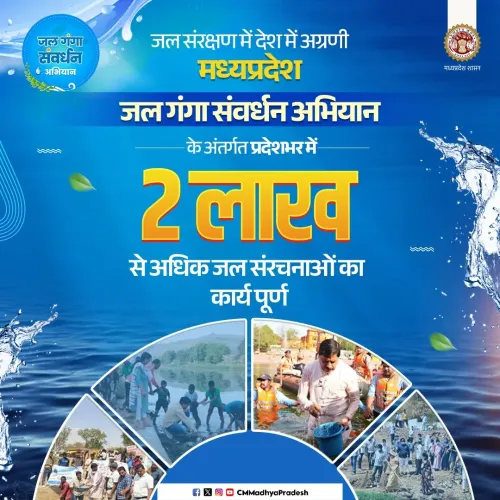
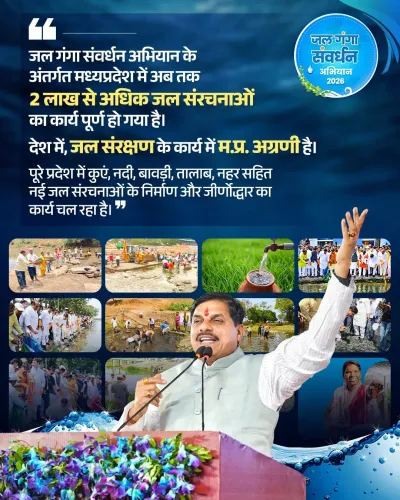
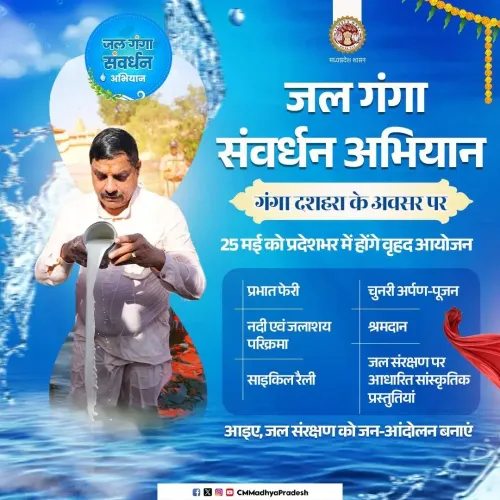
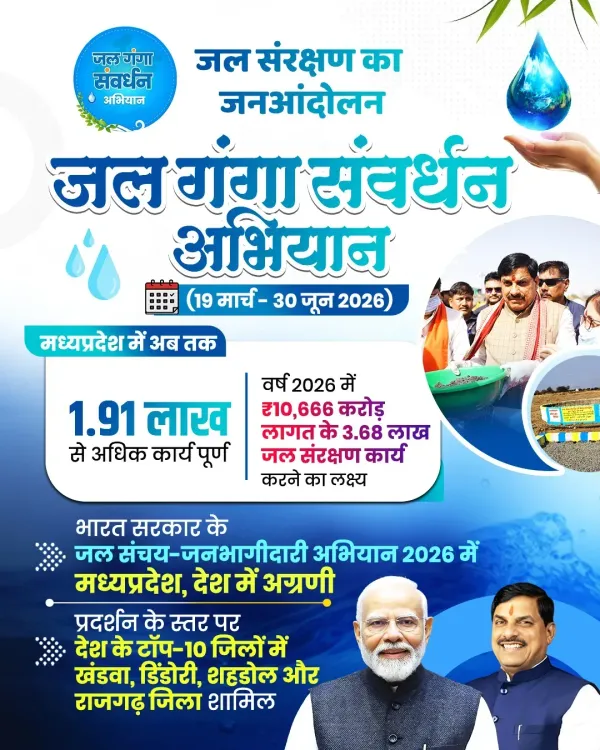
Madhya Pradesh CM Dr. Mohan Yadav announced that over 1.91 lakh water conservation works have been completed under the Jal Ganga Sanvardhan Abhiyan, which targets 3.68 lakh structures worth ₹10,666 crore by 2026, framing the drive as a people's movement for water conservation.
Key Takeaways
Madhya Pradesh has set a target of completing 3.68 lakh water conservation works under the Jal Ganga Sanvardhan Abhiyan by 2026 .
The total outlay for the campaign is ₹10,666 crore .
More than 1.91 lakh works — over half the target — have already been completed.
The campaign focuses on structures such as check dams, ponds, and recharge pits to address groundwater depletion.
Primary beneficiaries include farmers and rural communities across Madhya Pradesh .
Mohan Yadav described the initiative as a people's movement, signalling intent to sustain public mobilisation through the 2026 deadline.
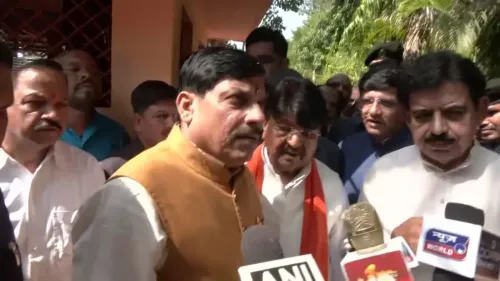
Madhya Pradesh Chief Minister Dr. Mohan Yadav on Tuesday, 26 May 2026, announced that more than 1.91 lakh water conservation works have been completed under the Jal Ganga Sanvardhan Abhiyan, a state-wide campaign targeting 3.68 lakh such works at a total outlay of ₹10,666 crore by the end of 2026. The Chief Minister described the drive as a 'जल संरक्षण का जनआंदोलन' — a people's movement for water conservation.
Context
In his post, Dr. Mohan Yadav shared that the Jal Ganga Sanvardhan Abhiyan has set an ambitious 2026 target of completing 3.68 lakh water conservation structures across Madhya Pradesh at a cost of ₹10,666 crore. Of these, over 1.91 lakh works have already been finished, indicating that more than half the target has been achieved. The campaign frames water conservation as a community-driven mission rather than a purely administrative exercise.
Policy Backdrop
Madhya Pradesh has increasingly prioritised water harvesting, groundwater recharge, and river rejuvenation as core pillars of its environmental governance. The Jal Ganga Sanvardhan Abhiyan sits within this broader framework, channelling state resources into constructing check dams, ponds, recharge pits, and other structures that capture monsoon runoff and replenish local aquifers. Similar campaigns are underway in several other Indian states grappling with groundwater depletion, and the initiative also complements central government programmes focused on watershed development and river-basin management.
The scale of the current target — 3.68 lakh individual works spread across the state — reflects the government's intent to reach villages and agricultural belts that have historically struggled with seasonal water scarcity. Budget allocations of ₹10,666 crore signal a significant fiscal commitment to the campaign ahead of its 2026 completion deadline.
Stakeholders and Impact
The primary beneficiaries of the Jal Ganga Sanvardhan Abhiyan are farmers and rural communities across Madhya Pradesh, who depend on reliable water availability for irrigation and daily use. Improved water retention in fields and village tanks can reduce crop losses during dry spells and lower dependence on diesel-powered borewells, cutting input costs for smallholder farmers. Rural women, who often bear the burden of fetching water over long distances, stand to gain directly from better local water availability.
For the state government, the campaign also carries political significance — demonstrating visible, measurable delivery on environmental promises ahead of future electoral cycles and reinforcing the BJP-led administration's credentials on rural welfare.
What's Next
With 1.91 lakh works completed and roughly 1.77 lakh remaining, the pace of execution in the coming months will be closely watched. State budget allocations and district-level progress reports will determine whether the 2026 deadline is met in full. Dr. Mohan Yadav's public communication on the campaign's milestones suggests the government intends to keep the issue in the public eye, potentially mobilising gram panchayats and civil society groups to accelerate the final stretch of the drive. The success of the Jal Ganga Sanvardhan Abhiyan could also serve as a template for scaling water conservation efforts in other water-stressed states across India.
Point of View
Costed target keeps administrative pressure on district machinery to hit the 2026 deadline. The framing of water conservation as a 'people's movement' echoes a broader BJP rhetorical strategy of presenting state-funded infrastructure drives as citizen-led missions, lending them moral weight beyond bureaucratic execution. With more than half the target achieved, the campaign is past its critical early phase, but the remaining 1.77 lakh works will test whether momentum can be sustained without the novelty of a launch. If completed on schedule, the abhiyan could become a reference point for water governance in central India, reinforcing Madhya Pradesh's positioning as a model state for rural environmental policy.
NationPress
14 Oct 2026
Frequently Asked Questions
What is the Jal Ganga Sanvardhan Abhiyan in Madhya Pradesh?
The Jal Ganga Sanvardhan Abhiyan is a Madhya Pradesh government initiative aimed at constructing water conservation structures such as check dams, ponds, and recharge pits across the state to address water scarcity and groundwater depletion.
How many water conservation works have been completed under Jal Ganga Sanvardhan Abhiyan?
As of May 2026, more than 1.91 lakh water conservation works have been completed under the Jal Ganga Sanvardhan Abhiyan, out of a total target of 3.68 lakh works.
What is the total budget for the Jal Ganga Sanvardhan Abhiyan?
The campaign has a total outlay of ₹10,666 crore, covering 3.68 lakh water conservation works to be completed by 2026.
Who will benefit from the Jal Ganga Sanvardhan Abhiyan?
Farmers and rural communities across Madhya Pradesh are the primary beneficiaries, gaining improved irrigation water availability, groundwater recharge, and reduced dependence on costly borewells.
What is CM Mohan Yadav's role in the Jal Ganga Sanvardhan Abhiyan?
As Chief Minister of Madhya Pradesh, Dr. Mohan Yadav oversees the campaign and has been actively communicating its progress publicly, framing it as a community-driven people's movement for water conservation.