CM Mohan Yadav: MP Completes 2 Lakh Water Structures Under Jal Ganga Abhiyan
Synopsis
Madhya Pradesh Chief Minister Dr. Mohan Yadav announced on 28 May 2026 that over 2 lakh water structures have been completed under the Jal Ganga Sanvardhan Abhiyan, positioning the state as India's leader in water conservation ahead of the 2026 monsoon.
Key Takeaways
Madhya Pradesh CM Dr.
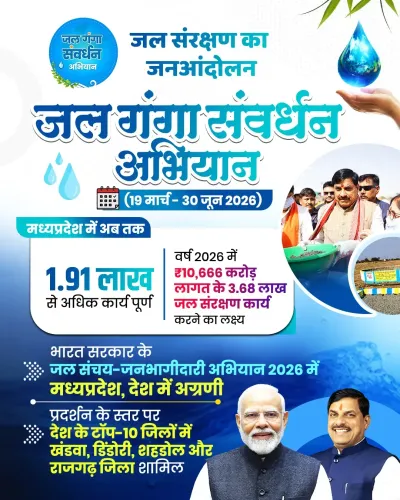
Mohan Yadav announced completion of more than 2 lakh water structures under the Jal Ganga Sanvardhan Abhiyan as of 28 May 2026 .
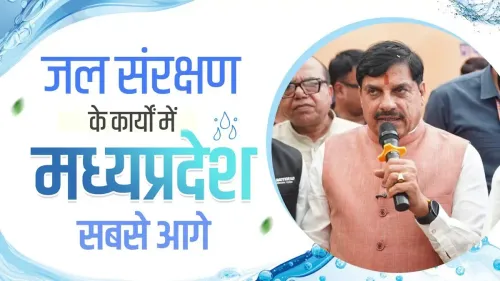
The Chief Minister claimed Madhya Pradesh leads the country in water conservation work.
The campaign involves construction and restoration of check dams, tanks, and groundwater recharge structures across the state.
The initiative aligns with the national Jal Jeevan Mission launched in 2019 , targeting rural water security.
Primary beneficiaries include farmers and rural households dependent on groundwater and surface water sources.
The upcoming 2026 monsoon will serve as a key test of the completed structures' functionality and impact.
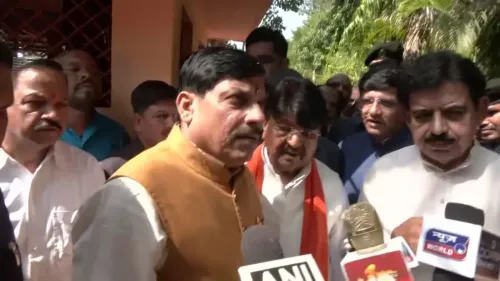
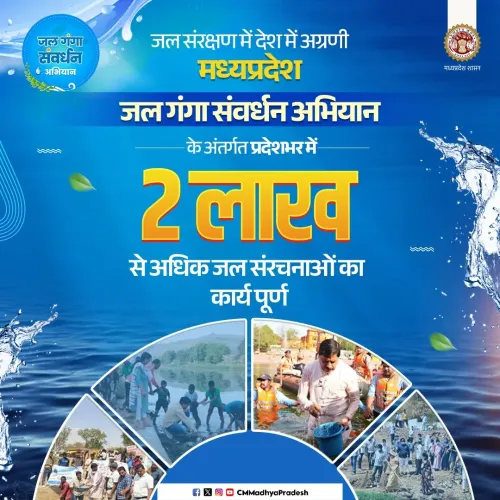
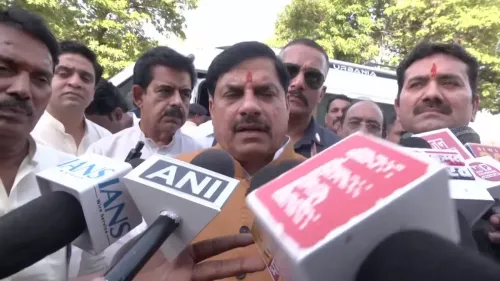
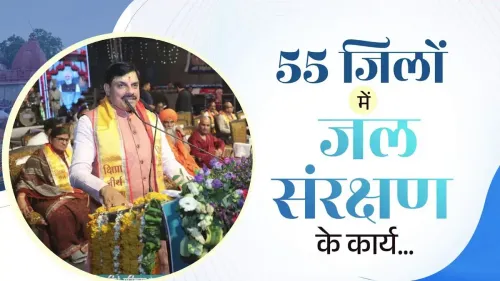
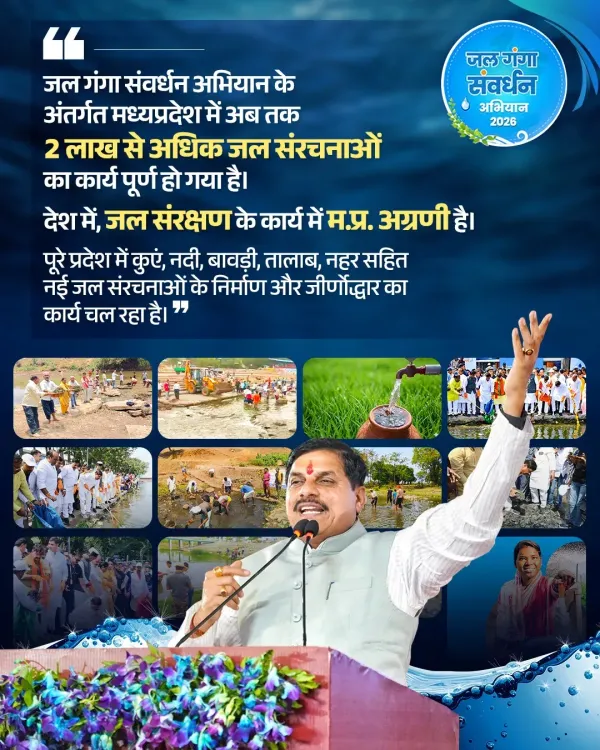
Madhya Pradesh Chief Minister Dr. Mohan Yadav announced on Thursday, 28 May 2026 that more than 2 lakh water structures have been completed across the state under the Jal Ganga Sanvardhan Abhiyan, asserting that Madhya Pradesh now leads the country in water conservation work.
Context
In his post, Dr. Yadav stated: 'Jal Ganga Sanvardhan Abhiyan ke antargat Madhya Pradesh mein ab tak 2 lakh se adhik jal sanrachnaon ka kary poorn ho gaya hai' — meaning, 'Under the Jal Ganga Sanvardhan Abhiyan, the work of more than 2 lakh water structures has been completed in Madhya Pradesh so far.' He further declared that Madhya Pradesh is at the forefront of water conservation efforts in the country.
The announcement marks a significant milestone for the state's ongoing water security push, coming ahead of the 2026 monsoon season when the functionality of these structures will face its most direct test.
Policy Backdrop
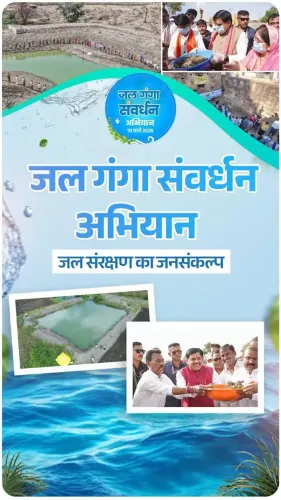
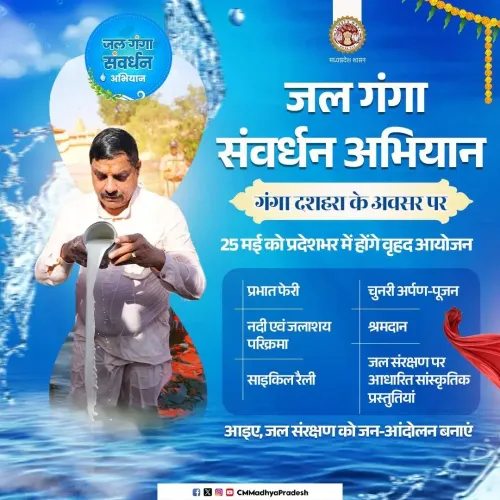
The Jal Ganga Sanvardhan Abhiyan is a state-level campaign focused on the construction and restoration of water bodies, check dams, tanks, and groundwater recharge structures across Madhya Pradesh. The campaign aligns with the broader national push for water security, including the Jal Jeevan Mission launched by the central government in 2019, which aims to provide tap water connections to rural households and has driven infrastructure expansion in states including Madhya Pradesh.
Indian states have intensified construction of watershed structures over the past several years in response to declining groundwater tables and recurring drought conditions. Madhya Pradesh, a central Indian state with extensive river systems, has consistently highlighted its performance in physical works under such programmes. These efforts are part of wider river basin management and climate adaptation strategies being pursued across the country.
Stakeholders and Impact
The primary beneficiaries of the completed water structures are farmers and rural households across Madhya Pradesh, who depend on groundwater and surface water sources for irrigation and daily use. The completion of over 2 lakh structures is expected to improve water availability in water-stressed districts and support agricultural productivity during dry spells.
State governments and rural communities across India have increasingly recognised that physical water harvesting infrastructure — when maintained and functional — can significantly reduce dependence on erratic rainfall and protect livelihoods in agrarian regions.
What's Next
Attention will now turn to the 2026 monsoon season, which will serve as a practical assessment of how many of the completed structures are operational and effectively capturing rainwater and runoff. State authorities are expected to conduct reviews of the structures' functionality and utilisation as the monsoon progresses.
Budget allocations for the maintenance of existing structures and the sanction of additional works under the campaign are also anticipated in forthcoming state-level reviews. Sustained upkeep will be critical to ensuring that the scale of construction translates into long-term water security for rural Madhya Pradesh.
Point of View
Framing a physical infrastructure count as evidence of governance performance on a nationally salient issue — water security. By claiming a national leadership rank, CM Yadav is also implicitly benchmarking his administration against other states ahead of potential electoral cycles. The milestone fits a broader pattern among BJP-governed states of publicising quantifiable targets under centrally aligned schemes to demonstrate alignment with Prime Minister Modi's water and rural infrastructure agenda. The real test, however, lies in whether the structures deliver measurable improvements in groundwater levels and agricultural resilience once the monsoon arrives.
NationPress
11 Oct 2026
Frequently Asked Questions
What is the Jal Ganga Sanvardhan Abhiyan in Madhya Pradesh?
The Jal Ganga Sanvardhan Abhiyan is a Madhya Pradesh state government campaign focused on constructing and restoring water bodies, check dams, tanks, and groundwater recharge structures to improve water security across the state.
How many water structures have been completed under the Jal Ganga Sanvardhan Abhiyan?
According to Chief Minister Dr. Mohan Yadav's announcement on 28 May 2026, more than 2 lakh water structures have been completed under the campaign in Madhya Pradesh.
Who is Dr. Mohan Yadav?
Dr. Mohan Yadav is the Chief Minister of Madhya Pradesh and a BJP leader who has held the position since December 2023, overseeing state development and conservation programmes.
How does the Jal Ganga Sanvardhan Abhiyan relate to the Jal Jeevan Mission?
The state-level Jal Ganga Sanvardhan Abhiyan complements the central government's Jal Jeevan Mission, launched in 2019, which aims to provide tap water connections to rural households and has driven water infrastructure expansion across India including in Madhya Pradesh.
Who benefits from water structures built under this campaign?
The primary beneficiaries are farmers and rural households in Madhya Pradesh who depend on groundwater and surface water for irrigation and daily needs, particularly in water-stressed districts.