CM Mohan Yadav: MP works on 2 lakh water bodies under Jal Ganga Abhiyan
Synopsis
Madhya Pradesh's CMO says the Jal Ganga Sanvardhan Abhiyan has covered over 2 lakh water structures with an outlay above ₹10,000 crore. More than 8 lakh volunteers participated in a Ganga Dussehra community drive. CM Mohan Yadav reaffirmed the state's commitment to raising groundwater levels and expanding irrigation capacity.
Key Takeaways
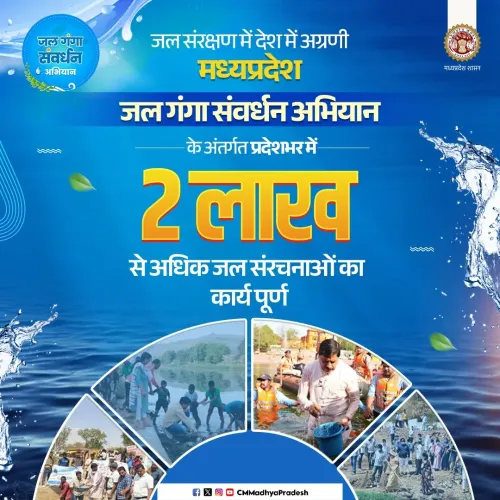
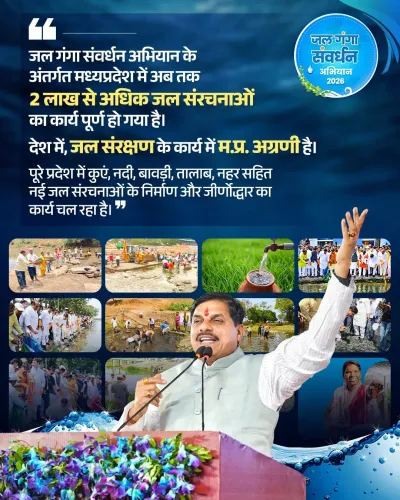
The Jal Ganga Sanvardhan Abhiyan has covered work on over 2 lakh water structures in Madhya Pradesh.
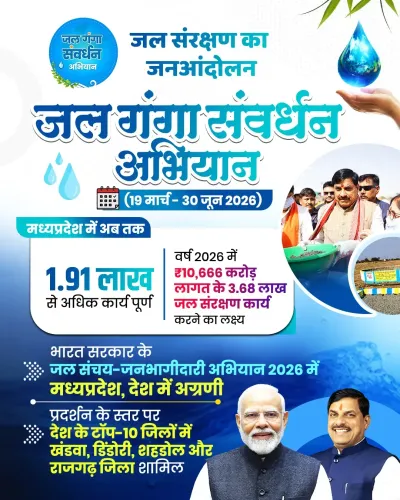
The outlay for conservation and rejuvenation of water bodies exceeds ₹10,000 crore .
Structures covered include stepwells, ponds, canals, river origin points , and Amrit Sarovar sites.
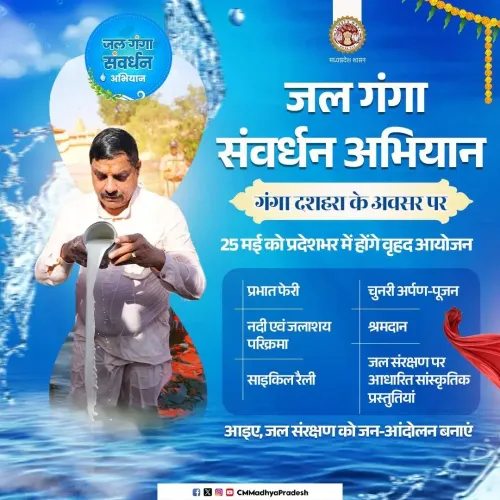
Over 8 lakh Jaldoots and volunteers participated in the mass campaign organised on Ganga Dussehra .
Mohan Yadav reaffirmed the state's goals of saving water structures, raising groundwater levels, and expanding irrigation capacity.
Madhya Pradesh positions itself among India's leading states in water conservation, aligning with national missions including Amrit Sarovar and Jal Shakti Abhiyan .
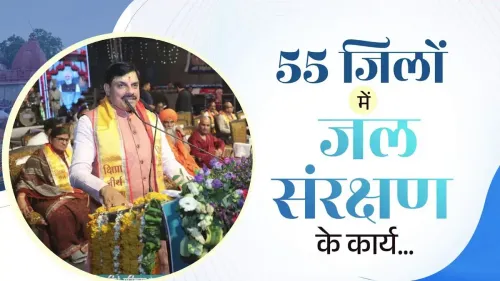
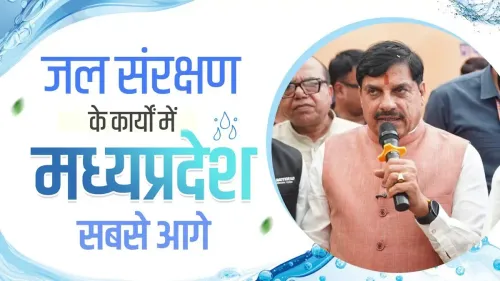
The Chief Minister's Office of Madhya Pradesh announced on Thursday, 28 May 2026 that the state has undertaken work on over 2 lakh water structures through the Jal Ganga Sanvardhan Abhiyan, with an outlay exceeding ₹10,000 crore directed at conserving and rejuvenating water sources across the state.
Speaking through the official handle, Chief Minister Dr. Mohan Yadav stated: 'जल है तो कल है' ('If there is water, there is tomorrow') — framing the campaign as a long-term commitment to saving water structures, raising groundwater levels, and expanding irrigation capacity. The post tagged Dr. Mohan Yadav's personal handle and the state's water resources department, signalling coordinated government messaging.
Context
The Jal Ganga Sanvardhan Abhiyan is a Madhya Pradesh state campaign focused on the conservation and rejuvenation of traditional and modern water bodies, including stepwells (bawdi), ponds (talab), canals (nahar), river origin points, and Amrit Sarovar sites. The campaign draws its name from the Ganga river and frames water conservation as a cultural and civic duty. Work under the campaign spans rural and semi-urban landscapes where rain-fed agriculture depends heavily on surface and groundwater availability. The announcement was made around Ganga Dussehra, an annual Hindu festival marking river worship, during which a mass community drive was organised. The CMO stated that over 8 lakh Jaldoots (water ambassadors) and volunteers participated in the collective campaign on the occasion — a mobilisation the government described as an inspiring example of public awareness around water conservation.Policy Backdrop
Madhya Pradesh's campaign sits within a broader national architecture of water conservation schemes. The Amrit Sarovar Mission, launched nationally in April 2022, targets the creation or rejuvenation of 75 ponds per district across India. The state has aligned its own campaign with this mission, counting Amrit Sarovar sites among the structures addressed. Earlier national frameworks include the Jal Shakti Abhiyan (2019) and the Atal Bhujal Yojana (approved 2018), both aimed at groundwater recharge and community-led conservation in water-stressed regions. Since 2019, the Government of India has promoted integrated water conservation combining central missions such as Namami Gange and Jal Jeevan Mission with state-level execution. Madhya Pradesh, a large central Indian state with extensive river systems, has positioned itself among states reporting high volumes of water structures created or revived, aligning with national targets for irrigation expansion and aquifer recharge.Stakeholders and Impact
The primary beneficiaries of the campaign are farmers and rural communities in Madhya Pradesh who depend on surface water bodies and groundwater for irrigation and drinking water. Restoration of stepwells, ponds, and canals directly supports rabi and kharif crop cycles in rain-fed districts. The government's emphasis on bhujal star badhana (raising groundwater levels) is particularly significant in districts where over-extraction has historically lowered aquifer levels. The involvement of 8 lakh-plus volunteers as Jaldoots reflects a deliberate community-participation model, echoing similar drives in states such as Rajasthan and Gujarat. Such mobilisation on festival occasions has been a recurring feature of state-level environment campaigns, combining cultural resonance with civic outreach.What's Next
The state government has indicated that work on water structures is ongoing, with conservation and augmentation efforts continuing beyond the Ganga Dussehra drive. Observers will watch for updates from the Central Ground Water Board on groundwater trends in Madhya Pradesh and for allocations in the next state budget that could signal whether the ₹10,000-crore-plus outlay will be expanded. The broader test for the campaign will be whether the scale of infrastructure work translates into measurable improvements in groundwater levels and irrigated area across the state's districts.Point of View
Timed to a culturally resonant occasion — Ganga Dussehra — to maximise public visibility. The scale cited, over 2 lakh structures and ₹10,000 crore, places the campaign among the largest sub-national water conservation drives in India and signals the state's intent to benchmark itself against national mission targets. For CM Mohan Yadav, who took office in December 2023, the campaign offers a high-visibility governance narrative ahead of potential electoral cycles, linking ecological stewardship with rural livelihoods. The real measure of success, however, will come from independent groundwater and irrigation data rather than mobilisation numbers alone.
NationPress
19 Sept 2026
Frequently Asked Questions
What is the Jal Ganga Sanvardhan Abhiyan in Madhya Pradesh?
The Jal Ganga Sanvardhan Abhiyan is a Madhya Pradesh state campaign for conserving and rejuvenating water bodies including stepwells, ponds, canals, river origin points, and Amrit Sarovar sites, with an outlay exceeding ₹10,000 crore.
How many water structures have been covered under the Jal Ganga Sanvardhan Abhiyan?
According to the Chief Minister's Office of Madhya Pradesh, work has been undertaken on over 2 lakh water structures under the campaign.
What is Ganga Dussehra and why is it relevant to this campaign?
Ganga Dussehra is an annual Hindu festival centred on river worship. Madhya Pradesh organised a mass community conservation drive on the occasion in 2026, drawing participation from over 8 lakh Jaldoots and volunteers.
Who are Jaldoots in the Madhya Pradesh water campaign?
Jaldoots, meaning 'water ambassadors', are community volunteers mobilised by the Madhya Pradesh government to participate in water conservation awareness and action drives under the Jal Ganga Sanvardhan Abhiyan.
How does Madhya Pradesh's campaign connect to national water schemes?
The campaign aligns with central missions including the Amrit Sarovar Mission (2022), Jal Shakti Abhiyan (2019), and Atal Bhujal Yojana (2018), all of which promote water body rejuvenation and groundwater recharge across Indian states.