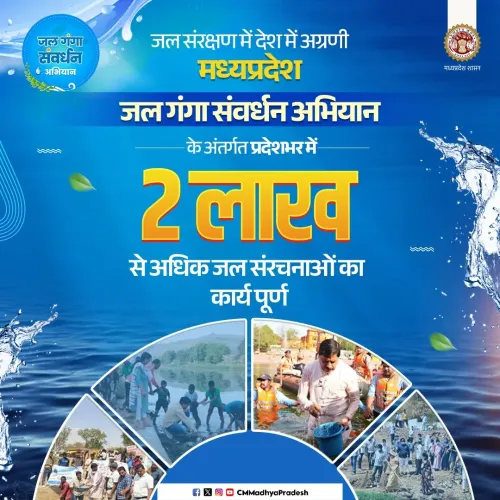
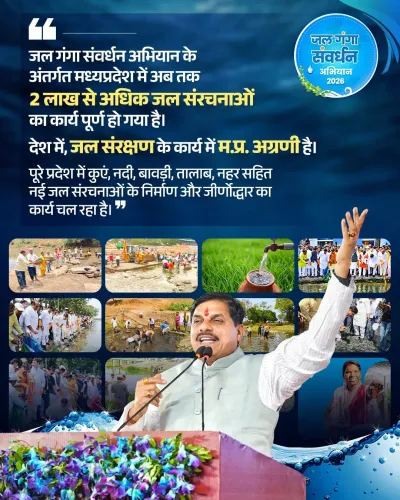
MP CM Mohan Yadav: Jal Ganga Abhiyan crosses 2 lakh water structures
Synopsis
The Chief Minister's Office of Madhya Pradesh says the Jal Ganga Sanvardhan Abhiyan has covered over 2 lakh water structures through construction, revival and conservation, with CM Mohan Yadav describing it as a fast-moving people's movement placing the state at the forefront of water conservation in India.
Key Takeaways
The Jal Ganga Sanvardhan Abhiyan in Madhya Pradesh has addressed more than 2 lakh (200,000) water structures through construction, revival, and conservation.
Mohan Yadav described the campaign as a jan abhiyan (people's movement) progressing continuously.
The campaign aligns with the national Jal Shakti Abhiyan launched in 2019 to counter groundwater decline and monsoon variability.
Primary beneficiaries are farmers and rural communities across Madhya Pradesh who depend on local water bodies for irrigation and drinking water.
No specific expansion target or funding figure was announced; district-wise impact data is yet to be made public.
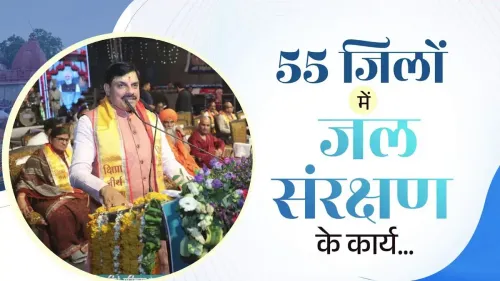
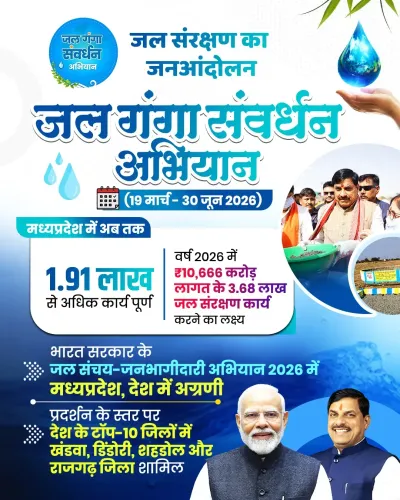
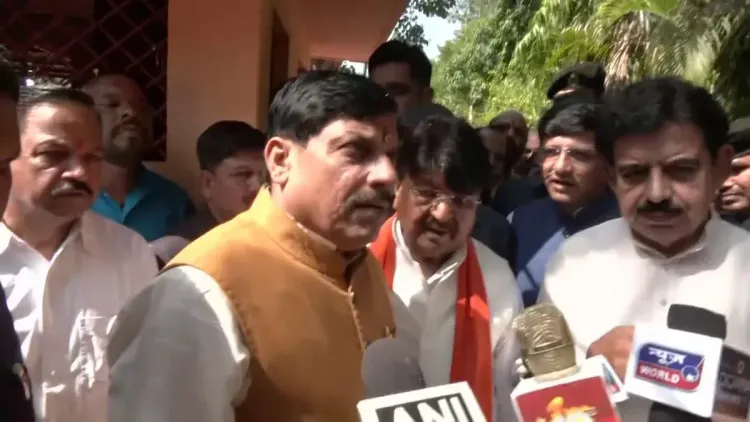
The Chief Minister's Office of Madhya Pradesh announced on Thursday, 18 June 2026, that the state's flagship Jal Ganga Sanvardhan Abhiyan has covered more than 2 lakh water structures through construction, revival, and conservation work, positioning Madhya Pradesh as a leader in water conservation.
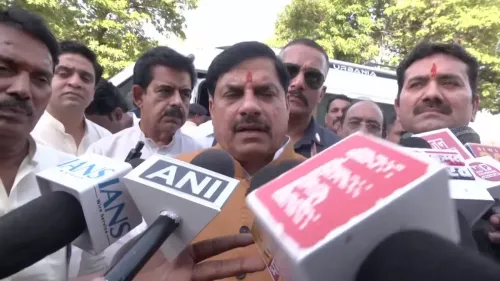
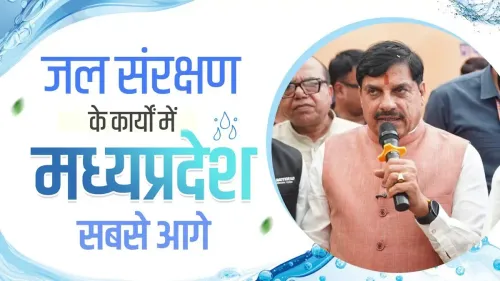
Quoting Chief Minister Dr. Mohan Yadav, the post stated: 'मध्यप्रदेश जल संरक्षण के क्षेत्र में अग्रणी है' ('Madhya Pradesh is at the forefront in the field of water conservation'). The CM added that the campaign is 'continuously moving forward at pace,' underscoring the state government's intent to sustain momentum.
Context
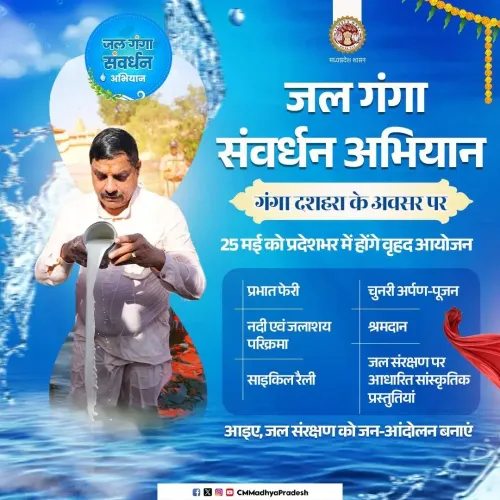
The Jal Ganga Sanvardhan Abhiyan is a Madhya Pradesh state-level campaign centred on the construction, rejuvenation, and protection of water bodies and related infrastructure. The announcement places the cumulative count of structures addressed under the campaign at over 2 lakh (200,000), a figure the Chief Minister's Office cited as evidence of the state's leading role in water conservation among Indian states. The campaign's name invokes the Ganga as a cultural and ecological symbol, framing water conservation as both a civic duty and a people's movement — jan abhiyan — rather than a purely administrative exercise.Policy Backdrop
The Jal Ganga Sanvardhan Abhiyan is broadly aligned with the national Jal Shakti Abhiyan, launched by the Union government in 2019, which sought to promote rainwater harvesting and groundwater recharge across water-stressed districts. Several Indian states have since run community-driven conservation missions in response to declining groundwater tables and increasing monsoon variability. Madhya Pradesh, a central Indian state with extensive river systems and an economy heavily dependent on agriculture, has framed its approach as a public-participation model. Dr. Mohan Yadav, who has served as Chief Minister since December 2023, has positioned water security as a central plank of his administration's development agenda.Stakeholders and Impact
The primary beneficiaries of the Jal Ganga Sanvardhan Abhiyan are farmers and rural communities across Madhya Pradesh, who depend on functional water bodies for irrigation, livestock, and drinking water. The revival and construction of local water structures — including ponds, check dams, and step-wells — directly supports groundwater recharge and reduces dependence on erratic monsoon patterns. By framing the campaign as a jan abhiyan (people's movement), the state government is also signalling an intent to build community ownership over water assets, which conservation practitioners consider essential for long-term upkeep of such infrastructure.What's Next
The Chief Minister's Office has described the campaign as ongoing and gathering pace, but has not announced a specific target or deadline for the next phase. Observers will watch for district-wise impact assessments that break down the 2 lakh-plus structures by type and geography, as well as any fresh funding allocations or expansion announcements tied to the upcoming monsoon season. The state's ability to publish verifiable, granular data will be key to substantiating its claim of national leadership in water conservation.Point of View
Lending political visibility to what are fundamentally administrative programmes. By invoking the imagery of a 'people's movement,' the Yadav government is attempting to cast infrastructure work as citizen-led, a framing that strengthens its grassroots credentials. The 2 lakh figure, while significant if verified, will need district-level disaggregation to be taken seriously by policy analysts and opposition scrutineers alike. More broadly, the announcement reflects the increasing salience of water security as an electoral issue in agriculture-dependent central Indian states.
NationPress
19 Sept 2026
Frequently Asked Questions
What is the Jal Ganga Sanvardhan Abhiyan in Madhya Pradesh?
The Jal Ganga Sanvardhan Abhiyan is a Madhya Pradesh state campaign focused on the construction, revival, and conservation of water bodies and structures such as ponds, check dams, and step-wells, aimed at improving water security for farmers and rural communities.
How many water structures have been covered under the Jal Ganga Sanvardhan Abhiyan?
According to the Chief Minister's Office of Madhya Pradesh, more than 2 lakh (200,000) water structures have been addressed through construction, revival, and conservation work under the campaign as of June 2026.
Who is the Chief Minister of Madhya Pradesh in 2026?
Dr. Mohan Yadav is the Chief Minister of Madhya Pradesh, a position he has held since December 2023.
How is the Jal Ganga Sanvardhan Abhiyan related to the national Jal Shakti Abhiyan?
The Madhya Pradesh campaign is aligned with the Union government's Jal Shakti Abhiyan, launched in 2019, which promotes rainwater harvesting and groundwater recharge across water-stressed districts. The state campaign builds on the national framework with a community-participation model.
Who benefits from the Jal Ganga Sanvardhan Abhiyan?
Farmers and rural communities in Madhya Pradesh are the primary beneficiaries, as revived and newly constructed water structures support irrigation, livestock needs, drinking water access, and groundwater recharge.