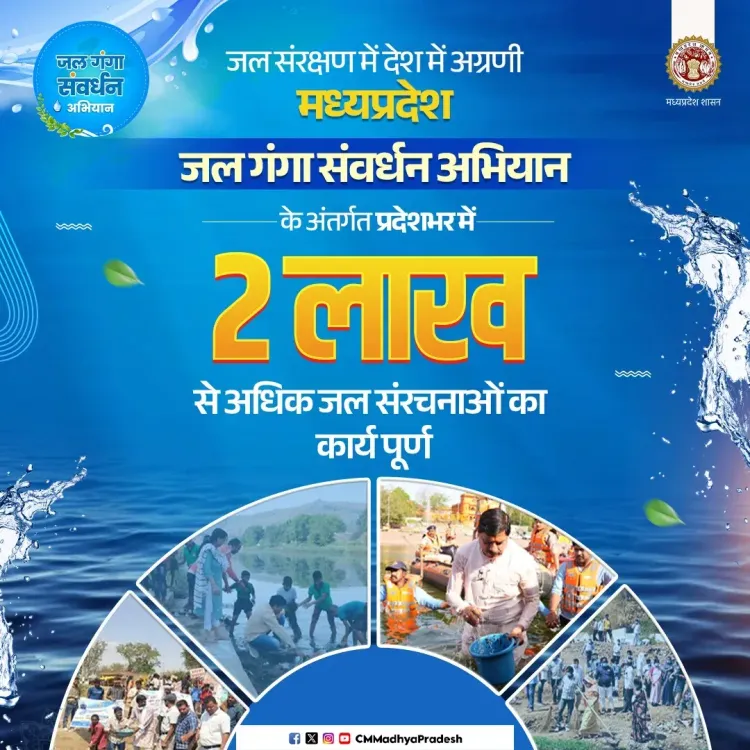
CM Mohan Yadav: MP completes 2 lakh water structures
Synopsis
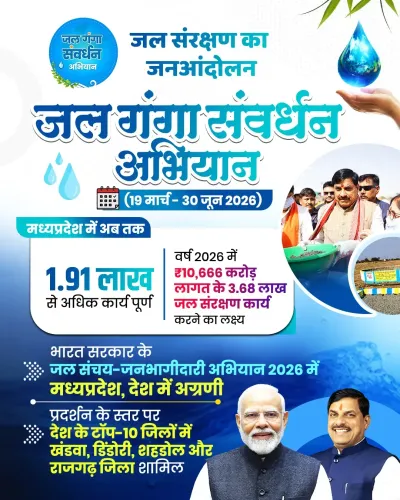
Madhya Pradesh's Chief Minister's Office has announced the completion of over 2 lakh water conservation structures under the Jal Ganga Sanvardhan Abhiyan, highlighting community participation as the cornerstone of the state's water security drive under CM Dr. Mohan Yadav.
Key Takeaways
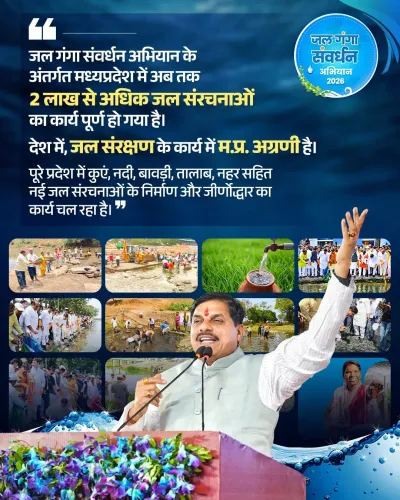
The Chief Minister's Office of Madhya Pradesh announced on 29 May 2026 that more than 2 lakh water conservation structures have been completed statewide.
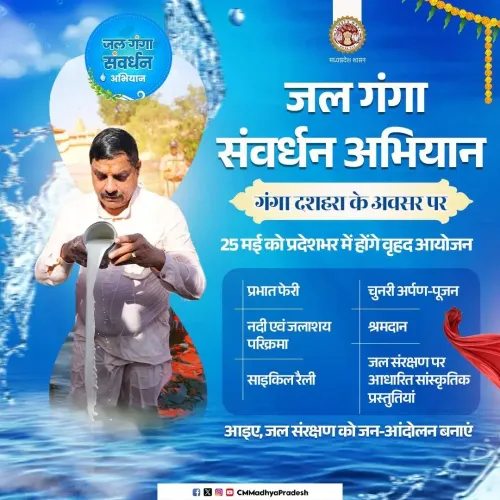
The milestone falls under the Jal Ganga Sanvardhan Abhiyan , a community-participation campaign for building and restoring water harvesting infrastructure.
Mohan Yadav was directly tagged in the announcement, signalling high-level political ownership of the initiative.
Madhya Pradesh's river systems feed both the Ganga and Narmada basins, giving local recharge works inter-state significance.
Key beneficiaries include farmers and rural communities in water-stressed regions such as Bundelkhand and Malwa .
Post-monsoon groundwater data and the next state budget will be the key metrics to watch for the campaign's real-world impact.
The Chief Minister's Office of Madhya Pradesh announced on Friday, 29 May 2026, that the state has completed work on more than 2 lakh (200,000) water conservation structures under the Jal Ganga Sanvardhan Abhiyan, marking a significant milestone in community-led water conservation across the state.
Context
The post, shared from the official handle of the Chief Minister's Office of Madhya Pradesh and tagging Chief Minister Dr. Mohan Yadav and the Madhya Pradesh Water Resources Department, declared: 'Madhyapradesh mein janabhagidari se jal sanrakshan ka sankalp ho raha sakar' ('The resolve for water conservation through public participation is being realised in Madhya Pradesh'). The announcement underlines the state government's push to mobilise communities as active partners in building and restoring water harvesting infrastructure.Policy Backdrop
The Jal Ganga Sanvardhan Abhiyan is a Madhya Pradesh government campaign designed to promote the creation and repair of small-scale water harvesting structures — including ponds, check-dams, and recharge pits — across river basins in the state. Madhya Pradesh sits at a critical hydrological juncture: its river systems feed both the Ganga and the Narmada basins, making local groundwater recharge directly relevant to inter-state water security and climate resilience. State governments in Madhya Pradesh have run community pond and check-dam programmes since the mid-2010s, targeting groundwater-stressed regions such as Bundelkhand and Malwa, and this campaign represents a continuation and scaling of that lineage.Stakeholders and Impact
The primary beneficiaries of the completed structures are farmers and rural communities who depend on groundwater for irrigation and drinking water. The campaign's model combines state budget outlays with village-level labour contributions, creating assets intended to outlast a single monsoon cycle. Across India, several states have adopted similar public-participation drives as part of national river-rejuvenation and drought-proofing goals; Madhya Pradesh's scale — crossing the 2 lakh mark — positions it among the more ambitious state-level efforts in this space. For farming communities in rain-shadow and semi-arid pockets of the state, functional water structures can mean the difference between a viable kharif crop and a distress season.What's Next
Attention will now turn to post-monsoon groundwater data from Madhya Pradesh, which will offer the first measurable indicator of whether the completed structures are translating into aquifer recharge. Analysts and policymakers will also watch the state's upcoming budget deliberations for fresh allocations toward the next phase of the Jal Ganga Sanvardhan Abhiyan. CM Dr. Mohan Yadav, who has championed the initiative since taking office in December 2023, is expected to use the milestone to build momentum for wider community participation ahead of the next agricultural season.Point of View
The Yadav administration aligns itself with a broader national narrative of citizen-led development that resonates in agrarian constituencies. The real test, however, lies in post-monsoon groundwater readings: if aquifer levels in Bundelkhand and Malwa show measurable improvement, the campaign gains durable policy credibility. If not, the milestone risks being read as an exercise in optics rather than outcomes.
NationPress
12 Oct 2026
Frequently Asked Questions
What is the Jal Ganga Sanvardhan Abhiyan in Madhya Pradesh?
The Jal Ganga Sanvardhan Abhiyan is a Madhya Pradesh government campaign that promotes community-led construction and restoration of water harvesting structures such as ponds, check-dams, and recharge pits across the state's river basins, with the goal of improving groundwater levels and agricultural water security.
How many water structures have been completed under the Jal Ganga Sanvardhan Abhiyan?
According to the Chief Minister's Office of Madhya Pradesh, more than 2 lakh (200,000) water conservation structures have been completed across the state as of 29 May 2026.
Who is the Chief Minister of Madhya Pradesh overseeing this water campaign?
Dr. Mohan Yadav has been the Chief Minister of Madhya Pradesh since December 2023 and is the political head overseeing the Jal Ganga Sanvardhan Abhiyan.
Which regions of Madhya Pradesh benefit most from water conservation structures?
Water-stressed regions such as Bundelkhand and Malwa are among the primary beneficiaries, as these areas have historically faced groundwater decline and are most dependent on small-scale harvesting infrastructure for irrigation and drinking water.
How does Madhya Pradesh's water conservation campaign connect to national goals?
Madhya Pradesh's river systems feed both the Ganga and Narmada basins, so local groundwater recharge efforts support national river-rejuvenation and drought-proofing objectives, aligning with broader central government water security frameworks.