CM Bhajanlal Launches Vande Ganga Water Drive in Rajasthan
Synopsis
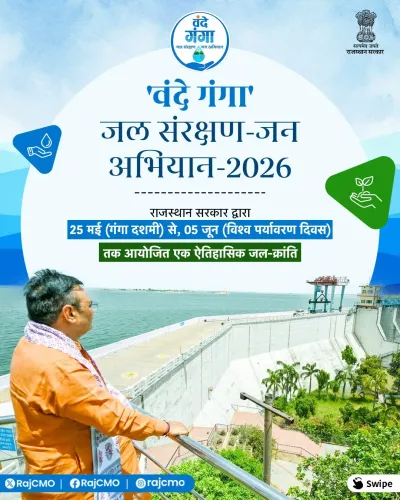
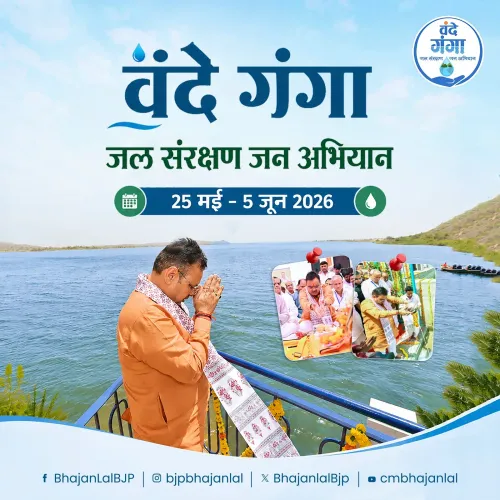
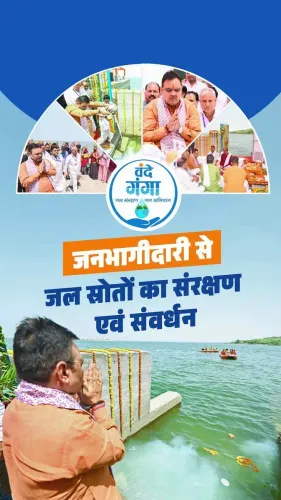
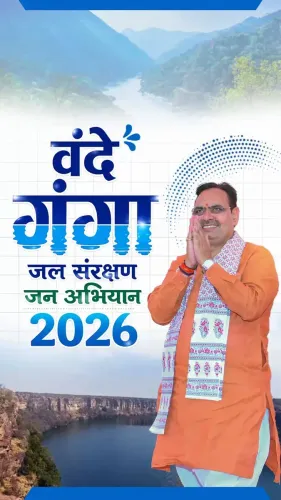
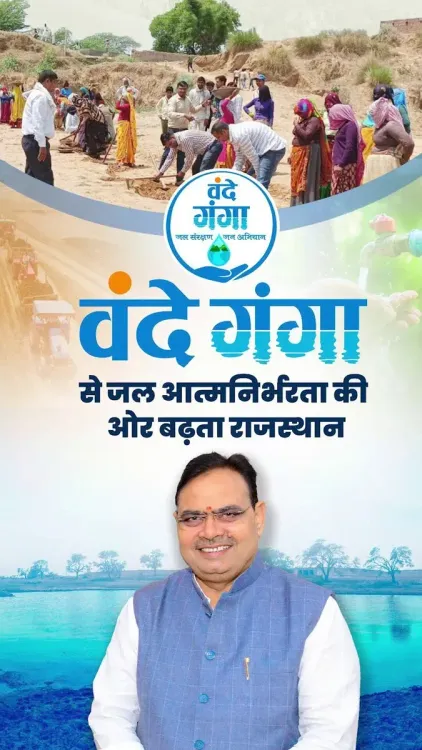
The Chief Minister's Office of Rajasthan has promoted the Vande Ganga Jal Sanrakshan Jan Abhiyan, CM Bhajanlal Sharma's campaign to make Rajasthan water self-reliant through public participation. The initiative urges citizens to treat water conservation as a mass movement and pledge to protect every drop for future generations.
Key Takeaways
The Chief Minister's Office of Rajasthan announced the Vande Ganga Jal Sanrakshan Jan Abhiyan on 30 May 2026 .
The campaign is attributed to the vision of CM Bhajanlal Sharma and aims to make Rajasthan water self-reliant through community participation.
Rajasthan is India's largest state by area and faces chronic groundwater depletion and monsoon dependence.
The campaign continues a policy lineage that includes the Mukhya Mantri Jal Swavalamban Abhiyan launched in 2016 .
Primary beneficiaries are farmers and rural households across Rajasthan's arid districts.
District-level rollout metrics and possible integration with the Jal Jeevan Mission will be key indicators of the campaign's progress.
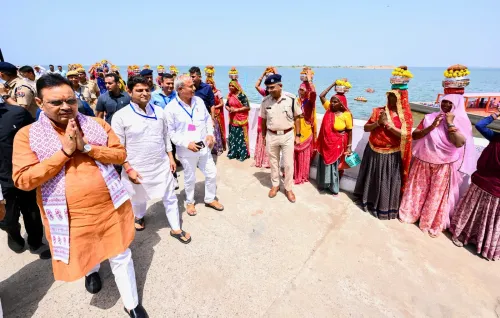
The Chief Minister's Office of Rajasthan on Saturday, 30 May 2026, announced the 'Vande Ganga Jal Sanrakshan Jan Abhiyan' — a state-wide community water-conservation campaign attributed to the vision of Chief Minister Bhajanlal Sharma — calling on citizens to transform water conservation into a mass movement across Rajasthan.
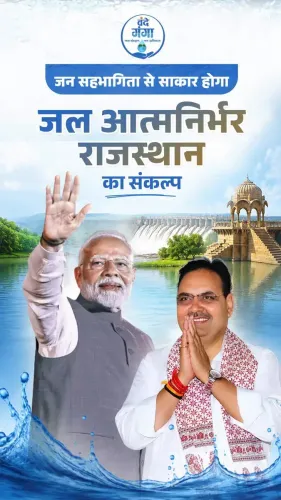
The official post declared: 'Janbhagidari se banega Jal Aatmanirbhar Rajasthan' ('A water self-reliant Rajasthan will be built through public participation'), framing the campaign as a people-first initiative rather than a government infrastructure drive alone. It urged every citizen to 'understand the value of every drop and take a pledge to conserve water for future generations.'
Context
Rajasthan is India's largest state by area and among its most water-stressed. The state sits predominantly in arid and semi-arid zones, is heavily dependent on monsoon recharge, and has faced chronic groundwater depletion across several districts for decades. These structural challenges make community-level conservation not merely aspirational but operationally necessary. The Vande Ganga Jal Sanrakshan Jan Abhiyan is positioned as CM Bhajanlal Sharma's flagship people's campaign on water, seeking to achieve jal aatmanirbharta — water self-reliance — by mobilising citizens alongside government machinery.Policy Backdrop
Rajasthan has a documented history of community-driven water conservation. The Mukhya Mantri Jal Swavalamban Abhiyan, launched in 2016, set an early precedent by encouraging village-level water harvesting structures and demonstrated that jan bhagidari (public participation) models could yield measurable results in rural water security. The current campaign continues that lineage, with the government framing conservation as a social movement rather than a top-down project. This approach mirrors strategies adopted in other water-scarce Indian states, where citizen ownership of local water bodies has proved more durable than purely state-funded interventions. Potential integration with central programmes such as the Jal Jeevan Mission could amplify the campaign's reach and funding base.Stakeholders and Impact
Farmers and rural households stand as the primary beneficiaries of improved groundwater availability and reliable water access. For farming communities in Rajasthan's arid districts, even marginal improvements in local water storage can affect cropping decisions and livelihoods across seasons. Urban residents and civic bodies are equally implicated, as the campaign's language — 'let us all come together' — signals an intent to build a broad coalition beyond traditional rural water-management audiences. Community structures such as johads, baoris, and check dams are likely focal points for on-ground mobilisation.What's Next
Attention will now turn to district-level rollout: the number of conservation structures built, volumes of water harvested, and the depth of community enrolment will be the metrics by which the campaign's credibility is judged. State budget allocations and review meetings are expected to reveal whether Vande Ganga receives dedicated funding lines or is integrated within existing scheme heads. If the campaign succeeds in sustaining public momentum beyond its launch phase, it could serve as a replicable model for other water-scarce states and strengthen Rajasthan's positioning in national water-governance discussions. The pledge to conserve water 'for future generations' sets a long-horizon accountability standard that observers will track through successive monsoon cycles.Point of View
' CM Bhajanlal Sharma positions his government as an enabler of collective action rather than a sole provider — a framing that distributes accountability while generating grassroots visibility. This mirrors similar community-conservation narratives deployed across water-scarce Indian states, suggesting the approach is as much about political optics as hydrological outcomes. The campaign's true test will come in the post-monsoon audit: whether conservation structures are built, groundwater tables respond, and citizen engagement outlasts the launch momentum.
NationPress
22 Sept 2026
Frequently Asked Questions
What is the Vande Ganga Jal Sanrakshan Jan Abhiyan?
The Vande Ganga Jal Sanrakshan Jan Abhiyan is a Rajasthan state campaign promoted by CM Bhajanlal Sharma to achieve water self-reliance through community participation in water conservation.
Who launched the Vande Ganga water conservation campaign?
The campaign is attributed to the vision of Chief Minister Bhajanlal Sharma and was promoted by the Chief Minister's Office of Rajasthan.
Why does Rajasthan need a water conservation campaign?
Rajasthan is India's largest state by area and is predominantly arid, facing chronic groundwater depletion and heavy dependence on monsoon rainfall, making water conservation a pressing priority.
How is Vande Ganga different from earlier Rajasthan water schemes?
It continues the tradition of the 2016 Mukhya Mantri Jal Swavalamban Abhiyan but places greater emphasis on framing conservation as a mass social movement involving all citizens, not just rural communities.
What will success look like for the Vande Ganga campaign?
Success will be measured by district-level conservation structures built, groundwater levels, community enrolment numbers, and possible integration with central schemes like Jal Jeevan Mission.