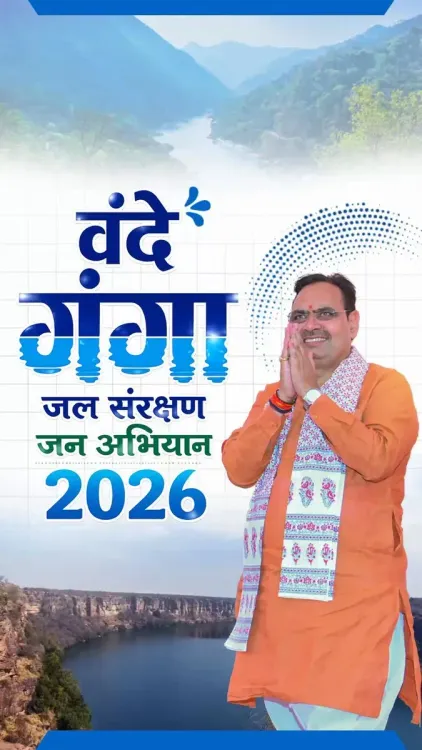
CM Bhajan Lal launches Vande Ganga water drive in Rajasthan
Synopsis
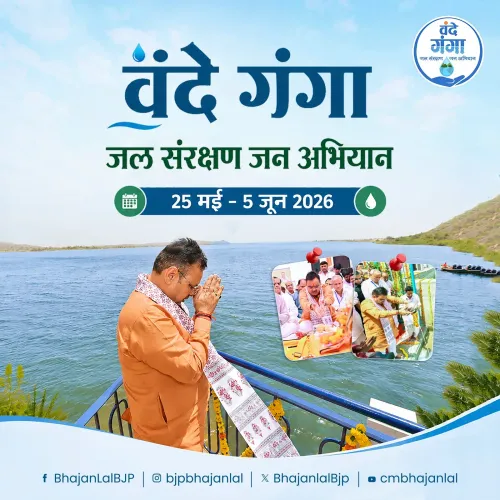
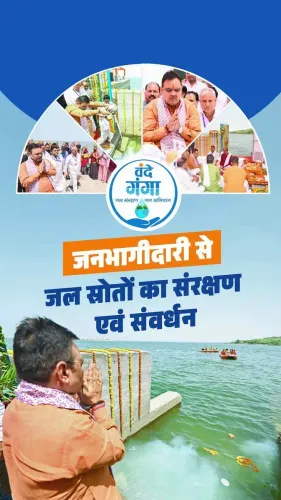
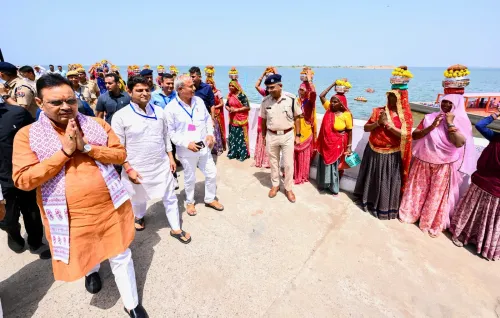
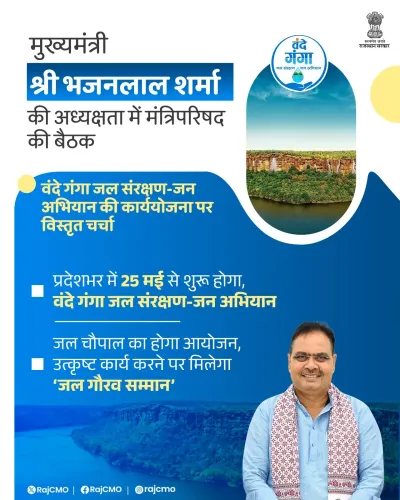
Rajasthan CM Bhajan Lal Sharma has launched the 'Vande Ganga Jal Sanrakshan Jan Abhiyan' on Ganga Dussehra, 25 May 2026, calling citizens to pledge water conservation until World Environment Day on 5 June. The campaign aims to make water self-reliance a mass movement in water-scarce Rajasthan.
Key Takeaways
Bhajan Lal Sharma launched the Vande Ganga Jal Sanrakshan Jan Abhiyan on 25 May 2026 , coinciding with Ganga Dussehra .
The campaign runs for 12 days , closing on 5 June 2026 — World Environment Day .
The drive aims to convert water conservation into a jan andolan (mass movement) across Rajasthan .
Goals include jal aatmanirbharta (water self-reliance) and building a harit (green) Rajasthan .
The campaign follows earlier Rajasthan water initiatives including the Mukhya Mantri Jal Swavalamban Abhiyan (2016) and the national Jal Jeevan Mission (2019) .
Citizens and farmers across Rajasthan are the primary target audience for participation.
Rajasthan Chief Minister Bhajan Lal Sharma on Monday, 25 May 2026 announced the launch of the 'Vande Ganga Jal Sanrakshan Jan Abhiyan', a state-wide water conservation campaign aimed at making water self-reliance a mass movement across Rajasthan. The campaign runs from Ganga Dussehra (25 May) to World Environment Day (5 June 2026), a twelve-day window chosen to align civic action with two significant cultural and environmental observances.
Context
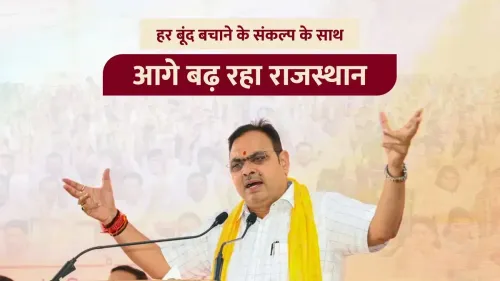
Posting on X in Hindi, Sharma called on citizens to pledge to save every drop of water and participate in building a 'Viksit Rajasthan' (developed Rajasthan). His post read: 'Rajasthan sarkar... jal aatmanirbharta evam harit Rajasthan ke nirmaan ki disha mein prabhavi kadam utha rahi hai' — meaning the Rajasthan government is taking effective steps towards water self-reliance and a greener Rajasthan through this campaign. The hashtags #VandeGanga, #JalSankalp, and #AapnoAgrani_Rajasthan accompanied the post, signalling a coordinated digital mobilisation push.
Policy Backdrop
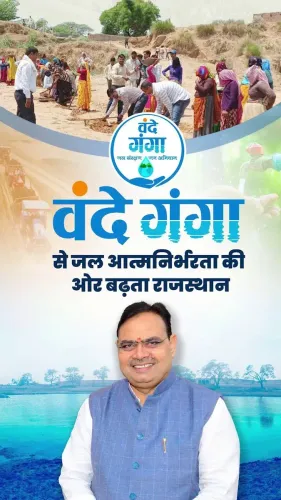
Rajasthan, a largely arid and semi-arid state in northwestern India, has faced chronic water scarcity for decades, making water harvesting a recurring governance priority. The state had previously launched the Mukhya Mantri Jal Swavalamban Abhiyan in 2016, which focused on village-level water harvesting structures, and has been a participant in the national Jal Jeevan Mission launched in 2019 to deliver piped water to rural households. The new Vande Ganga campaign builds on this lineage, framing water conservation explicitly as a 'jan andolan' — a people's movement — rather than a top-down administrative exercise.
The choice of Ganga Dussehra as the launch date carries symbolic weight: the Hindu festival commemorates the descent of the sacred river Ganga to earth, making it a culturally resonant moment to invoke water stewardship. Closing the campaign on 5 June, World Environment Day, anchors it within the global environmental calendar and signals alignment with international sustainability goals.
Stakeholders and Impact
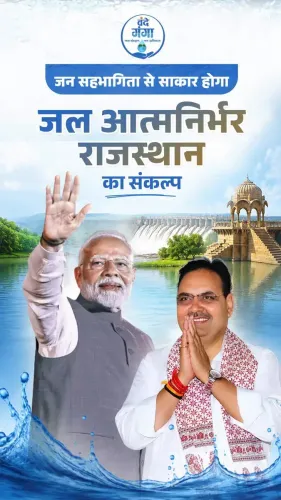
The campaign's primary audience is Rajasthan's residents, particularly farmers in water-stressed districts who depend on seasonal rainfall and groundwater for both agriculture and daily needs. By framing the drive as a mass movement, the government is seeking broad community participation — from urban households to rural panchayats — rather than limiting action to official water departments. Civil society groups and local self-government bodies are expected to serve as mobilisation partners during the twelve-day window.
The dual emphasis on jal aatmanirbharta (water self-reliance) and a harit Rajasthan (green Rajasthan) also signals an environmental co-benefit framing, linking water conservation to broader ecological restoration goals in a state where desertification and groundwater depletion are documented concerns.
What's Next
The campaign concludes on 5 June 2026, after which participation data and measurable conservation outcomes — such as water bodies restored, pledges collected, or harvesting structures created — will be the key indicators of its reach. How the government translates the campaign's momentum into longer-term water policy or infrastructure investment will determine whether the Vande Ganga drive marks a sustained shift or remains a time-bound awareness exercise. Observers will watch whether the jan andolan framing translates into verifiable community-level action on the ground.
Point of View
Ganga Dussehra — to widen public buy-in beyond bureaucratic channels. Sharma, who took office in December 2023, is using the drive to reinforce his government's development narrative under the 'Viksit Rajasthan' brand, aligning state messaging with the national 'Viksit Bharat' framework. The jan andolan framing is not new to Rajasthan — successive governments have used time-bound campaigns to address the state's structural water deficit — but the dual bookending with a Hindu festival and a global observance reflects a sharper communications strategy. Whether the campaign produces measurable outcomes or remains primarily a mobilisation exercise will shape how it is judged ahead of the next electoral cycle.
NationPress
24 Sept 2026
Frequently Asked Questions
What is the Vande Ganga Jal Sanrakshan Jan Abhiyan?
The Vande Ganga Jal Sanrakshan Jan Abhiyan is a Rajasthan state government campaign launched on 25 May 2026 to promote water conservation as a mass movement, with the goal of achieving water self-reliance and a greener Rajasthan.
When does the Vande Ganga campaign start and end?
The campaign began on 25 May 2026 (Ganga Dussehra) and runs until 5 June 2026, which is World Environment Day — a 12-day drive.
Who launched the Vande Ganga water conservation campaign?
Rajasthan Chief Minister Bhajan Lal Sharma announced and launched the campaign, calling on citizens to pledge to save every drop of water.
Why is Rajasthan focusing on water conservation campaigns?
Rajasthan is a largely arid and semi-arid state with chronic water scarcity. The government has a history of water harvesting initiatives dating back to the Mukhya Mantri Jal Swavalamban Abhiyan of 2016 and participates in the national Jal Jeevan Mission.
What does 'jal aatmanirbharta' mean in the Vande Ganga campaign?
'Jal aatmanirbharta' means water self-reliance — the campaign's goal of enabling Rajasthan's communities, especially farmers, to meet their water needs through local conservation and harvesting rather than dependence on external sources.