CM Bhajan Lal Pushes Vande Ganga Water Drive in Rajasthan
Synopsis
Rajasthan Chief Minister Bhajan Lal Sharma on 31 May 2026 invoked the Vande Ganga Jal Sanrakshan Jan Abhiyan, framing mass public participation and collective resolve as the twin pillars of his government's push for a water self-reliant Rajasthan — a goal long sought across the arid state's political history.
Key Takeaways
CM Bhajan Lal Sharma publicly reaffirmed the Vande Ganga Jal Sanrakshan Jan Abhiyan on 31 May 2026 as the state's flagship water conservation drive.
Rajasthan , covering large parts of the Thar Desert , faces chronic groundwater depletion and drought vulnerability.
The abhiyan continues a policy lineage that includes the Mukhya Mantri Jal Swavalamban Abhiyan launched in 2016 .
The national Jal Jeevan Mission (2019) provides the supply-side complement to this state-level conservation campaign.
Primary beneficiaries are farmers and rural households in semi-arid districts dependent on over-exploited aquifers.
District-level rollout and pre-monsoon water body rejuvenation works are the immediate metrics to watch.
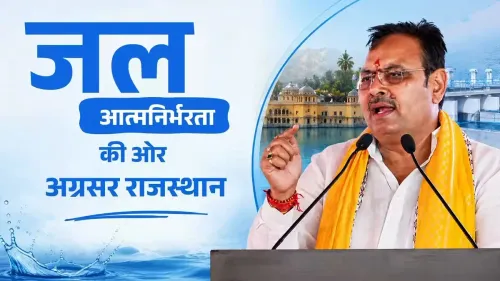
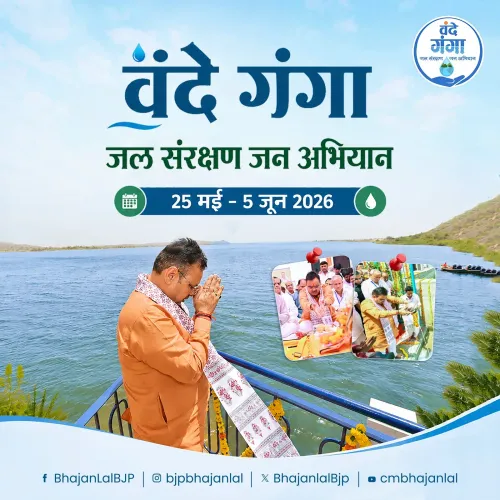
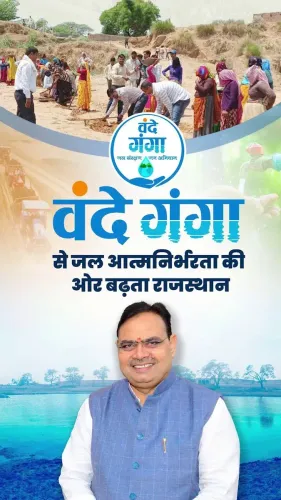
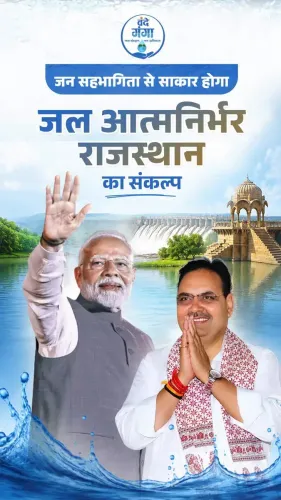
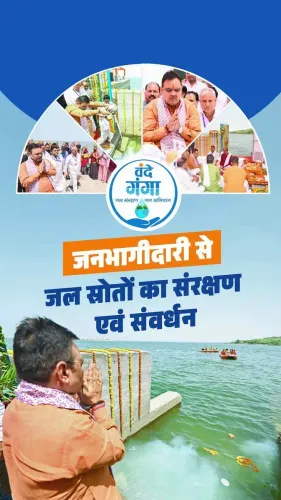
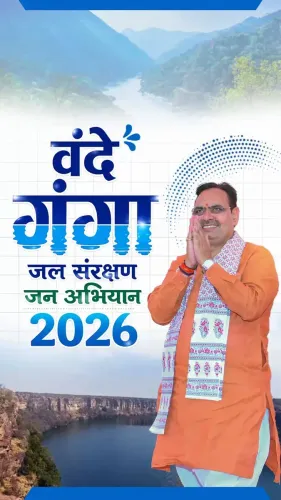
Rajasthan Chief Minister Bhajan Lal Sharma on Sunday, 31 May 2026, reaffirmed his government's commitment to making the state water self-reliant, citing the 'Vande Ganga Jal Sanrakshan Jan Abhiyan' as the primary vehicle for achieving that goal through mass public participation.
Context
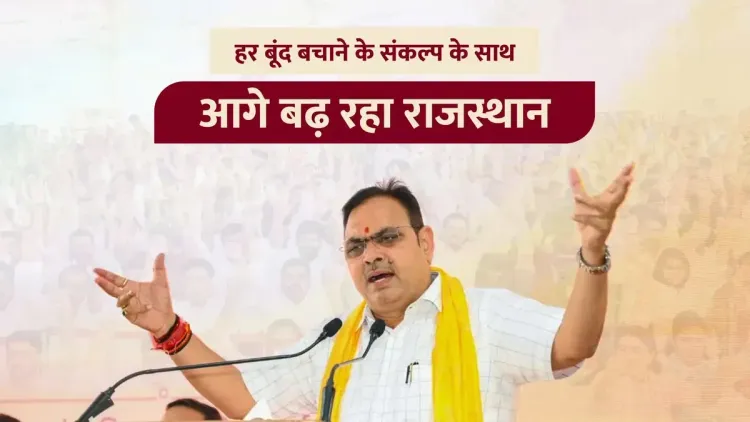
In his post, CM Sharma wrote: 'जन-जन की सहभागिता और जल संरक्षण के प्रति सामूहिक संकल्प के साथ हमारी सरकार वंदे गंगा जल संरक्षण जन अभियान के माध्यम से जल आत्मनिर्भर राजस्थान की दिशा में निरंतर आगे बढ़ रही है।' [Translation: 'With the participation of every citizen and a collective resolve towards water conservation, our government is continuously moving forward towards a water self-reliant Rajasthan through the Vande Ganga Jal Sanrakshan Jan Abhiyan.'] The statement underlines the administration's framing of water security as a shared civic responsibility rather than a purely governmental function.
Rajasthan is India's largest state by area and covers significant portions of the Thar Desert, making it one of the most water-stressed regions in the country. Groundwater depletion and recurring drought conditions have long defined the agricultural and domestic water challenges faced by farmers and rural households across the state.
Policy Backdrop
The Vande Ganga Jal Sanrakshan Jan Abhiyan builds on a lineage of state-level water conservation efforts. The earlier Mukhya Mantri Jal Swavalamban Abhiyan, launched in 2016, sought to create community water harvesting structures across villages, establishing a template of citizen-government co-ownership over local water bodies.
At the national level, the Jal Jeevan Mission, announced in 2019, set out to provide piped water connections to rural households across India, including Rajasthan. The current state campaign complements that infrastructure push by focusing on conservation and demand-side management alongside supply-side interventions.
Successive governments in Rajasthan have consistently framed such campaigns as long-term structural solutions rather than seasonal relief measures, reflecting the chronic nature of the state's water deficit.
Stakeholders and Impact
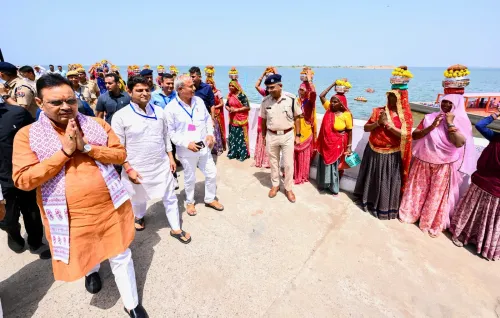
The campaign's primary beneficiaries are farmers and rural households, who bear the sharpest impact of groundwater depletion and erratic rainfall in the semi-arid districts. Community mobilisation under the abhiyan is aimed at rejuvenating local water bodies, promoting rainwater harvesting, and reducing dependence on over-exploited aquifers before the monsoon season.
Urban residents and local self-government bodies are also implicated, as the campaign's 'jan-jan' — meaning every individual — framing signals an intent to extend participation beyond rural areas. The involvement of panchayats and civic bodies in district-level execution will be critical to the campaign's reach.
What's Next
Attention will now turn to district-level rollout metrics and the progress of pre-monsoon water body rejuvenation works undertaken under the abhiyan. The period leading into the monsoon of 2026 is seen as the operational window when catchment preparation and storage augmentation efforts yield the most measurable results.
Whether the campaign translates its public-mobilisation mandate into verifiable gains in groundwater levels and water body coverage will determine its standing among Rajasthan's long history of conservation initiatives — and its political salience ahead of future electoral cycles.
Point of View
Lending political visibility to administrative programmes. The emphasis on 'jal aatmanirbharta' — water self-reliance — deliberately echoes the broader 'Aatmanirbhar Bharat' vocabulary, anchoring a state-level environmental campaign within the national ideological frame. For a state where water scarcity is both a livelihood crisis and a recurring electoral issue, such messaging serves a dual purpose: signalling administrative intent while mobilising community ownership. The real test, as with predecessor campaigns, will be whether district-level implementation produces measurable improvements in water table levels before the next dry season.
NationPress
22 Sept 2026
Frequently Asked Questions
What is the Vande Ganga Jal Sanrakshan Jan Abhiyan?
The Vande Ganga Jal Sanrakshan Jan Abhiyan is a Rajasthan state government campaign focused on public participation in water conservation, aimed at achieving water self-reliance across the state's arid and semi-arid regions.
Why is water conservation so critical for Rajasthan?
Rajasthan covers a large part of the Thar Desert and experiences chronic groundwater depletion and recurring droughts, making water security a persistent challenge for farmers and rural households.
What earlier water conservation schemes did Rajasthan run?
The Mukhya Mantri Jal Swavalamban Abhiyan, launched in 2016, promoted community water harvesting structures across Rajasthan villages and serves as a direct policy predecessor to the current campaign.
How does the Jal Jeevan Mission relate to Rajasthan's water campaigns?
The Jal Jeevan Mission, announced nationally in 2019, focuses on providing piped water supply to rural households and complements state-level conservation campaigns like the Vande Ganga Abhiyan by addressing the supply side of water security.
What should citizens watch for in the Vande Ganga Abhiyan's rollout?
Key indicators include district-level participation metrics, the number of water bodies rejuvenated before the monsoon, and any reported improvements in local groundwater levels in targeted areas.