Amit Shah: Cabinet clears ₹10,000 cr container scheme
Synopsis
The Union Cabinet has approved the ₹10,000 crore Container Manufacturing Promotion Scheme, aiming to make India a global container manufacturing hub by scaling up indigenous production tenfold and generating large-scale employment, Home Minister Amit Shah announced.
Key Takeaways
The Union Cabinet has approved the Container Manufacturing Promotion Scheme with a ₹10,000 crore outlay.
The scheme targets a tenfold increase in indigenous container manufacturing in India.
It follows the established PLI-style model — government incentives catalyse private-sector investment rather than direct public production.
The initiative is positioned as part of the broader Atmanirbhar Bharat manufacturing push launched in 2020 .
Detailed scheme guidelines, eligibility criteria and disbursement timelines are yet to be notified by the government.
Employment generation and early industry investment commitments will be the key metrics to watch in the first two years of rollout.
A ₹10,000 crore scheme to make India a global manufacturing hub for shipping containers — a segment the country has long imported rather than built — cleared the Union Cabinet this week, with Union Home Minister Amit Shah calling it the launchpad for a tenfold expansion of indigenous production and a creator of 'massive employment opportunities.'
What the Container Manufacturing Promotion Scheme actually does
The Container Manufacturing Promotion Scheme (CMPS) is designed around a now-familiar Indian policy architecture: government funds de-risk private investment rather than building public capacity directly. The ₹10,000 crore outlay is structured to incentivise industry players to scale up domestic container production, with the explicit target of a tenfold increase in indigenous manufacturing. Detailed guidelines, eligibility criteria and disbursement timelines are yet to be notified.
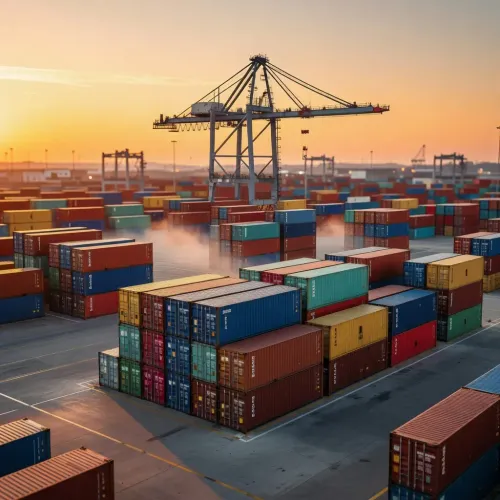
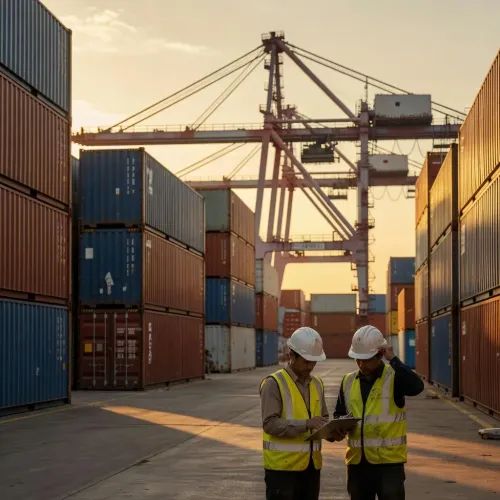
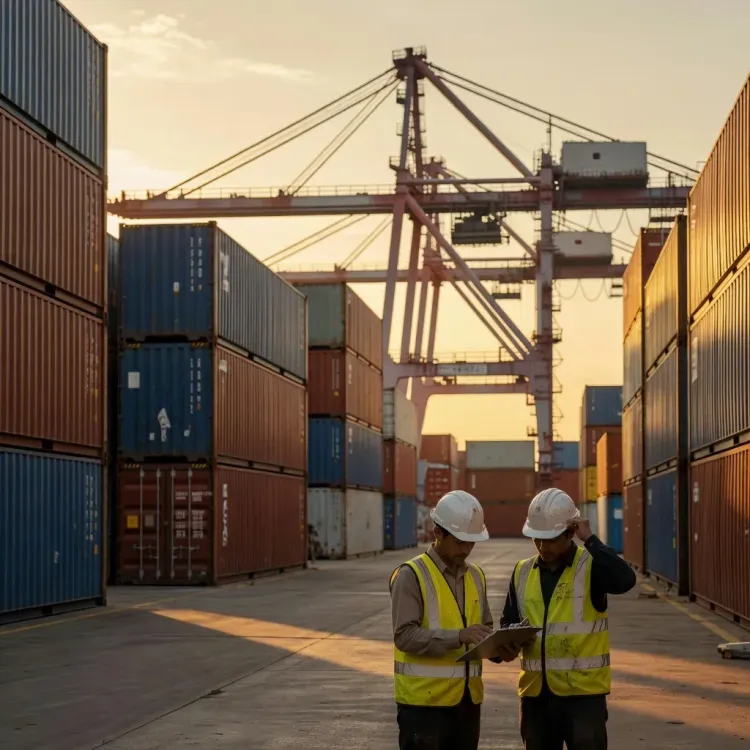
Containers are the invisible backbone of global trade — every shipping lane, every export consignment, every cold-chain corridor depends on them. India, despite being among the world's fastest-growing trade economies, has historically relied on imports for the bulk of its container fleet. The CMPS is a direct bet that this structural dependence can be reversed at scale.
The Atmanirbhar arc — from PLI to containers
The scheme slots neatly into a policy lineage that began with the Atmanirbhar Bharat initiative in 2020, which pushed domestic manufacturing across sectors through production-linked and sector-specific incentives. Electronics, pharmaceuticals, semiconductors, defence equipment — the Production-Linked Incentive (PLI) architecture has touched all of them. Containers represent its latest frontier: a high-volume, trade-critical industrial segment where domestic capacity has lagged badly behind demand.
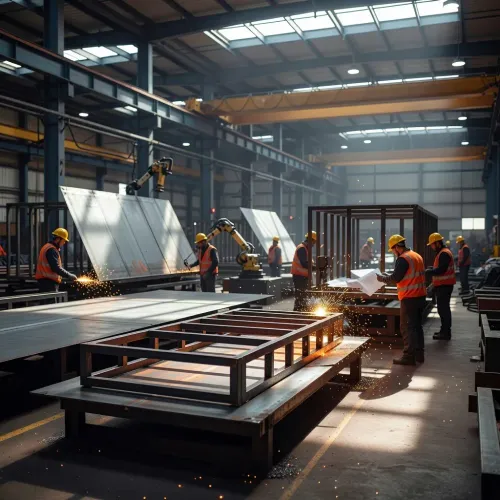
The logic is compounding. More containers built in India means lower logistics costs for Indian exporters, shorter supply chains, and a new industrial cluster employing skilled and semi-skilled workers in fabrication, steel processing and port-adjacent manufacturing zones. The employment multiplier in heavy fabrication industries is significant — though specific job-creation numbers from the scheme are yet to be published.
Why this matters for India's trade logistics ambition
India's trade volumes have grown sharply across the last decade, but the country's container manufacturing base has not kept pace. During the global supply-chain disruptions of 2021-22, container shortages drove up freight rates worldwide and hit Indian exporters hard — a vulnerability that policymakers noted. The CMPS is, in part, a structural answer to that episode: build the box, not just the goods inside it.
Scheme watchers will track two early indicators — the pace at which manufacturing firms commit capital investment, and whether employment generation in the first two years matches the scale the government is projecting. Both will test whether the incentive structure is calibrated correctly for an industry that requires large upfront capital and long production cycles.
India is placing a serious industrial bet — not just on what it exports, but on the very infrastructure that carries those exports to the world.
Point of View
Supply-chain resilience and employment creation. The announcement signals that the Modi government sees logistics infrastructure — not just finished goods — as a legitimate target for industrial policy. Whether the scheme delivers its tenfold production target will depend heavily on how well the disbursement architecture is designed; past PLI schemes have shown that incentive design matters as much as headline outlay. If it succeeds, it positions India to capture a slice of global container manufacturing currently dominated by Chinese firms.
NationPress
28 Oct 2026
Frequently Asked Questions
What is the Container Manufacturing Promotion Scheme?
It is a ₹10,000 crore initiative approved by the Union Cabinet to incentivise private industry to scale up indigenous container manufacturing in India, with a stated goal of a tenfold increase in domestic production.
Why is India launching a container manufacturing scheme?
India has historically relied on imported containers despite being a large trading economy. The scheme aims to reduce this dependence, lower logistics costs for exporters, and create employment in heavy fabrication industries — an ambition that gained urgency after the global container shortages of 2021-22.
How much money has the government allocated for the container scheme?
The government has allocated ₹10,000 crore under the Container Manufacturing Promotion Scheme approved by the Union Cabinet.
Is this scheme related to Atmanirbhar Bharat?
Yes. The scheme is part of the broader Atmanirbhar Bharat policy framework launched in 2020 , which uses production-linked and sector-specific incentives to expand domestic manufacturing and reduce import dependence across industries.
When will the Container Manufacturing Promotion Scheme guidelines be released?
Detailed eligibility criteria, scheme guidelines and disbursement timelines have not yet been notified and are expected in subsequent government notifications following the Cabinet approval.