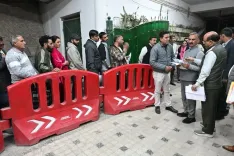
PM Modi unveils Container Manufacturing Promotion Scheme
Synopsis
The Union Cabinet has approved the Container Manufacturing Promotion Scheme, aiming for a tenfold rise in domestic production to 7.5 lakh TEUs annually. The move cuts import dependence, backs manufacturers with financial support, and extends India's Make in India and Sagarmala-led maritime reform agenda.
Key Takeaways
The Union Cabinet has approved the Container Manufacturing Promotion Scheme to expand domestic container production.
The scheme targets a tenfold increase in annual capacity, reaching 7.5 lakh TEUs .
Both new and existing manufacturers will receive financial support under the scheme.
The policy aims to produce globally competitive, quality-certified containers , reducing reliance on imports.
It builds on the Make in India (2014) , Sagarmala Project (2015) and National Logistics Policy (2022) frameworks.
Exact incentive details, eligibility norms and implementation timelines are pending official gazette notification.
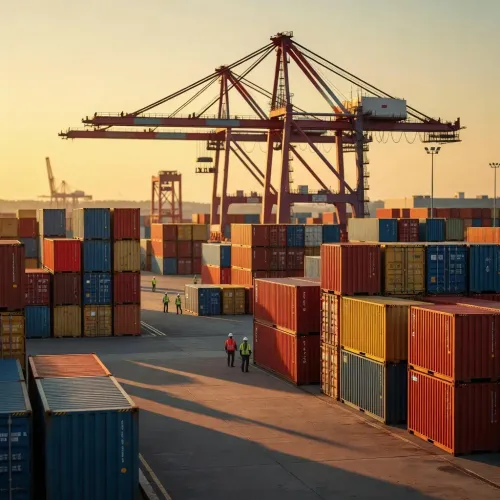
India's shipping lanes just got a policy anchor. Prime Minister Narendra Modi on Wednesday, 28 October 2026 announced that the Union Cabinet has approved the Container Manufacturing Promotion Scheme, a targeted push to slash the country's dependence on imported shipping containers and build a globally competitive domestic manufacturing base.
A tenfold leap: from marginal player to 7.5 lakh TEUs
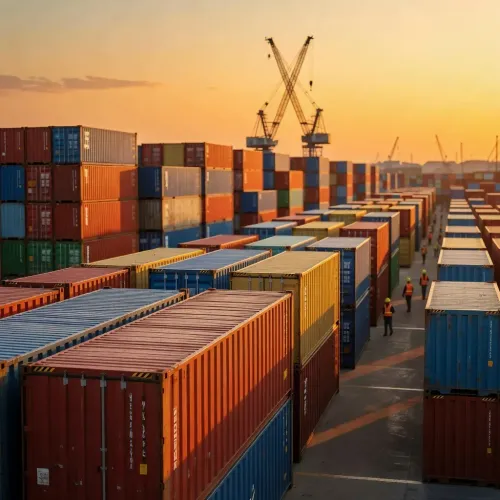
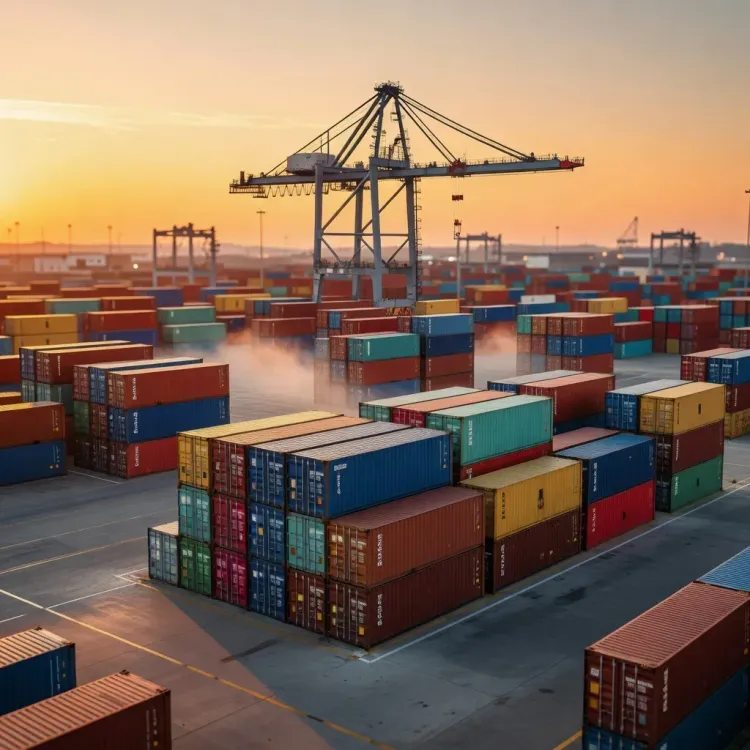
The headline number is striking. The scheme targets a tenfold increase in India's domestic container production capacity, bringing it to 7.5 lakh Twenty-foot Equivalent Units (TEUs) annually. Today, India produces a fraction of the containers it moves through its ports — the bulk are imported, mostly from China, which dominates global container manufacturing with an estimated share of over 90 per cent of world output. A supply-chain shock, a geopolitical disruption, or even a freight-rate spike can throttle Indian exporters overnight. This scheme is a direct answer to that vulnerability.
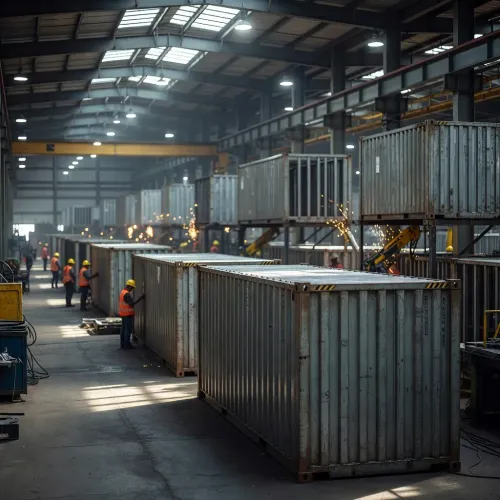
The Cabinet approval provides financial support for both new and existing manufacturers, signalling that the government wants to seed fresh capacity while also backing incumbents who can scale fast. Containers certified to global quality standards are a key deliverable — without them, Indian-made boxes cannot compete on international shipping routes.
How this fits twelve years of logistics reform
The scheme does not arrive in a vacuum. It sits at the intersection of at least three major policy threads. The Make in India campaign, launched in 2014, set the template: identify sectors where import dependence is both economically costly and strategically risky, then use financial incentives to crowd in domestic capacity. The Sagarmala Project, initiated in 2015, placed port-led development at the centre of India's infrastructure agenda, upgrading berths, rail linkages and coastal shipping corridors. And the National Logistics Policy of 2022 set an explicit goal of reducing logistics costs from roughly 13-14 per cent of GDP to single digits — a gap that makes Indian exports structurally less competitive against peers.
Containers are the invisible backbone of that entire system. Every box that India must import adds cost, lead time and foreign-exchange outflow before a single piece of cargo has moved.
Who gains — and what still needs to be watched
The immediate beneficiaries are container manufacturers, logistics and shipping firms, and Indian exporters across sectors from textiles to pharmaceuticals to engineering goods. A deeper domestic supply of competitively priced containers lowers freight costs at the origin, which can sharpen India's export price competitiveness at a time when global trade is being reshuffled by tariff pressures and supply-chain diversification.
The details that will determine actual impact are still to come. The official gazette notification — spelling out exact financial incentives, eligibility criteria and the implementation timeline — has not yet been published. Progress on capacity addition, and whether subsequent budget statements earmark dedicated funds, will be the real scorecards. The 7.5 lakh TEU target is ambitious; China's dominance in this space is built on decades of scale, integrated steel supply chains and government coordination. India will need all three to converge.
Still, the direction is unmistakable. Targeted production-linked and capacity-incentive schemes have already moved the needle in steel, electronics and defence manufacturing. Containers are next on the list — and for a country whose trade volumes are set to grow sharply through the decade, getting this right is not optional.
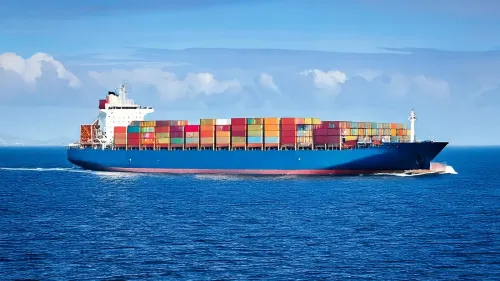
The boxes that carry India's exports to the world may soon be made in India too.
Point of View
Not just an industrial subsidy. By targeting an input that underpins virtually all of India's merchandise trade, the government is extending the Atmanirbhar Bharat logic into logistics infrastructure — a sector that directly affects export competitiveness. The tenfold capacity target signals ambition, but the real test will be whether financial incentives can overcome China's entrenched scale advantage in steel-intensive manufacturing. If the scheme succeeds, it reinforces a broader pattern: that India is systematically using production incentives to de-risk strategic chokepoints, from semiconductors to defence hardware to, now, the humble shipping container.
NationPress
28 Oct 2026
Frequently Asked Questions
What is the Container Manufacturing Promotion Scheme approved by India's Cabinet?
It is a government scheme that provides financial support to domestic container manufacturers — both new and existing — with the goal of expanding India's annual production capacity tenfold to 7.5 lakh TEUs, reducing reliance on imported shipping containers.
What is a TEU in shipping?
TEU stands for Twenty-foot Equivalent Unit, the standard measure for shipping container capacity. One TEU equals one standard 20-foot intermodal container.
Why does India import most of its shipping containers?
China dominates global container manufacturing with an estimated share of over 90 per cent of world output, making it far cheaper historically to import than to produce domestically. India has lacked the industrial scale and integrated supply chains needed to compete.
How does this scheme relate to Make in India and Sagarmala?
The scheme directly extends the Make in India campaign's import-substitution philosophy and complements the Sagarmala Project's port-led development agenda, together aimed at lowering logistics costs and strengthening India's maritime supply chains.
When will the details of the Container Manufacturing Promotion Scheme be available?
The official gazette notification — covering exact financial incentives, eligibility criteria and the implementation timeline — has not yet been published and will be the key document to watch following the Cabinet approval.