CM Sukhu raises Kullu Dussehra honoraria for musicians, priests
Synopsis
Himachal Pradesh CM Sukhvinder Singh Sukhu has announced a 10% honorarium increase for Kullu Dussehra's traditional musicians, a 5% rise in deity offerings, and a new ₹1,100 honour payment for chief oracles ahead of International Kullu Dussehra 2026.
Key Takeaways
Bajantari honoraria — the pay for Kullu Dussehra's traditional hereditary musicians — will rise by 10% .
The nazrana (ritual offering) extended to deities during the festival will increase by 5% .
The mukhya gur (principal oracle) of each deity will receive a new ₹1,100 samman rashi (honour amount).
The announcement was made by CM Sukhvinder Singh Sukhu on 28 October 2026 ahead of International Kullu Dussehra 2026 .
The move is part of Himachal Pradesh's ongoing policy to sustain intangible cultural heritage and attract festival tourism to the Kullu valley .
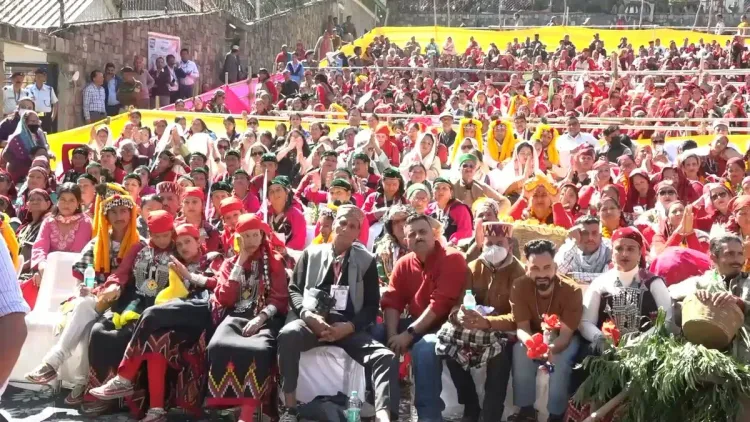
A festival celebrated for centuries is about to get a little more rewarding for the people who keep it alive. Himachal Pradesh Chief Minister Sukhvinder Singh Sukhu announced on Wednesday, 28 October 2026, that the state will raise honoraria for traditional musicians and deity offerings ahead of International Kullu Dussehra 2026 — a direct acknowledgement that the festival's soul rests with its performers and priests, not just its spectacle.
What the state is putting on the table
The increases are specific and deliberate. Honoraria for bajantaris — the hereditary wind and percussion musicians whose sound defines every deity procession — will rise by 10%. The nazrana (ritual offerings) extended to deities will increase by 5%. And for the first time, the mukhya gur — the principal oracle or medium of each deity — will receive a dedicated honour amount of ₹1,100.
In the CM's own words: 'bajantariyom ke maandey mein 10% aur devi-devataon ke nazrane mein 5% ki badhotari ki jaayegi' — the honorarium for musicians will rise 10% and the ritual tribute to deities 5%. The ₹1,100 samman rashi for the gur is a new formal recognition of a role that has existed at the heart of Kullu's religious life for generations.
Why the bajantari and the gur matter so much
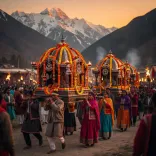
Kullu Dussehra is not a conventional ten-day Dussehra. Unlike most of India, where the festival culminates on the tenth day, Kullu's version begins on Vijayadashami — when hundreds of local deities descend from villages across the valley to pay homage to the presiding deity Raghunath Ji in the town of Kullu. The bajantaris lead each deity's palanquin with distinct instrumental signatures; the gur speaks on behalf of the deity at key ceremonial moments. These are not decorative roles — they are structurally essential to the ritual architecture of the festival.
Himachal Pradesh has periodically revised financial support for Kullu Dussehra to sustain the participation of these traditional functionaries, recognising that low or stagnant honoraria are one of the main reasons younger members of hereditary musician families drift away from the tradition. The broader concern is the erosion of intangible cultural heritage — a category UNESCO has flagged as among the most fragile globally.
Culture, tourism, and the state's balancing act
The announcement sits at the intersection of two policy concerns that the Himachal government regularly navigates together: cultural preservation and hill-district tourism. International Kullu Dussehra draws visitors from across India and abroad, generating significant economic activity for the Kullu valley. Sustaining the authenticity of the festival — its living traditions, not just its visual spectacle — is therefore both a heritage imperative and a long-term tourism strategy.
Incremental financial revisions of this kind rarely make headlines on their own, but they carry cumulative weight. For a bajantari whose family has played the same instrument at the same festival for five generations, a 10% increase in recognition is more than arithmetic — it is the state signalling that the tradition is worth passing on.
The question now is whether these increases will be followed by the structural budget allocations and logistical planning that a festival of international scale demands — and whether the 2026 edition will raise Kullu Dussehra's global profile as sharply as its local standing.
Point of View
100 honour — rather than folding the increase into a blanket revision — the Sukhu government is making a subtle but deliberate statement about the ritual hierarchy of Kullu Dussehra. This kind of micro-targeted cultural policy rarely generates electoral noise, but it builds credibility with hill communities whose identity is inseparable from these festivals. The real test will come when the state's budget sessions reveal whether these percentage increases are backed by commensurate allocations, or remain symbolic gestures ahead of a high-profile international event.
NationPress
28 Oct 2026
Frequently Asked Questions
What is Kullu Dussehra and why is it internationally famous?
Kullu Dussehra is an annual festival in the Kullu valley of Himachal Pradesh that begins on Vijayadashami — when most of India's Dussehra celebrations end. Hundreds of local deities are carried in procession to pay homage to the presiding deity Raghunath Ji in Kullu town, making it a unique celebration of regional religious traditions that draws visitors from across India and abroad.
Who are bajantaris and why did CM Sukhu increase their honorarium?
Bajantaris are hereditary traditional musicians who lead deity processions during Kullu Dussehra with wind and percussion instruments. CM Sukhu announced a 10% increase in their honorarium to help sustain this intangible cultural tradition and encourage the next generation to continue it.
What is a mukhya gur in the context of Kullu Dussehra?
The mukhya gur is the principal oracle or medium of a deity — a person believed to speak on the deity's behalf during ceremonial occasions. CM Sukhu announced that each deity's mukhya gur will receive ₹1,100 as a new formal honour amount at International Kullu Dussehra 2026.
How much will deity offerings (nazrana) increase at Kullu Dussehra 2026?
The nazrana — ritual offerings extended to deities during Kullu Dussehra — will increase by 5%, as announced by Himachal Pradesh Chief Minister Sukhvinder Singh Sukhu on 28 October 2026.
Why does Himachal Pradesh government financially support Kullu Dussehra participants?
Himachal Pradesh periodically revises financial support for traditional festival functionaries to prevent the erosion of intangible cultural heritage, sustain participation of hereditary artists and priests, and maintain the authenticity of Kullu Dussehra — which is also a major international tourism draw for the Kullu valley.