Cabinet clears ₹10,000 crore Container Manufacturing Promotion Scheme till FY2040
Synopsis
India has approved a ₹10,000 crore Container Manufacturing Promotion Scheme that could increase domestic container production capacity nearly ten-fold to 7.5 lakh TEUs annually. With China dominating global container supply, this is one of the most strategically targeted manufacturing interventions in India's logistics history — and a direct attempt to fix a supply-chain vulnerability exposed during recent global disruptions.
Key Takeaways
The Union Cabinet approved the Container Manufacturing Promotion Scheme (CMPS) on 28 October 2026 with an outlay of ₹10,000 crore through FY 2039–40 .
The scheme targets a ten-fold increase in domestic capacity, reaching up to 7.5 lakh TEUs annually.
An estimated 3,000 direct jobs and over 50,000 indirect jobs are projected, benefiting ancillary sectors like specialised steel and corner castings.
Operational Expenditure Assistance at ₹8,891 crore is the largest component, bridging cost competitiveness with global producers.
Interest Subvention Assistance of ₹859 crore covers 3% per annum subvention on loans for greenfield and brownfield container manufacturing facilities.
The scheme was first announced in the Union Budget 2026–27 ; Cabinet approval is the formal implementation trigger.
The Union Cabinet, chaired by Prime Minister Narendra Modi, on Wednesday, 28 October 2026, approved the Container Manufacturing Promotion Scheme (CMPS) with a total budgetary outlay of ₹10,000 crore through FY 2039–40. The scheme aims to build a globally competitive container manufacturing ecosystem in India, cutting import dependence and reinforcing maritime supply-chain resilience.
Key Components of the Scheme
The CMPS is structured around three financial pillars. The first is Interest Subvention Assistance (ISA), with an outlay of ₹859 crore, offering a 3% per annum interest subvention on eligible term loans for both greenfield container manufacturing facilities and brownfield expansion of existing units.
The second, and largest, component is Operational Expenditure Assistance (OEA), allocated ₹8,891 crore, which provides direct financial support for all containers manufactured to global shipping standards and sold by eligible producers — designed to close the cost gap between Indian-made and imported containers. The third pillar is Testing and Certification Assistance, backed by ₹150 crore, which will fund common facilities including Dynamic Longitudinal Impact Testing infrastructure.
Scale of Ambition: 7.5 Lakh TEUs a Year
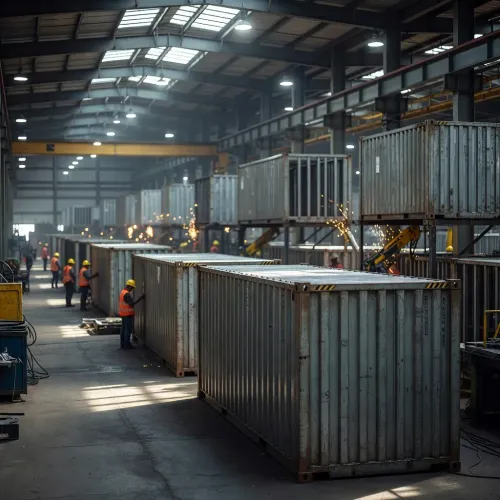
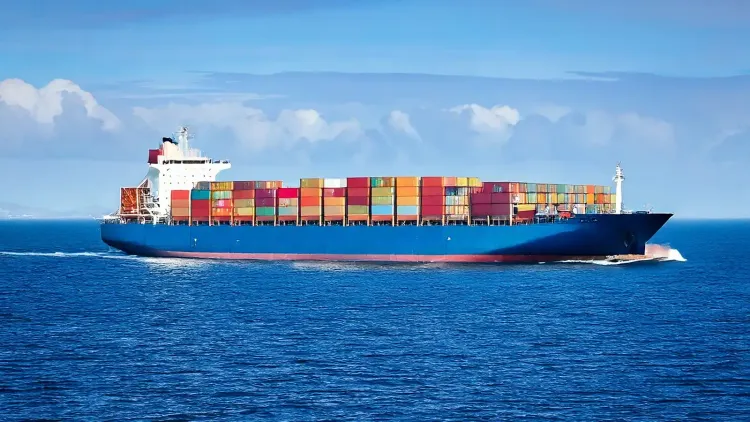
According to the Cabinet, the scheme is expected to increase India's annual domestic container manufacturing capacity approximately ten-fold, reaching up to 7.5 lakh TEUs (Twenty-foot Equivalent Units). The government projects this will position India as a global export hub for quality shipping containers and materially strengthen the country's maritime and logistics supply chains.
On the employment front, the CMPS is estimated to generate around 3,000 direct jobs and over 50,000 indirect jobs. Ancillary industries — including corner castings, specialised steel, wooden frames, and industrial paints — are expected to benefit from the demand surge.
Budget Origins and Policy Context
The Container Manufacturing Scheme was first announced in the Union Budget 2026–27, making Wednesday's Cabinet clearance the formal enabling step for its implementation. The approval signals the government's intent to reduce India's historically high dependence on imported containers — a vulnerability that was sharply exposed during global supply-chain disruptions in recent years.
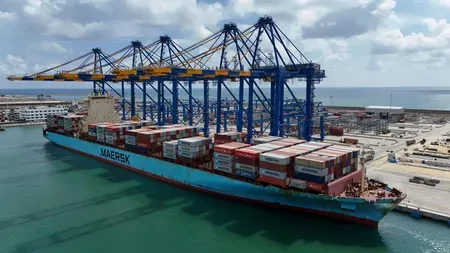
Notably, India currently manufactures a negligible share of the containers it uses for export trade, with the bulk sourced from China. The CMPS directly targets this structural gap.
What Comes Next
With Cabinet approval now in place, the focus shifts to operationalising the scheme — particularly the eligibility criteria for manufacturers seeking ISA and OEA benefits, and the timeline for setting up common testing facilities. Industry stakeholders in the shipping, logistics, and steel sectors will be watching the rollout closely, as the scheme's success hinges on bridging the cost competitiveness gap with established global producers.
Point of View
And the scheme's three-pillar design (capex relief, opex bridge, and testing infrastructure) addresses the full cost stack rather than just headline subsidies. However, the job creation numbers deserve scrutiny: 3,000 direct jobs for ₹10,000 crore is a capital-intensive ratio, and the real multiplier depends on how deep the ancillary supply chain actually develops. The ten-fold capacity target by FY 2040 is ambitious but achievable only if India can compete on steel input costs — something no scheme alone can guarantee. The proof will be in FY 2028 production numbers, not Cabinet press releases.
NationPress
28 Oct 2026
Frequently Asked Questions
What is the Container Manufacturing Promotion Scheme (CMPS)?
The CMPS is a government scheme approved by the Union Cabinet on 28 October 2026, with a budgetary outlay of ₹10,000 crore through FY 2039–40, aimed at building a globally competitive container manufacturing industry in India. It seeks to reduce import dependence and increase annual domestic capacity to 7.5 lakh TEUs — roughly ten times the current level.
How many jobs will the CMPS create?
The scheme is estimated to generate approximately 3,000 direct jobs and over 50,000 indirect jobs. Ancillary industries such as corner castings, specialised steel, wooden frames, and industrial paints are expected to be among the key beneficiaries.
What are the main financial components of the CMPS?
The scheme has three components: Interest Subvention Assistance (₹859 crore) offering 3% per annum interest subvention on term loans for greenfield and brownfield facilities; Operational Expenditure Assistance (₹8,891 crore) to bridge cost competitiveness for standard containers; and Testing and Certification Assistance (₹150 crore) for common testing infrastructure.
When was the Container Manufacturing Scheme first announced?
The scheme was first announced in the Union Budget 2026–27. The Cabinet approval on 28 October 2026 is the formal step that enables its implementation.
Why does India need a dedicated container manufacturing scheme?
India currently manufactures a negligible share of the containers it uses for export trade, with the majority sourced from China. Global supply-chain disruptions in recent years exposed this dependency, making domestic container manufacturing capacity a strategic priority for logistics resilience.