Sonowal Unveils First Made-in-India EXIM Container at ICD Dadri
Synopsis
Union Minister Sarbananda Sonowal unveiled India's first Made-in-India EXIM-grade container at ICD Dadri for Maersk on 3 July 2026, marking a milestone under the ₹10,000 crore Container Manufacturing Promotion Scheme and Prime Minister Modi's push for domestic logistics manufacturing.
Key Takeaways
Union Minister Sarbananda Sonowal unveiled India's first Made-in-India EXIM-grade container at ICD Dadri, Uttar Pradesh on 3 July 2026 .
The container was produced for Maersk , one of the world's largest container shipping operators, lending it immediate commercial validation.
The milestone is supported by the ₹10,000 crore Container Manufacturing Promotion Scheme , a central government initiative to build domestic container production capacity.
The initiative aligns with the PM Gati Shakti National Master Plan , the National Logistics Policy , and the broader Atmanirbhar Bharat push to reduce import dependence on containers, largely sourced from China.
Netherlands Ambassador Maris Gerards attended the event, reflecting bilateral maritime and logistics cooperation between India and the Netherlands.
Sonowal stated the vision was shared 16 months ago under Prime Minister Narendra Modi and has now translated into a tangible product.
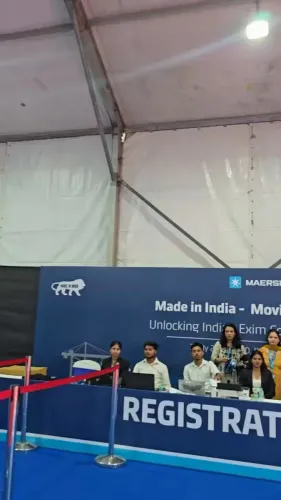
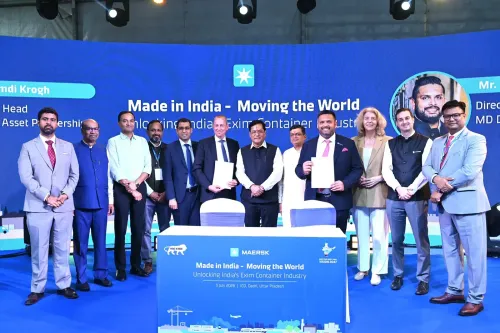
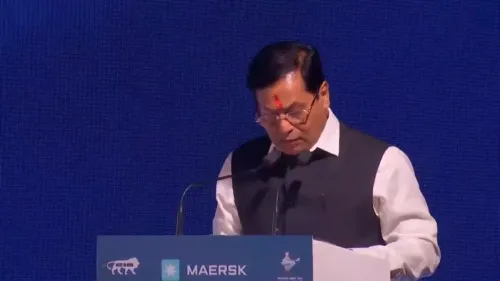
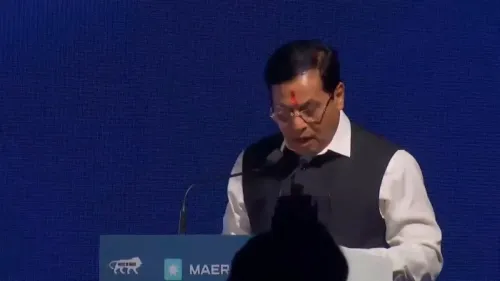
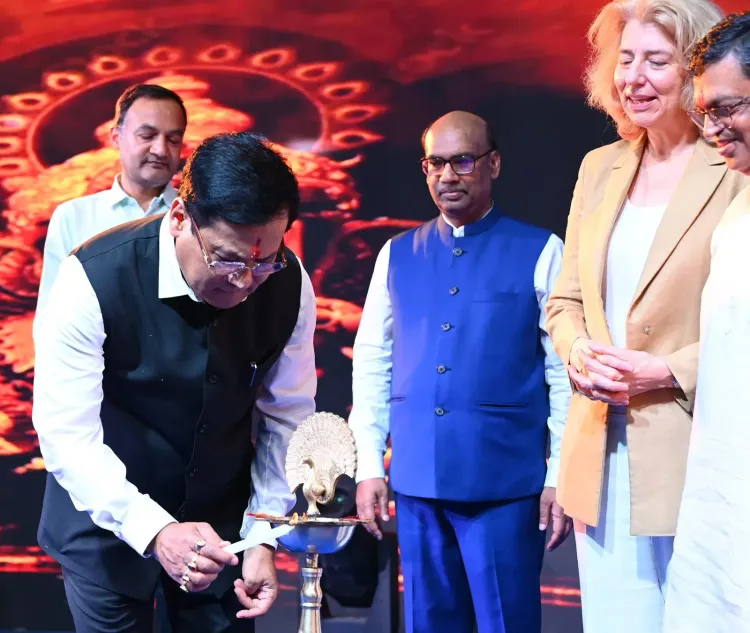
Union Minister of Ports, Shipping and Waterways Sarbananda Sonowal on Friday, 3 July 2026, unveiled what he described as India's first Made in India EXIM-grade container at ICD Dadri, Uttar Pradesh, in a ceremony marking a significant milestone in the country's domestic manufacturing push for the logistics sector. The container has been produced for Maersk, one of the world's largest shipping and container operators. The event was also attended by HE Maris Gerards, Ambassador of The Netherlands to India.
Context
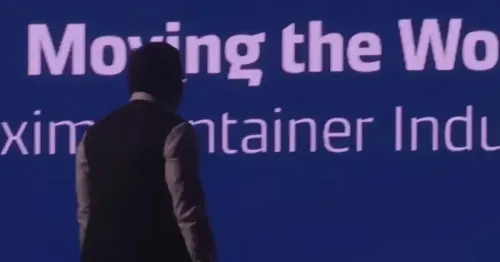
Posting on X, Minister Sonowal declared: 'Made in India – Moving the World!' He stated that a vision articulated 16 months ago under the leadership of Prime Minister Narendra Modi — to create a world-class container manufacturing ecosystem in India — had now become a reality. The unveiling at ICD Dadri, a key inland container depot in Gautam Buddha Nagar, Uttar Pradesh, and a major hub for EXIM cargo in northern India, signals the first tangible output of this policy direction.
India has historically depended heavily on imports, primarily from China, for EXIM-grade containers — the standardised steel boxes that move the overwhelming bulk of global seaborne trade. Developing a domestic supply base addresses both a strategic vulnerability and a cost burden for Indian exporters.
Policy Backdrop
The milestone is underpinned by the ₹10,000 crore Container Manufacturing Promotion Scheme, a central government initiative designed to build indigenous capacity for producing containers that meet international export-import standards. The scheme forms part of a broader logistics modernisation drive that includes the PM Gati Shakti National Master Plan — launched in October 2021 — which integrates multimodal infrastructure planning across ministries, and the National Logistics Policy unveiled in September 2022 with the aim of reducing India's logistics costs and improving supply-chain efficiency.
The lineage traces further back to the Make in India programme launched in September 2014 and the Sagarmala project approved in 2015, which sought to modernise ports and promote port-led industrialisation. The container manufacturing push is thus the latest layer in a policy architecture built over more than a decade, now yielding its first physical deliverable in the EXIM container segment.
Stakeholders and Impact
Maersk, whose participation as the first recipient of a domestically manufactured EXIM container lends commercial credibility to the initiative, is a Danish multinational that operates one of the world's largest container fleets. Its involvement signals that the quality of the Made-in-India container meets the standards demanded by a top-tier global shipping line. For Indian exporters, particularly small and medium enterprises that have long cited container availability and cost as pain points, a domestic supply chain could improve the Ease of Doing Business (EoDB) — a metric Sonowal specifically highlighted in his post.
The presence of Netherlands Ambassador Maris Gerards adds a bilateral dimension. The Netherlands, home to the Port of Rotterdam — Europe's largest — maintains deep expertise in port technology, logistics, and maritime services, and has cultivated growing cooperation with India in these domains. Her attendance suggests the event carried diplomatic as well as industrial significance.
What's Next
The immediate question is the pace and scale at which production can be ramped up under the ₹10,000 crore Container Manufacturing Promotion Scheme to meaningfully meet India's demand for EXIM containers. Observers will watch for the rollout of manufacturing units at other ICDs and coastal locations across the country, as well as parliamentary disclosures on scheme utilisation and uptake by logistics operators. If domestic container supply scales successfully, it could structurally reduce India's dependence on imported containers, lower costs for exporters, and strengthen the country's position in global supply chains — a goal that sits at the centre of the Atmanirbhar Bharat vision.
Point of View
The government is signalling industrial credibility rather than simply policy intent. The ₹10,000 crore Container Manufacturing Promotion Scheme places this squarely within the Atmanirbhar Bharat framework, and the Dutch ambassador's presence suggests New Delhi is also leveraging the milestone for maritime diplomacy. The real test, however, will be whether production scales fast enough and cheaply enough to shift the cost calculus for Indian exporters who currently absorb the burden of imported container availability.
NationPress
2 Oct 2026
Frequently Asked Questions
What is the Made in India EXIM container unveiled by Sonowal?
It is India's first domestically manufactured container meeting EXIM-grade (export-import) standards, unveiled by Union Minister Sarbananda Sonowal at ICD Dadri on 3 July 2026 for shipping giant Maersk.
What is the Container Manufacturing Promotion Scheme?
The Container Manufacturing Promotion Scheme is a central government initiative worth ₹10,000 crore aimed at building domestic capacity to manufacture EXIM-grade containers, reducing India's dependence on imported containers primarily from China.
Where is ICD Dadri and why is it significant?
ICD Dadri is an Inland Container Depot located in Gautam Buddha Nagar, Uttar Pradesh. It is one of the largest and busiest EXIM cargo handling hubs in northern India, making it a strategic location for the container unveiling.
Why was the Netherlands ambassador present at the container launch?
HE Maris Gerards, Ambassador of the Netherlands to India, attended as the Netherlands maintains strong bilateral ties with India in maritime, port technology, and logistics sectors, and the event carried diplomatic significance alongside its industrial milestone.
How does this container launch fit into India's broader logistics policy?
The launch builds on a chain of policies including Make in India (2014), Sagarmala (2015), PM Gati Shakti (2021), and the National Logistics Policy (2022), all aimed at modernising India's supply chain, reducing logistics costs, and improving ease of doing business for exporters.