Logistics Data Bank tracks 10 crore EXIM containers, Goyal says tech key to Viksit Bharat

Synopsis
India's Logistics Data Bank has tracked 10 crore EXIM containers — a milestone that reflects the scale of the government's bet on real-time data to cut logistics costs. With LDB 2.0 now adding high-seas and multimodal visibility, the question is whether better tracking can finally move India's logistics cost from 13-14% of GDP closer to the global benchmark of 8%.
Key Takeaways
The Logistics Data Bank (LDB) crossed the milestone of tracking 10 crore EXIM containers , announced on 14 August .
Commerce Minister Piyush Goyal called efficient logistics central to realising the Viksit Bharat vision.
The LDB covers 100% of India's EXIM container movement across 19 ports , 32 terminals , 103 ICDs , and 5,569 railway stations .
LDB 2.0 , launched in September 2025 , added high-seas tracking and multimodal shipment visibility.
India's logistics costs are estimated at 13-14% of GDP , against a global benchmark of around 8% .
Commerce and Industry Minister Piyush Goyal on Friday, 14 August highlighted technology as the backbone of India's evolving logistics infrastructure, as the Logistics Data Bank (LDB) crossed the landmark of tracking 10 crore EXIM containers. Goyal said efficient logistics would be central to realising Prime Minister Narendra Modi's vision of a Viksit Bharat.
The Milestone and What It Signals
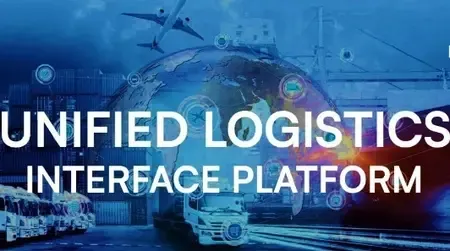
The LDB, which uses RFID-based tracking technology, now provides end-to-end visibility of EXIM container movement across the country. The platform currently covers 100 per cent of India's EXIM container movement, spanning 19 ports and 32 container terminals.
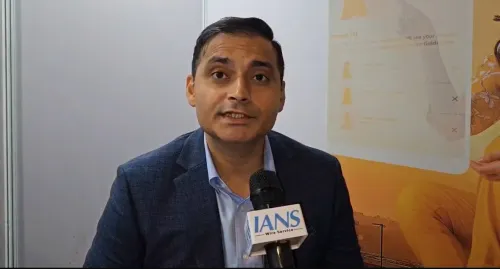
"The tracking of 10 crore containers through the Logistics Data Bank is an important milestone in India's logistics journey. Technology is helping us make logistics simpler, faster and more efficient, while improving the competitiveness of Indian industry," Goyal said.
Scale of the Network
The LDB's reach extends across 103 Inland Container Depots (ICDs), 439 Container Freight Stations (CFSs), empty yards, parking plazas, and industrial zones. It also covers 89 manufacturing Special Economic Zones (SEZs), 5,569 railway stations, 269 toll plazas, and 3 Integrated Check Posts. This breadth makes it one of the most comprehensive logistics tracking networks in Asia.
LDB 2.0: Upgraded Capabilities
In September 2025, Goyal launched LDB 2.0, a significantly upgraded version of the platform. The new iteration introduced high-seas tracking of India's export containers and added multimodal shipment visibility, enabling users to monitor cargo movements more comprehensively across land, sea, and rail corridors.
The platform generates analytics on dwell time, transit time, and port and terminal performance — data that logistics operators, exporters, importers, and policymakers use to identify bottlenecks and sharpen operational efficiency.
Why It Matters for India's Trade Ambitions
India has long grappled with high logistics costs — estimated at roughly 13-14% of GDP, compared to a global benchmark closer to 8%. Reducing this gap is considered critical to making Indian exports price-competitive in global markets. Goyal underscored this link directly: "Efficient logistics will be central to strengthening manufacturing, expanding our presence in global markets and realising the Prime Minister's vision of a Viksit Bharat."
This comes amid the government's broader push under the National Logistics Policy, launched in 2022, which set a target of bringing logistics costs down to single digits as a share of GDP. The LDB's expanding coverage is a measurable indicator of that policy's implementation progress.
What Comes Next
With the 10-crore milestone achieved, attention will now turn to whether the platform's analytics can drive measurable reductions in average dwell times at major ports — a key performance indicator that directly affects export turnaround. Industry bodies have previously flagged port congestion and last-mile connectivity as persistent pain points that data visibility alone cannot resolve.
Point of View
But the harder question is whether data visibility is translating into lower logistics costs on the ground. India's logistics bill has stubbornly stayed near 13-14% of GDP for years despite successive policy pushes — the National Logistics Policy, Sagarmala, and now LDB 2.0. The platform's dwell-time and transit-time analytics are only useful if port authorities and state agencies act on them. Without accountability loops that connect the data to measurable cost reductions, the milestone risks being a headline rather than a turning point.
NationPress
29 Sept 2026
Frequently Asked Questions
What is the Logistics Data Bank (LDB) and what milestone has it achieved?
The Logistics Data Bank is a government platform that uses RFID-based technology to provide end-to-end tracking of India's EXIM container movement. It recently crossed the milestone of tracking 10 crore containers, covering 100% of the country's EXIM container traffic across 19 ports and 32 terminals.
What is LDB 2.0 and how is it different from the original platform?
LDB 2.0 was launched by Minister Piyush Goyal in September 2025 and significantly upgraded the platform's capabilities. It added high-seas tracking of India's export containers and introduced multimodal shipment visibility, allowing users to monitor cargo across land, sea, and rail in a single interface.
Why does logistics efficiency matter for India's economy?
India's logistics costs are estimated at 13-14% of GDP, nearly double the global benchmark of around 8%. Reducing this gap is critical to making Indian exports more price-competitive and supporting the government's manufacturing and trade ambitions under the Viksit Bharat framework.
How extensive is the LDB network across India?
The LDB network spans 103 Inland Container Depots, 439 Container Freight Stations, 89 manufacturing SEZs, 5,569 railway stations, 269 toll plazas, and 3 Integrated Check Posts, in addition to 19 ports and 32 container terminals.
What kind of data does the Logistics Data Bank generate?
The platform generates analytics on dwell time, transit time, and port and terminal performance. This data helps logistics operators, exporters, importers, and policymakers identify bottlenecks and improve operational efficiency across the supply chain.