Piyush Goyal Marks 12 Years of Make in India With Record FDI Data
Synopsis
On Make in India's 12th anniversary, Commerce Minister Piyush Goyal highlights record FDI of USD 94.53 billion in FY26, PLI schemes generating ₹15.2 lakh crore in exports and 14.6 lakh jobs, and ONDC crossing 470 crore orders, framing manufacturing as the backbone of Viksit Bharat 2047.
Key Takeaways
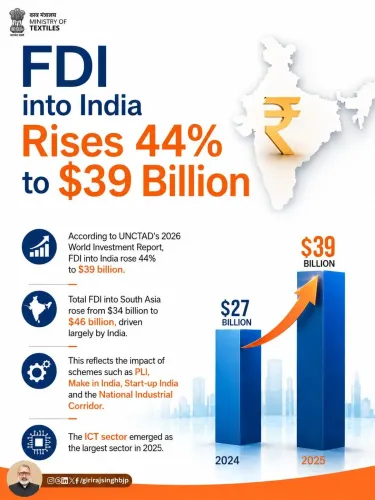
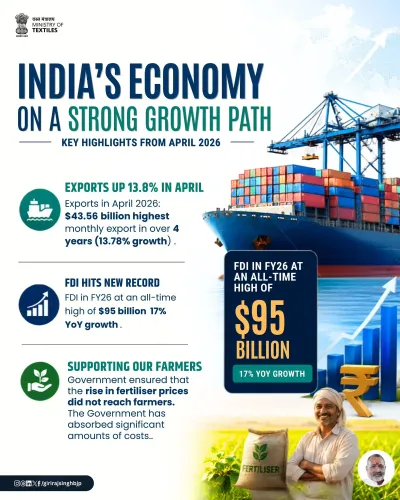
India recorded its highest-ever annual FDI inflow of USD 94.53 billion in FY 2025-26; cumulative FDI from FY 2014-15 to FY 2025-26 reached USD 843 billion .
PLI schemes as of 31 March 2026 have attracted ₹2.40 lakh crore in investment , driven ₹23.8 lakh crore in production/sales and ₹15.2 lakh crore in exports .
PLI schemes have created over 14.6 lakh direct and indirect jobs across sectors including electronics, pharma, automobiles and speciality steel.
The National Industrial Corridor Development Programme is building greenfield smart industrial cities to provide globally competitive manufacturing infrastructure.
ONDC has facilitated over 470 crore orders , significantly boosting small enterprises and digital commerce participation.
Minister Goyal links Make in India's trajectory directly to the Viksit Bharat 2047 goal of making India a global manufacturing powerhouse.
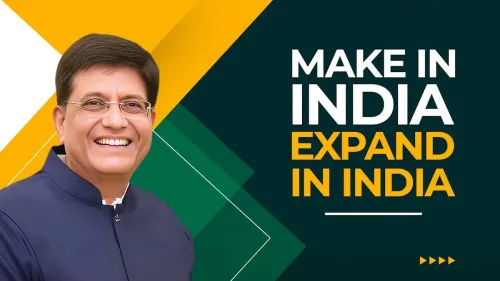
Union Commerce and Industry Minister Piyush Goyal on Friday, 25 September 2026 marked the 12th anniversary of Make in India with a sweeping account of the initiative's journey — from a 2014 bet on Indian manufacturing to a programme now logging record foreign investment and export figures that few imagined possible when the scheme was born.
From import dependence to a USD 94.53 billion FDI year
The headline number that anchors Goyal's assessment: India recorded its highest-ever annual FDI inflow of USD 94.53 billion in FY 2025-26. Cumulative foreign direct investment from FY 2014-15 through FY 2025-26 has now crossed USD 843 billion. Those figures are not a coincidence — they mark twelve years of compounding policy choices made after Prime Minister Narendra Modi formally launched Make in India on 25 September 2014, staking his first term's economic identity on the proposition that India could become a global factory floor.
Goyal frames the 2014 starting point starkly: a country where 'many products used in India were imported' and where scepticism about domestic manufacturing capacity was mainstream. Modi, he writes, 'refused to accept that as our fate.' That refusal translated into a twelve-year reform sequence — FDI liberalisation, Ease of Doing Business overhauls, industrial corridor construction and, from 2020 onwards, the targeted muscle of Production Linked Incentive (PLI) schemes.
PLI scoreboard: ₹2.40 lakh crore invested, 14.6 lakh jobs created
The PLI numbers Goyal cites as of 31 March 2026 are striking. The schemes have drawn ₹2.40 lakh crore in actual investment, generated ₹23.8 lakh crore in production and sales, and powered ₹15.2 lakh crore in exports. More than 14.6 lakh direct and indirect jobs have been created across beneficiary sectors.
Those sectors span the breadth of modern industry: electronics and telecom, pharmaceuticals, medical devices, automobiles, IT hardware, and speciality steel. The spread is deliberate — PLI was designed not as a single-sector subsidy but as a rolling incentive architecture that follows wherever India's comparative advantage can be sharpened. Electronics, once almost entirely imported, now leaves Indian ports at scale. Pharmaceuticals, already a global generics leader before 2014, have deepened that lead.
Greenfield corridors and the ONDC retail revolution
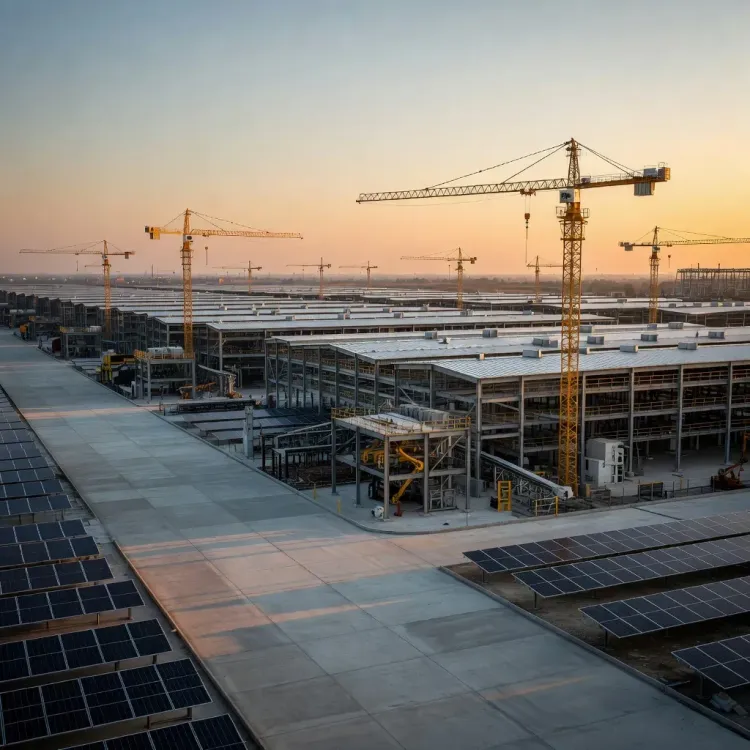
Manufacturing at scale needs land, power, logistics and connectivity before it needs subsidies. That is the logic behind the National Industrial Corridor Development Programme, which is building greenfield industrial smart cities across India to create infrastructure designed for globally competitive production from day one — not retrofitted around legacy constraints.
At the other end of the size spectrum sits the Open Network for Digital Commerce (ONDC), the government-backed open protocol that is doing for small-business e-commerce what UPI did for payments. Goyal notes that over 470 crore orders have been placed through the platform — a figure that signals ONDC has moved decisively past pilot stage into mass adoption. For a Make in India narrative that risks being dominated by heavy industry, ONDC is the proof that the programme's ambition extends to the kirana owner and the cottage artisan.
Viksit Bharat 2047 and the confidence argument
Goyal's post closes on something harder to quantify than FDI or PLI exports: confidence. He argues that Make in India's deepest legacy is 'the confidence among our startup founders, entrepreneurs, manufacturers, innovators, exporters and, most importantly, our people that India can make, India can innovate, and India can compete with the world.'
That confidence now has an explicit destination — Viksit Bharat 2047, the long-term national vision for India to become a developed economy by the centenary of its independence. Making India a 'global manufacturing powerhouse' is cast not as an end in itself but as the structural foundation that turns the 2047 ambition from slogan into arithmetic. Twelve years in, the programme has the numbers to argue the foundation is real. The next twelve will test whether those numbers compound.
Point of View
PLI-led export volumes and ONDC adoption give the government a credible scorecard to present before a 2047 deadline. The framing is significant: Goyal ties every metric back to a confidence-building narrative rather than dwelling on sectoral gaps or import substitution targets still unmet, suggesting the BJP intends Make in India to remain a central economic identity ahead of future electoral cycles. The PLI model's replicability across sectors is the key variable — if it continues to attract greenfield investment in high-value manufacturing, India's integration into global supply chains deepens meaningfully. The corridor and ONDC threads also signal an intent to broaden the programme's base beyond large capital, which is essential if manufacturing's share of GDP is to structurally shift.
NationPress
25 Sept 2026
Frequently Asked Questions
When was Make in India launched and who started it?
Make in India was formally launched on 25 September 2014 by Prime Minister Narendra Modi as the flagship manufacturing initiative aimed at positioning India as a global production hub.
What is India's FDI inflow in FY 2025-26?
India recorded its highest-ever annual FDI inflow of USD 94.53 billion in FY 2025-26 , according to figures cited by Commerce Minister Piyush Goyal on the 12th anniversary of Make in India.
How much investment and exports have PLI schemes generated?
As of 31 March 2026 , PLI schemes have attracted ₹2.40 lakh crore in actual investment , generated ₹23.8 lakh crore in production and sales , and driven ₹15.2 lakh crore in exports , while creating over 14.6 lakh jobs .
What is ONDC and how many orders has it processed?
The Open Network for Digital Commerce (ONDC) is a government-backed open e-commerce protocol designed to help small enterprises sell online. It has facilitated over 470 crore orders to date, according to Minister Goyal's anniversary post.
What is Viksit Bharat 2047 and how does Make in India connect to it?
Viksit Bharat 2047 is India's long-term vision to become a developed economy by the centenary of its independence. Make in India is positioned as the manufacturing foundation that makes this goal achievable, with Minister Goyal describing the aim as turning India into a 'global manufacturing powerhouse.'