Piyush Goyal outlines 7 calls to action to boost India's exports
Synopsis
Union Commerce Minister Piyush Goyal on 4 July 2026 unveiled a seven-point action plan to make exports a core driver of India's growth, building on the Foreign Trade Policy 2023 and the Make in India initiative. The framework targets MSME exporters and the manufacturing sector.
Key Takeaways
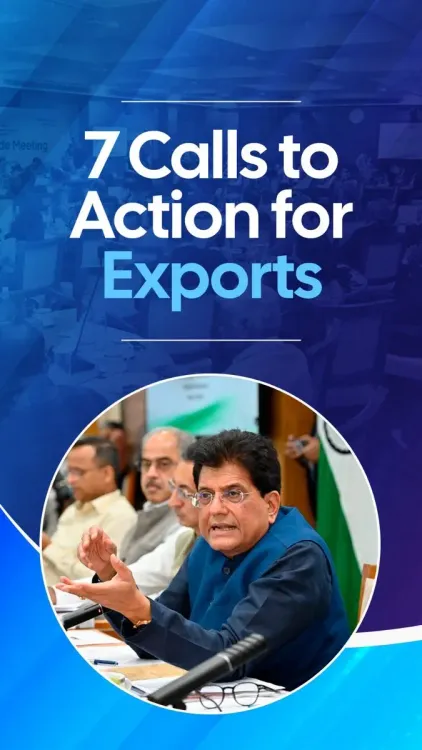
Piyush Goyal , Union Minister of Commerce and Industry, announced 7 calls to action to boost India's exports on 4 July 2026 .
The initiative positions exports as a primary driver of India's economic growth story, not merely a supplementary indicator.
The policy builds on the Make in India initiative (launched 2014 ) and the Foreign Trade Policy 2023 .
MSME exporters and the manufacturing sector are the key stakeholders expected to benefit from the framework.
Detailed operational measures are expected through follow-up ministry communications and the next Foreign Trade Policy review.
The framework could influence India's stance in ongoing free trade agreement negotiations.
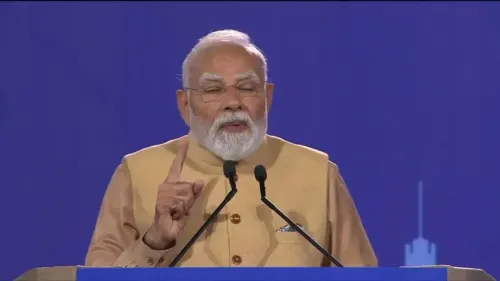
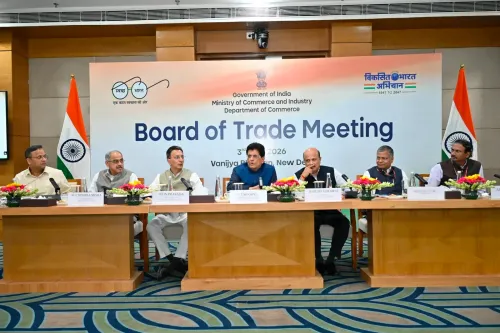
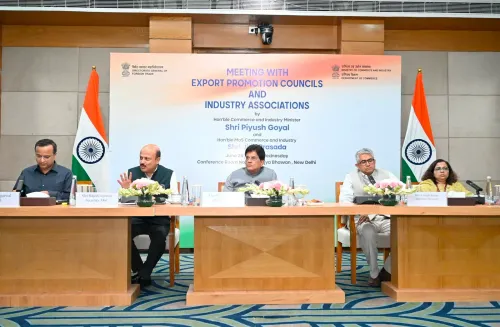
Union Commerce and Industry Minister Piyush Goyal on Saturday, 4 July 2026, laid out a seven-point agenda to make exports a central driver of India's economic growth, sharing his framework publicly on social media.
Context
In his post, Goyal described his '7 calls to action to make exports a key driver of India's growth story,' signalling a structured, minister-level push to accelerate the country's outbound trade. The announcement comes as India continues to seek a larger footprint in global commerce, with the Ministry of Commerce and Industry serving as the nodal body for all export-import policy.
While the specific content of each of the seven calls to action was shared through an accompanying video, the framing underscores the government's intent to treat exports not as a supplementary metric but as a primary engine of national growth.
Policy Backdrop
India's export ambitions have been shaped over the past decade by two major policy pillars. The Make in India initiative, launched in 2014, sought to position domestic manufacturing as the foundation for competitive exports. Building on that, the Foreign Trade Policy 2023 set out to raise overall export volumes and reduce procedural friction for exporters, particularly smaller enterprises.
Successive governments have also sought to move India away from import substitution toward deeper integration into global value chains. The emphasis has increasingly been on diversifying both the basket of export goods and the range of destination markets, reducing dependence on any single trading partner or commodity category.
Stakeholders and Impact
MSME exporters and the broader manufacturing sector stand at the centre of any export-led growth push. Small and medium enterprises account for a significant share of India's merchandise exports and are often the most sensitive to shifts in policy, logistics costs, and market access conditions.
A structured ministerial call to action of this kind typically signals forthcoming consultations, possible scheme refinements, or trade agreement negotiations. Exporters across sectors — from textiles and engineering goods to pharmaceuticals and electronics — are likely to watch for follow-up policy measures that translate the seven-point framework into operational support.
What's Next
The detailed content of Goyal's seven calls to action is expected to be elaborated in official ministry communications, industry interactions, and the next review of the Foreign Trade Policy. Stakeholders and trade bodies will look for specifics on incentive structures, market-access initiatives, and any proposed changes to export facilitation mechanisms.
If the framework gains traction, it could inform India's negotiating posture in ongoing and upcoming free trade agreement talks, as well as the government's engagement with multilateral trade bodies. The broader ambition — raising exports as a share of GDP — remains a long-standing goal that this initiative seeks to reinvigorate with fresh political momentum.
Point of View
Outcome-oriented trade posture ahead of what is likely to be a busy season of free trade agreement negotiations. The use of a numbered 'calls to action' format is deliberate — it sets a measurable public benchmark against which the ministry's performance can be tracked. This sits within a broader pattern of the current government using high-visibility ministerial communication to build momentum for economic priorities. Whether the framework translates into binding policy changes or remains an aspirational roadmap will depend on the specifics that emerge from follow-up official engagements.
NationPress
2 Oct 2026
Frequently Asked Questions
What are Piyush Goyal's 7 calls to action for exports?
Piyush Goyal announced 7 calls to action to make exports a key driver of India's growth on 4 July 2026. The specific details of each point were shared via an accompanying video on social media; official ministry communications are expected to elaborate further.
What is India's current export policy?
India's export policy is currently governed by the Foreign Trade Policy 2023, which aims to raise overall export volumes and simplify procedures for exporters, particularly MSMEs. It builds on the Make in India initiative launched in 2014.
Who is Piyush Goyal?
Piyush Goyal is the Union Minister of Commerce and Industry, a senior BJP leader, and the Leader of the House in the Rajya Sabha. He is responsible for India's foreign trade policies and export promotion.
How does the Make in India initiative relate to exports?
The Make in India initiative, launched in 2014, was designed to boost domestic manufacturing and position India as a competitive exporter. It laid the groundwork for subsequent trade policies aimed at integrating India into global value chains.
Which sectors will benefit from India's export push?
MSME exporters and the broader manufacturing sector are the primary stakeholders. Sectors including textiles, engineering goods, pharmaceuticals, and electronics are expected to watch closely for follow-up incentives and market-access measures.