Goyal Meets EPCs to Sharpen India's Export Edge
Synopsis
Union Commerce Minister Piyush Goyal met Export Promotion Councils and industry bodies on 29 July 2026 to review FTA leverage, Brand India quality exports, logistics upgrades, and MSME access — all framed as building blocks of the Viksit Bharat 2047 goal.
Key Takeaways
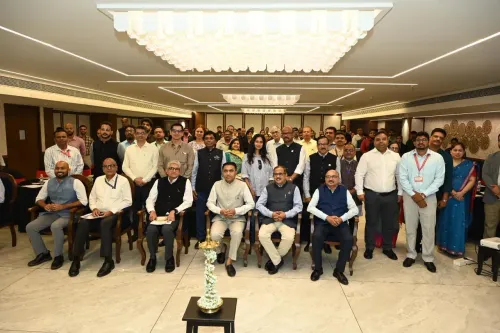
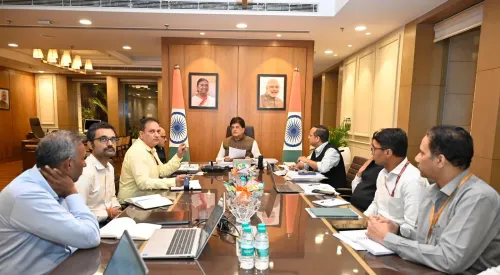
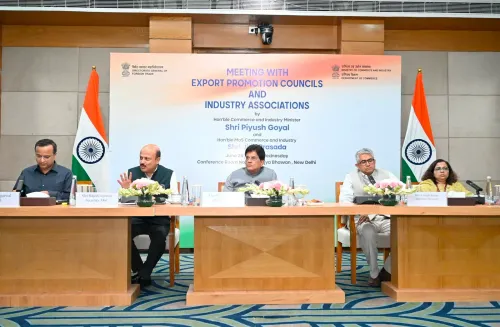
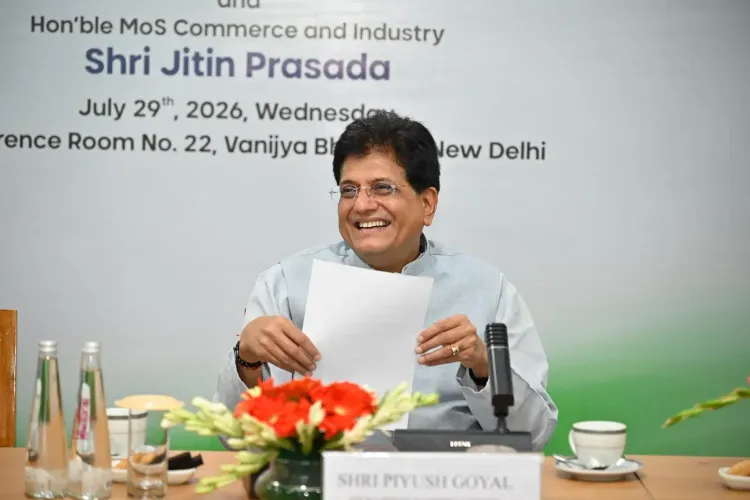
Piyush Goyal chaired a meeting with Export Promotion Councils (EPCs) and industry associations on 29 July 2026 to review India's export ecosystem.
Deliberations covered five areas: FTA utilisation , quality-led Brand India promotion, logistics and trade facilitation, market access expansion, and MSME and new-exporter support.
EPCs are statutory bodies under the Department of Commerce that provide sector-specific export promotion and direct policy feedback.
The meeting builds on the Foreign Trade Policy 2023-28 , which had already prioritised FTA use and MSME integration as key gaps.
The broader agenda is tied to the Viksit Bharat vision of a developed Indian economy by 2047 , with export competitiveness as a core pillar.
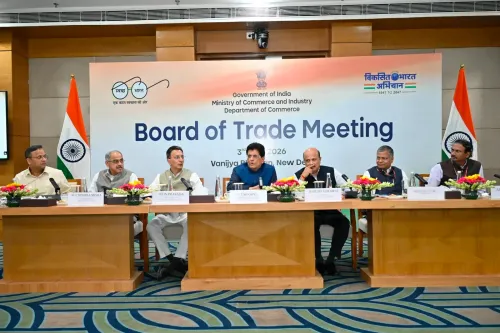
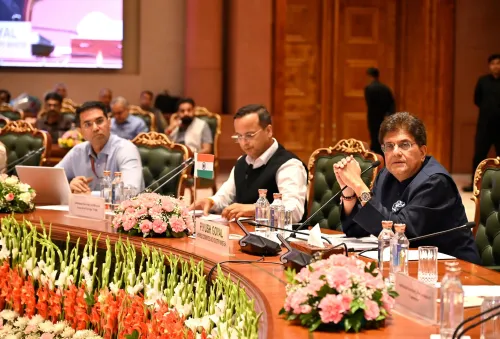
India's export machinery got a hard look on Wednesday, 29 July 2026, as Union Commerce and Industry Minister Piyush Goyal convened a working session with Export Promotion Councils (EPCs) and industry associations to stress-test the country's trade competitiveness. The agenda was blunt: what is working, what is not, and how fast can India move?
FTAs, Brand India, and the MSME push
The meeting covered five interlocking priorities — leveraging Free Trade Agreements (FTAs), promoting Brand India through quality-led exports, improving logistics and trade facilitation, expanding market access, and creating new opportunities for MSMEs and first-time exporters. Each of these threads has its own policy history. The Foreign Trade Policy 2023-28 had already flagged FTA utilisation and MSME integration as critical gaps; Tuesday's session signals a mid-course review of how far implementation has actually travelled.
EPCs — the statutory bodies under the Department of Commerce that champion sector-specific exports — are the government's clearest feedback loop from the ground. When they sit across the table from the Commerce Minister, the conversation is rarely ceremonial. It is about duty structures, logistics bottlenecks, and whether smaller firms can actually access the preferential tariff lanes that trade agreements open up on paper.
Why the 'quality-led exports' signal matters
The emphasis on quality-led exports is a deliberate reframe. For years, India's export strategy leaned on volume and price competitiveness. The newer push — visible since the RoDTEP scheme's operationalisation in 2021 — is toward building durable demand for Indian goods on the strength of standards, not just cost. 'Brand India' in this context is not a marketing slogan; it is a bet that premium positioning in global supply chains offers more resilience than racing to the bottom on price.
MSMEs remain both the opportunity and the pressure point. They account for a substantial share of India's exports and employment, yet FTA utilisation among smaller firms has historically lagged because navigating rules-of-origin documentation and compliance costs can be prohibitive. Expanding access for 'new exporters' — a phrase Goyal used explicitly — suggests the ministry is looking at on-boarding mechanisms, not just headline policy.
The Viksit Bharat scoreboard
Goyal reaffirmed the Modi Government's commitment to a 'stronger, more competitive and future-ready export ecosystem' in service of the Viksit Bharat vision — the government's target of a developed Indian economy by 2047. Export competitiveness is one of the load-bearing pillars of that ambition. India's share in global merchandise trade has inched up over the past decade, but closing the gap with the largest exporting economies demands consistent structural upgrades, not periodic sprints.
The real test will come in the utilisation data from recently signed FTAs and in whether the next Union Budget or Foreign Trade Policy review translates today's deliberations into concrete logistics investments and MSME support mechanisms. Meetings set direction. Numbers confirm it.
Point of View
Which tends to sharpen bureaucratic urgency. The credibility of this push will ultimately be judged by FTA utilisation rates and MSME export share in the next trade data cycle — not by the meeting itself.
NationPress
28 Oct 2026
Frequently Asked Questions
What did Piyush Goyal discuss with Export Promotion Councils in July 2026?
Goyal met EPCs and industry associations on 29 July 2026 to review FTA utilisation, quality-led Brand India exports, logistics improvements, expanded market access, and new opportunities for MSMEs and first-time exporters.
What are Export Promotion Councils and what do they do?
Export Promotion Councils are statutory bodies under India's Department of Commerce that promote sector-specific exports, provide market intelligence, and give direct policy feedback to the government.
How does this meeting relate to Viksit Bharat?
Export competitiveness is one of the core pillars of the Viksit Bharat vision, which targets a fully developed Indian economy by 2047. The meeting reaffirmed the government's intent to build a future-ready export ecosystem aligned with that goal.
What is Brand India in the context of exports?
Brand India in trade policy refers to promoting Indian goods globally on the basis of quality standards and reliability, moving beyond pure price competition to build durable demand in international markets.
How does the Foreign Trade Policy 2023-28 connect to this meeting?
The Foreign Trade Policy 2023-28 had already identified FTA utilisation, MSME support, and Brand India promotion as priorities; the July 2026 meeting appears to be a mid-course review of how far those commitments have been implemented.