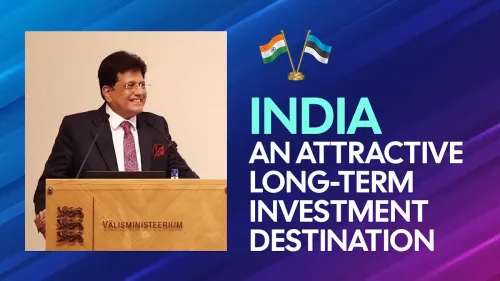
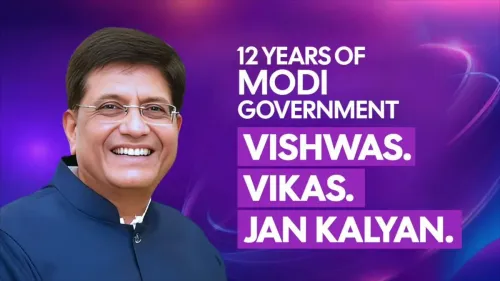
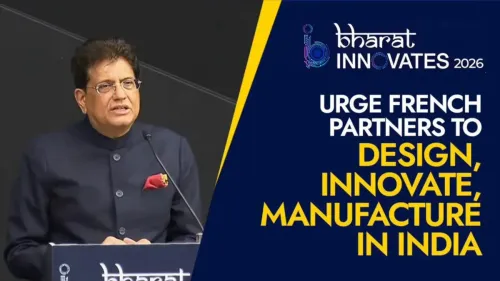
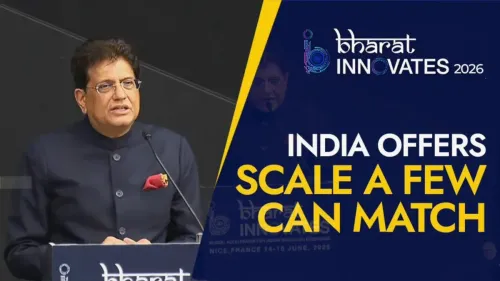
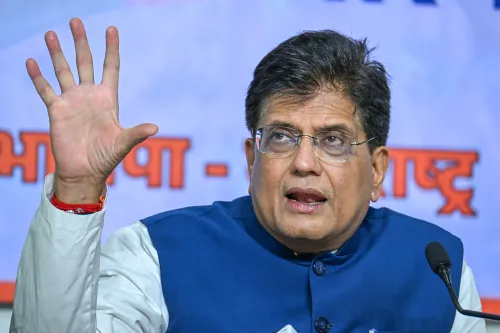
Goyal pitches India as global manufacturing base
Synopsis
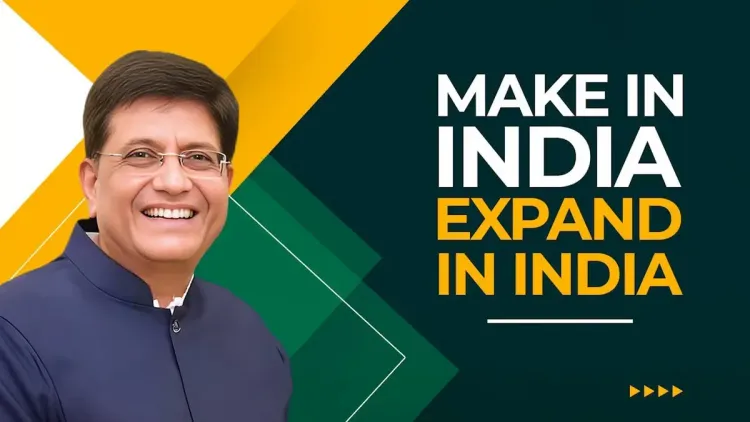
Union Commerce and Industry Minister Piyush Goyal has called on manufacturers to 'Make in India, Expand in India' and treat the country as their base for global operations, reinforcing the decade-long manufacturing push backed by PLI schemes and the Atmanirbhar Bharat framework.
Key Takeaways
Commerce Minister Piyush Goyal publicly urged manufacturers to use India as their global operations base on June 11, 2026 .
The call builds on the Make in India initiative launched in September 2014 by Prime Minister Narendra Modi .
Production Linked Incentive (PLI) schemes spanning 14 sectors have been the primary policy instrument since 2020 to incentivise domestic manufacturing and exports.
The pitch targets both MSME manufacturers and foreign investors seeking alternative supply-chain hubs.
The statement aligns with the broader Atmanirbhar Bharat doctrine of integrating Indian firms into global value chains.
Upcoming PLI tranches , investment summits, and bilateral trade agreement updates are the next policy levers to watch.
Union Commerce and Industry Minister Piyush Goyal on Thursday, June 11, 2026 renewed India's pitch to domestic and foreign manufacturers, urging them to treat India not merely as a market but as the operational headquarters for their worldwide businesses.
Context
Goyal's post — 'Make in India, Expand in India... Make India your base for global operations!' — is a concise restatement of the government's decade-long manufacturing agenda. The call is directed simultaneously at Indian MSMEs looking to scale and at multinational corporations evaluating alternative production hubs amid shifting global supply chains.
The message is accompanied by a video, signalling a deliberate outreach effort rather than a passing remark. As Leader of the House in the Rajya Sabha and the minister responsible for trade and investment promotion, Goyal is among the most prominent voices articulating India's economic positioning to a global audience.
Policy Backdrop
The Make in India initiative was launched in September 2014 by Prime Minister Narendra Modi with the explicit goal of raising manufacturing's share of GDP and attracting large-scale foreign direct investment. The programme introduced structural reforms in ease of doing business, simplified licensing, and opened several strategic sectors to higher FDI limits.
From 2020 onward, the government layered Production Linked Incentive (PLI) schemes across 14 sectors — including electronics, pharmaceuticals, textiles, and automobiles — to reward companies for incremental domestic production and exports. These schemes have drawn commitments from both Indian conglomerates and global technology and consumer-goods majors.
Goyal's framing of India as a 'base for global operations' also reflects the Atmanirbhar Bharat doctrine, which seeks to integrate Indian manufacturers into global value chains rather than simply substitute imports.
Stakeholders and Impact
MSME manufacturers stand to benefit most directly if the government's pitch translates into expanded credit lines, infrastructure upgrades, and preferential procurement. For this segment, 'expanding in India' means access to larger domestic contracts and export facilitation support.
For foreign investors, the proposition is more strategic: India offers a large domestic consumer base, a growing skilled workforce, and — increasingly — competitive logistics infrastructure. The minister's statement reinforces the narrative that India is a viable, long-term alternative to other Asian manufacturing destinations as companies diversify their supply chains.
Trade facilitation measures, bilateral trade agreements under negotiation, and investment promotion events hosted by Invest India and the Commerce Ministry are the operational instruments that back up this public pitch.
What's Next
The government is expected to announce additional PLI tranches and investment summits that would give concrete shape to the 'global operations base' narrative. Bilateral trade agreement updates — including ongoing negotiations with key partners — could further lower barriers for companies considering India as an export hub.
Analysts will watch whether the minister's renewed emphasis translates into fresh policy announcements or investment commitments in the near term, particularly as global firms continue to reassess their manufacturing footprints in response to geopolitical and tariff pressures.
Point of View
Compressed restatement of India's manufacturing diplomacy at a moment when global firms are actively rebalancing supply chains away from single-country dependence. By pairing 'Make in India' with 'Expand in India', the minister signals a maturation of the original 2014 pitch — the ask is no longer just to set up a factory, but to anchor an entire global production strategy in India. This framing is consistent with the Commerce Ministry's broader effort to position India not as a low-cost assembler but as a high-value manufacturing partner. The accompanying video suggests this is a targeted outreach moment, likely timed to investment cycles or ongoing trade negotiations.
NationPress
26 Oct 2026
Frequently Asked Questions
What is the Make in India initiative?
Make in India is a flagship central government programme launched in September 2014 by Prime Minister Narendra Modi to boost domestic manufacturing, attract foreign direct investment, and raise manufacturing's share of India's GDP.
What did Piyush Goyal say about manufacturing in India?
Piyush Goyal posted on June 11, 2026 urging manufacturers to 'Make in India, Expand in India' and to treat India as their base for global operations, reinforcing the government's long-standing manufacturing push.
What are PLI schemes and which sectors do they cover?
Production Linked Incentive (PLI) schemes, rolled out from 2020 , offer financial incentives to companies for incremental domestic production and exports across 14 sectors including electronics, pharmaceuticals, textiles, and automobiles.
Why is India being pitched as a global manufacturing hub?
India offers a large domestic market, a growing skilled workforce, and improving logistics infrastructure. Amid global supply-chain diversification, the government argues India is a competitive alternative production base for multinational companies.
What is Atmanirbhar Bharat and how does it relate to Make in India?
Atmanirbhar Bharat is India's self-reliance economic doctrine that complements Make in India by aiming to integrate domestic manufacturers into global value chains, moving beyond import substitution toward export-oriented production.