Giriraj Singh Hails 44% FDI Jump to $39 Billion
Synopsis
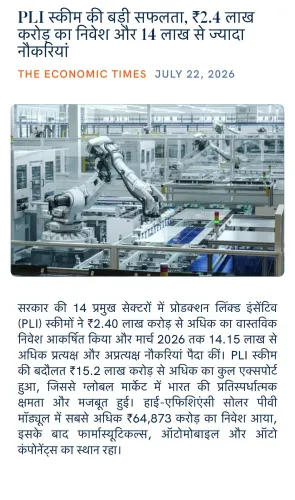
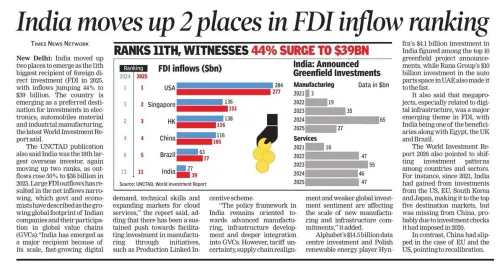
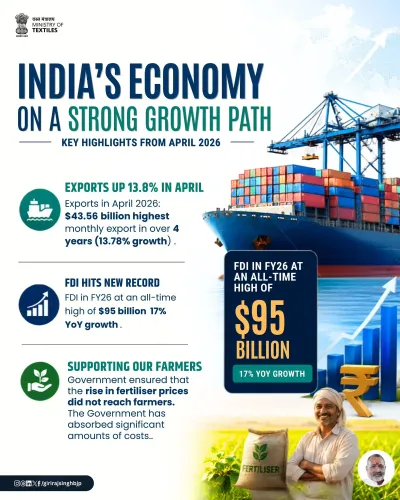
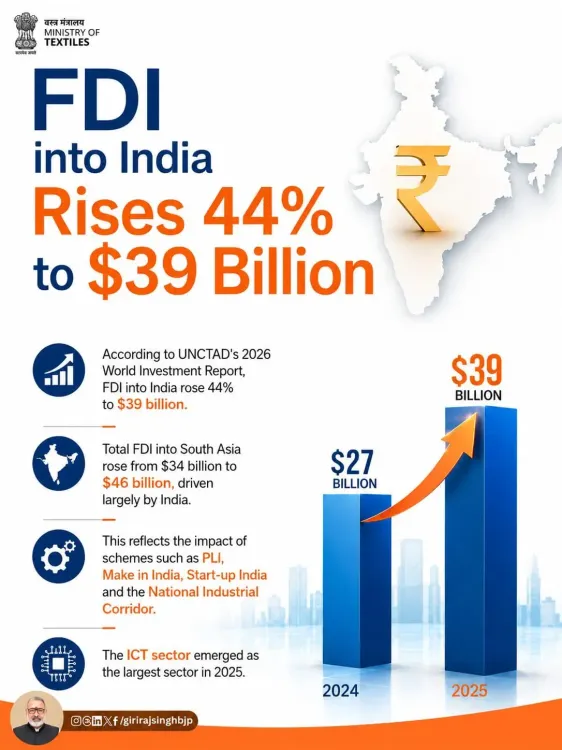
Union Textiles Minister Giriraj Singh on 22 July 2026 highlighted a 44 per cent surge in India's FDI to $39 billion, crediting Make in India, Startup India, and PLI schemes, and linking the inflow to the Viksit Bharat 2047 development vision.
Key Takeaways
Union Textiles Minister Giriraj Singh posted on 22 July 2026 citing a 44 per cent rise in India's FDI.
The inflow figure cited stands at $39 billion (approximately 39 arab rupees in dollar terms) .
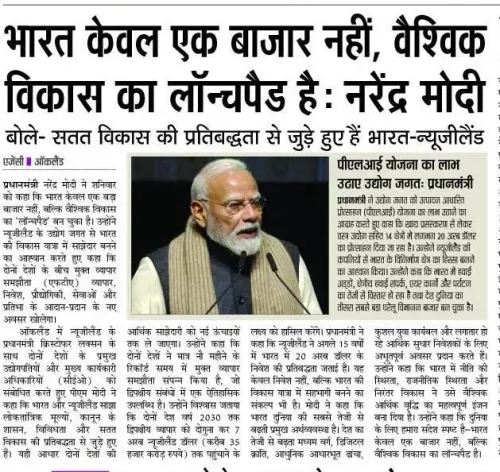
Singh attributed the surge to Make in India (2014), Startup India (2016), and PLI schemes (expanded across 14 sectors from 2020-21).
The minister said rising investment will drive new industries, job creation, and faster economic growth .
The post was framed within the Viksit Bharat 2047 vision of India becoming a developed economy by independence's centenary.
Next quarterly FDI data from the Reserve Bank of India and fresh PLI notifications will be key indicators to watch.
Union Textiles Minister Giriraj Singh on Wednesday, 22 July 2026, highlighted a 44 per cent rise in foreign direct investment (FDI) into India, citing the figure as evidence of growing global confidence in the country's economic fundamentals. The minister attributed the surge to flagship government initiatives and a steadily improving business environment.
Posting on X, Singh wrote: 'भारत में विदेशी निवेश (FDI) का 44% बढ़कर 39 अरब डॉलर तक पहुँचना वैश्विक स्तर पर भारत के प्रति बढ़ते विश्वास और मजबूत आर्थिक माहौल का स्पष्ट संकेत है' — ['A 44 per cent increase in FDI into India, reaching 39 billion dollars, is a clear signal of growing global trust in India and a strong economic environment.'] He added that the achievement was the result of initiatives such as Make in India, Startup India, and the Production Linked Incentive (PLI) scheme, and that rising investment would accelerate new industries, employment opportunities, and economic growth.
Context
The minister's remarks come as India continues to position itself as a preferred destination for global capital. Singh framed the $39 billion inflow as a validation of the government's decade-long push to liberalise FDI policy and build a more investor-friendly regulatory environment. The post was tagged with #FDI, #MakeInIndia, #StartupIndia, #PLI, and #ViksitBharat2047, signalling alignment with the government's long-term development vision.
Policy Backdrop
Make in India was launched in September 2014 to position India as a global manufacturing hub, while Startup India followed in January 2016, offering tax benefits and regulatory support to new enterprises. The PLI schemes, first announced in the Union Budget for 2020-21, were subsequently expanded across 14 sectors to incentivise domestic production and attract technology-intensive investment. Together, these programmes have formed the backbone of India's supply-side reform strategy over the past decade.
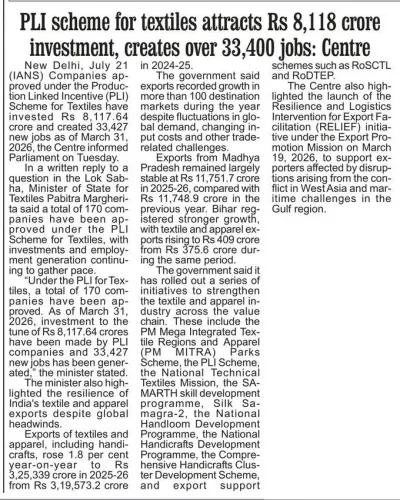
Since 2014, successive administrations have also eased FDI norms through periodic policy notifications, introduced single-window clearance mechanisms, and reduced compliance burdens to raise India's share of global investment flows. The textiles sector — Singh's own portfolio — has been among the beneficiaries of PLI allocations, with the scheme targeting modernisation of spinning, weaving, and technical textiles.
Stakeholders and Impact
A sustained rise in FDI carries direct implications for foreign investors, domestic manufacturing firms, and job seekers across sectors. Higher inflows typically translate into capacity expansion, technology transfer, and new employment, particularly in labour-intensive industries such as textiles, electronics, and auto components. Singh specifically noted that the investment surge would generate 'new industries, employment opportunities, and faster economic growth' — a message aimed squarely at the aspirational workforce and industrial stakeholders.
The Viksit Bharat 2047 vision — India's long-term goal of achieving developed-economy status by the centenary of independence — provides the broader frame for these claims. Sustained double-digit FDI growth, if maintained, would be a key metric in tracking progress toward that target.
What's Next
Attention will now turn to the next quarterly FDI data release, which will test whether the momentum cited by the minister is sustained across sectors and source countries. Any fresh PLI notifications or budget allocations — particularly for textiles and advanced manufacturing — will be closely watched by industry bodies and investor groups. Singh's post underscores that FDI performance has become a central political and economic benchmark for the ruling dispensation as it builds its narrative ahead of future electoral cycles.
Point of View
Startup India, PLI, and Viksit Bharat 2047 in a single post, the minister reinforces the narrative that a decade of supply-side reforms is now yielding measurable results. The timing is significant: with FDI figures serving as a proxy for investor confidence, such messaging is likely to intensify ahead of any electoral or budgetary cycle. The minister's framing also signals that the government intends to make FDI performance a central plank in its broader economic credibility argument.
NationPress
21 Oct 2026
Frequently Asked Questions
What is the FDI increase in India that Giriraj Singh mentioned?
Giriraj Singh cited a 44 per cent increase in FDI into India, with the total inflow reaching $39 billion , attributing the rise to government schemes such as Make in India, Startup India, and PLI.
What is Make in India and how does it relate to FDI?
Make in India is a flagship manufacturing initiative launched in September 2014 to position India as a global production hub; it is one of the key programmes the government credits with attracting higher foreign investment inflows.
What is the PLI scheme and which sectors does it cover?
The Production Linked Incentive (PLI) scheme, first announced in the Union Budget for 2020-21 , provides financial incentives to manufacturers and has been expanded to cover 14 sectors , including textiles, electronics, and pharmaceuticals.
What is Viksit Bharat 2047?
Viksit Bharat 2047 is India's long-term national vision to achieve developed-economy status by 2047 , the centenary of independence; rising FDI is frequently cited as a key metric for progress toward this goal.
Who is Giriraj Singh?
Giriraj Singh is the Union Minister of Textiles, a senior BJP leader, and a Lok Sabha MP representing Begusarai, Bihar ; he is known for frequently commenting on economic and development policy.