Giriraj Singh hails 7x surge in India's net FDI to $7.7 bn in FY26
Synopsis
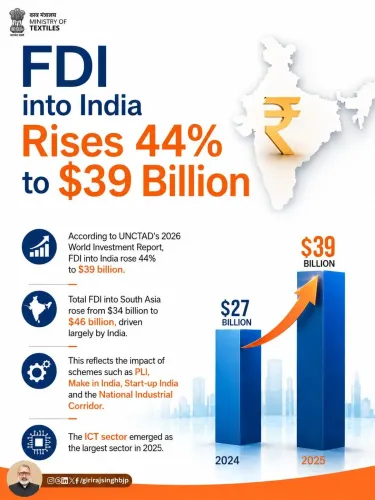
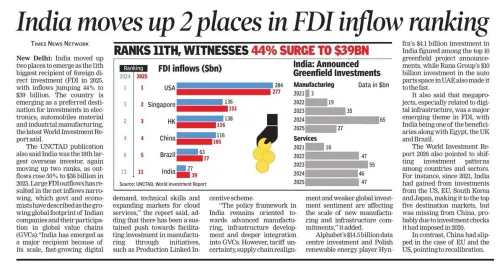
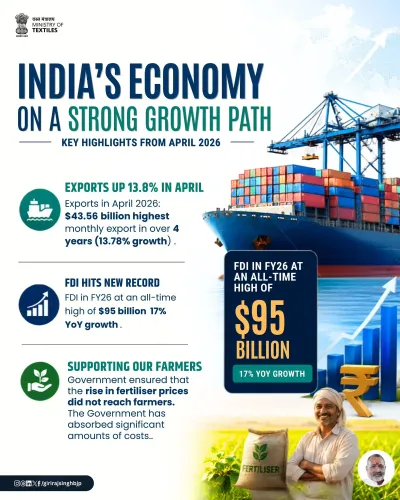
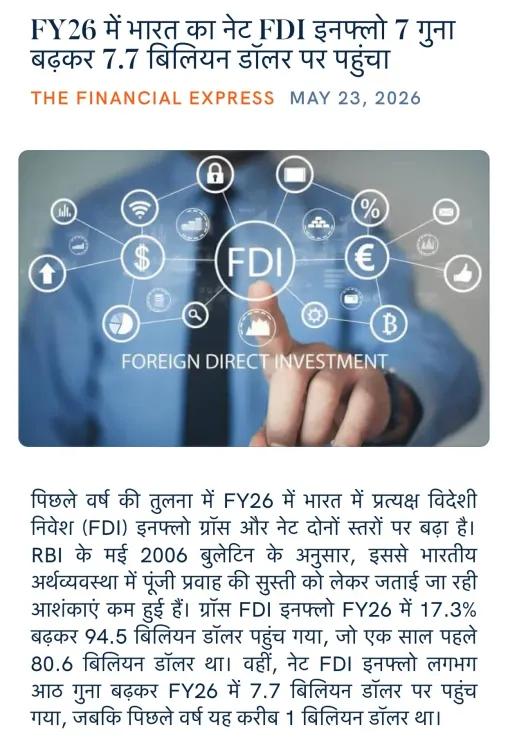
Union Textiles Minister Giriraj Singh on 23 May 2026 shared data showing India's net FDI inflows jumped nearly sevenfold in FY26 to $7.7 billion from $1 billion in FY25, citing it as evidence of growing investor confidence under current economic policies.
Key Takeaways
India's net FDI inflows reached $7.7 billion in FY26 , a nearly sevenfold increase from approximately $1 billion in FY25 .
Union Textiles Minister Giriraj Singh amplified the data on 23 May 2026 via the NaMo App on X.
Net FDI accounts for gross inflows minus repatriation and disinvestment, making it a more conservative measure of retained foreign capital.
India has liberalised FDI policy since 2014 , with PLI schemes across 14 sectors launched from 2020 to attract manufacturing investment.
DPIIT and RBI are expected to publish the final, audited FY26 FDI figures later in 2026.
The textiles sector, a priority area for employment and exports, stands to benefit if FDI momentum is sustained into FY27.
Union Textiles Minister Giriraj Singh on Saturday, 23 May 2026, shared data showing India's net foreign direct investment inflows rose nearly sevenfold in FY26, reaching $7.7 billion compared to approximately $1 billion in FY25 — citing the development as a marker of investor confidence in the Indian economy.
Context
Singh shared the data via the NaMo App, amplifying a report on the sharp rebound in net FDI inflows. The post, in Hindi, highlighted: 'FY26 mein Bharat ka net FDI inflow 7 guna badhkar 7.7 billion dollar par pahuncha' ('India's net FDI inflow in FY26 rose 7 times to 7.7 billion dollars'). Net FDI — gross inflows minus repatriation and disinvestment — is considered a more conservative and meaningful measure of actual foreign capital retained within the country.
The figure represents a significant turnaround from FY25, when net inflows had compressed to around $1 billion, reflecting elevated repatriation by multinational companies amid global risk-off sentiment and profit-booking in Indian equities.
Policy Backdrop
India has progressively liberalised its FDI policy since 2014, placing most sectors under the automatic route and permitting up to 100 percent foreign ownership in several industries. The Make in India initiative, launched in 2014, was designed specifically to position the country as a global manufacturing hub and attract long-term capital across sectors including electronics, defence, and textiles.
From 2020 onwards, the government rolled out Production Linked Incentive (PLI) schemes across 14 sectors to incentivise fresh investment and export-linked production. The Department for Promotion of Industry and Internal Trade (DPIIT), which formulates FDI policy and tracks inflow data in coordination with the Reserve Bank of India (RBI), periodically publishes both gross and net FDI figures to assess the quality and sustainability of investment flows.
Textiles and apparel — sectors directly under Singh's ministry — have been priority areas under multiple incentive schemes, given their high employment intensity and export potential.
Stakeholders and Impact
A sevenfold rise in net FDI is significant for foreign investors, domestic manufacturers, and export-oriented industries. Higher retained foreign capital typically signals stronger long-term commitment by global companies to Indian operations, as opposed to short-term portfolio flows that can reverse quickly.
For the textiles sector, improved FDI sentiment could translate into fresh capacity creation, technology transfer, and integration into global value chains — particularly as India seeks to capture manufacturing share shifting away from other Asian economies. Bihar and other industrially developing states stand to benefit if investment flows into labour-intensive sectors.
What's Next
The final, audited FY26 FDI statistics from DPIIT and RBI are expected to be released later in 2026, which will provide a complete sectoral and geographic breakdown of where foreign capital has landed. Any fresh policy adjustments — including further easing of sectoral caps or new PLI tranches — are likely to be signalled in the Union Budget 2027.
If the net FDI recovery is sustained through FY27, it would strengthen the government's narrative heading into a period of heightened global competition for manufacturing investment, particularly as multinational companies accelerate 'China-plus-one' supply-chain strategies.
Point of View
As net figures strip out repatriation and are harder to inflate, lending the claim greater credibility if the underlying data holds up to DPIIT's final audit. The sevenfold jump also reflects how compressed FY25's base was, meaning the absolute number — $7.7 billion — should be contextualised against India's historical gross FDI figures, which have typically been in the $70-80 billion range. Sustained net FDI recovery will ultimately depend on whether global supply-chain realignment translates into committed, long-term capital rather than short-cycle inflows.
NationPress
19 Sept 2026
Frequently Asked Questions
What is India's net FDI inflow in FY26?
India's net FDI inflow in FY26 rose to approximately $7.7 billion, nearly seven times the $1 billion recorded in FY25, according to data shared by Union Textiles Minister Giriraj Singh on 23 May 2026.
What is the difference between gross FDI and net FDI?
Gross FDI refers to total foreign investment inflows into a country, while net FDI subtracts repatriation of profits and disinvestment by foreign companies, giving a more conservative picture of capital actually retained in the economy.
Why did India's net FDI fall so sharply in FY25?
Net FDI compressed in FY25 largely due to elevated repatriation by multinational companies amid global risk-off sentiment and profit-booking in Indian markets, reducing the net capital retained after accounting for outflows.
Which government body tracks India's FDI data?
The Department for Promotion of Industry and Internal Trade (DPIIT), in coordination with the Reserve Bank of India (RBI), formulates FDI policy and publishes periodic data on both gross and net foreign investment inflows.
How does the Make in India scheme relate to FDI growth?
Make in India, launched in 2014, aimed to position India as a global manufacturing destination by liberalising FDI rules and easing procedural requirements. It is widely cited as a structural driver of India's efforts to attract long-term foreign capital across sectors including textiles, electronics, and defence.