CMAS: India's ₹10,000 crore container scheme targets 53,000 jobs, cuts imports
Synopsis
India imports nearly 2 million empty containers a year — and the government wants to end that dependence. The ₹10,000 crore CMAS, paired with a ₹70,000 crore shipbuilding package, is the Centre's most direct bet yet on building a self-sufficient maritime manufacturing base, with 53,000 jobs and ₹99,149 crore in projected investments on the line.
Key Takeaways
The Centre proposed the Container Manufacturing Assistance Scheme (CMAS) on 11 August , backed by a ₹10,000 crore outlay.
The scheme targets over 53,000 jobs — 3,000 direct and more than 50,000 indirect — across container manufacturing and allied industries.
Projected investments stand at approximately ₹99,149 crore , covering 51 container vessels and domestic container procurement.
India currently imports nearly 2 million empty containers annually; CMAS aims to reduce this dependence.
The scheme complements Make in India , Maritime Amrit Kaal Vision 2047 , and a separately announced ₹70,000 crore Shipbuilding Financial Assistance Package .
UNCTAD data shows 80% of global merchandise trade by volume moves by sea, underlining the strategic importance of domestic container capacity.
The Centre on Tuesday, 11 August unveiled the Container Manufacturing Assistance Scheme (CMAS), a ₹10,000 crore initiative aimed at building a domestic container manufacturing base, reducing India's dependence on imported empty containers, and generating over 53,000 jobs, according to an official statement. The scheme is part of a broader push to strengthen India's maritime and logistics competitiveness ahead of its long-term trade ambitions.
What CMAS Covers
The scheme is designed to promote manufacturing, investment, and technology development across the container ecosystem. It is expected to catalyse investments of approximately ₹99,149 crore in fleet development — covering 51 container vessels of various sizes — and domestic container procurement. Ancillary industries such as corner castings, wooden frames, and corten steel are also expected to benefit.
According to the official statement, CMAS 'marks a significant step towards building a globally competitive maritime manufacturing ecosystem.'
Employment and Investment Impact
The scheme is projected to create around 3,000 direct jobs and more than 50,000 indirect jobs across container manufacturing and allied industries. The government's statement framed CMAS as a supply-chain resilience measure as much as an employment driver, noting that India currently imports nearly 2 million empty containers annually to meet domestic demand and for repositioning purposes.
The Global Context
The initiative comes at a moment of heightened global maritime stress. The United Nations Conference on Trade and Development (UNCTAD) has noted that around 80 per cent of global merchandise trade by volume moves by sea, and that geopolitical tensions have increased freight-rate volatility, placing pressure on maritime transport networks. Many countries are now prioritising domestic manufacturing of critical logistics assets, including shipping containers, in response.
India's growing trade volumes have sharpened the need for a self-sufficient container base — a gap CMAS is explicitly designed to address.
Fit Within Broader Policy Architecture
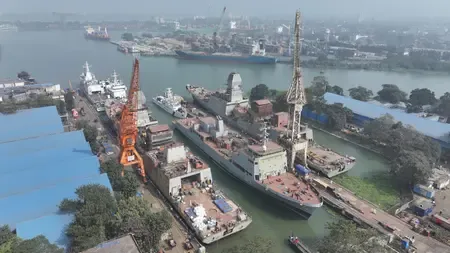
CMAS complements several existing government frameworks, including Make in India, the Maritime Amrit Kaal Vision 2047, and multimodal logistics development programmes. Separately, the government has also announced a ₹70,000 crore Shipbuilding Financial Assistance Package aimed at boosting domestic shipbuilding capabilities and attracting further investment into the maritime manufacturing sector.
Together, the two schemes signal a concerted effort to reduce India's structural dependence on foreign-built vessels and containers — a vulnerability that global supply-chain disruptions since 2020 have repeatedly exposed.
What Comes Next
The scheme is described as 'proposed' in the official statement, suggesting implementation guidelines and disbursement timelines are yet to be finalised. Industry observers will watch closely for clarity on eligibility criteria, production-linked conditions, and how the government plans to verify employment outcomes — areas where past industrial schemes have faced scrutiny.
Point of View
Not just a logistics one. Yet the scheme is still described as 'proposed', and the gap between announcement and implementation has historically been wide in Indian industrial policy. The critical question is whether disbursements will be tied to verifiable employment and production outcomes, or whether the 53,000-jobs figure will remain a projection. With a ₹70,000 crore shipbuilding package running in parallel, the maritime sector is receiving its most concentrated policy attention in decades — but execution, not ambition, will determine whether India actually closes its container import gap.
NationPress
25 Sept 2026
Frequently Asked Questions
What is the Container Manufacturing Assistance Scheme (CMAS)?
CMAS is a proposed Central government scheme backed by a ₹10,000 crore outlay, aimed at promoting domestic container manufacturing, reducing India's dependence on imported empty containers, and generating over 53,000 jobs. It is designed to catalyse investments of approximately ₹99,149 crore across container production and fleet development.
How many jobs will CMAS create?
The scheme is projected to generate around 3,000 direct jobs and more than 50,000 indirect jobs across container manufacturing and allied industries such as corner castings, wooden frames, and corten steel.
Why does India need a domestic container manufacturing scheme?
India imports nearly 2 million empty containers annually to meet domestic demand and for repositioning. UNCTAD has flagged that geopolitical tensions and freight-rate volatility are pressuring global maritime networks, making domestic container capacity a strategic priority for trade-dependent economies like India.
How does CMAS fit with other government schemes?
CMAS complements Make in India, the Maritime Amrit Kaal Vision 2047, and multimodal logistics development initiatives. It runs alongside a separately announced ₹70,000 crore Shipbuilding Financial Assistance Package, together forming the government's most concentrated push yet into maritime manufacturing.
When will CMAS be implemented?
The scheme has been announced but is still described as 'proposed' in the official statement, meaning detailed implementation guidelines, eligibility criteria, and disbursement timelines are yet to be released by the government.