Semicon 2.0 and MPMS could generate over 3.6 lakh jobs: Industry
Synopsis
India's Cabinet has cleared two of its most ambitious technology manufacturing bets — Semicon 2.0 at ₹1,27,500 crore and MPMS at ₹62,500 crore — with industry projecting over 3.6 lakh jobs and $40–50 billion in fresh semiconductor investment. If Phase 2 delivers where Phase 1 only promised, this could be the moment India genuinely enters the global semiconductor supply chain.
Key Takeaways
Semicon 2.0 (outlay: ₹1,27,500 crore ) and MPMS (outlay: ₹62,500 crore ) received Cabinet approval, targeting over 3.6 lakh jobs combined.
Semicon 2.0 could attract $40–50 billion in fresh investment and create 2–3 lakh high-skilled jobs .
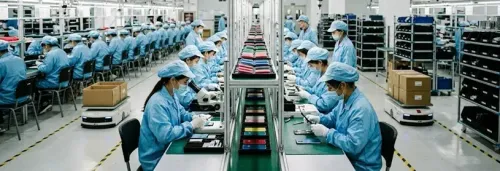
MPMS is projected to nearly double cumulative mobile production to ₹39 lakh crore and exports to ₹15 lakh crore , adding 60,000 direct jobs.
Phase 1 of India's semiconductor initiative secured more than $20 billion in announced projects, according to IESA .
Global semiconductor equipment spending is forecast to reach $230 billion by 2028 , a market India is now positioning to capture.
Cabinet approvals for Semicon 2.0 and the Mobile Phone Manufacturing Scheme (MPMS) signal a strategic pivot from assembly-led growth toward building a full semiconductor value chain in India, with industry bodies projecting the two schemes could collectively create over 3.6 lakh jobs. The announcements, welcomed by leading electronics and semiconductor associations, are being described as among the most consequential industrial policy moves of the decade.
What the Two Schemes Commit
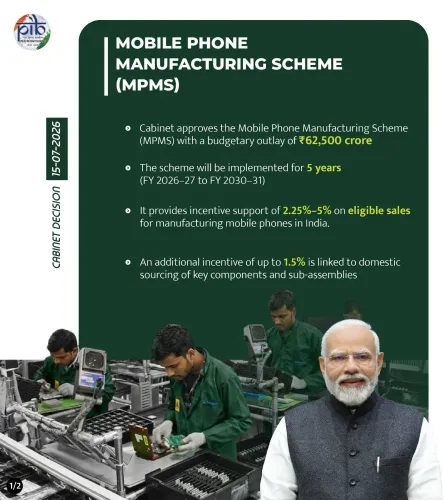
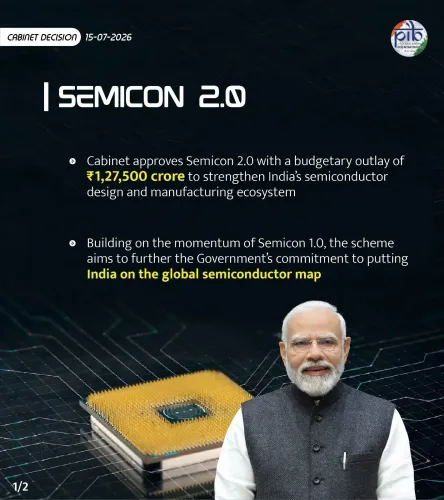
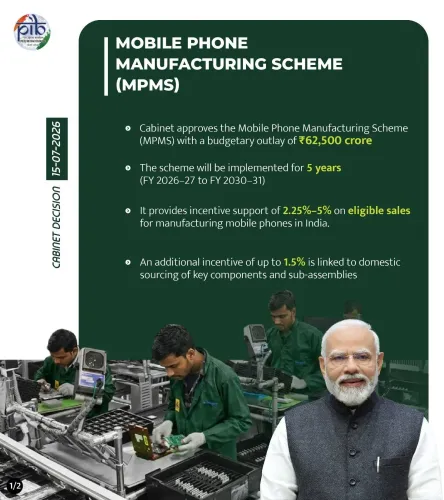
Semicon 2.0 carries a committed outlay of ₹1,27,500 crore, while the MPMS is backed by ₹62,500 crore. Together, they aim to move India decisively beyond the role of a low-cost assembly destination. According to industry bodies, Semicon 2.0 alone could attract $40–50 billion in fresh investment and generate 2–3 lakh high-skilled jobs. The MPMS, meanwhile, is projected to nearly double cumulative mobile phone production to approximately ₹39 lakh crore and cumulative exports to around ₹15 lakh crore, while adding 60,000 direct jobs.
Semiconductor Industry Response
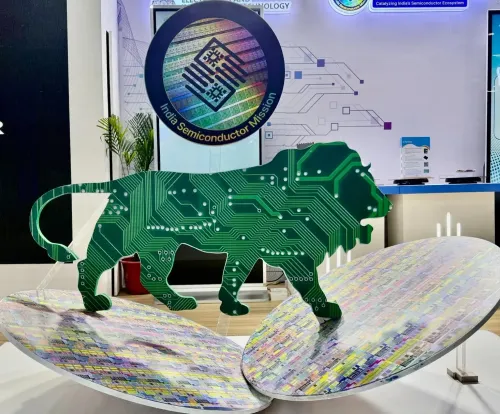
The India Electronics and Semiconductor Association (IESA) noted that Phase 1 of India's semiconductor push had already helped secure more than $20 billion in announced semiconductor projects. Phase 2, the association said, places greater emphasis on fabs, advanced packaging, design, research and development, talent development, and equipment and materials — areas considered essential for long-term competitiveness.
'With several OSAT projects already under implementation and entering production, Phase 2 rightly places greater emphasis on semiconductor fabs, while continuing strong support for advanced packaging, thereby creating a balanced and future-ready semiconductor ecosystem,' IESA said in a statement.
Ashok Chandak, President of IESA and SEMI India, said: 'SEMICON 2.0 marks a decisive step in India's journey from policy intent to execution at scale. Phase 1 established India's credibility and phase 2 will build long-term capability.' Chandak also pointed to worldwide semiconductor manufacturing equipment spending expected to reach nearly $230 billion by 2028, positioning India to capture a share of that wave.
Mobile Manufacturing: From Assembly Hub to Innovation Base
Pankaj Mohindroo, Chairman of the India Cellular and Electronics Association (ICEA), welcomed the policy continuity, saying ISM 2.0's focus on design, R&D, capital goods, and skills will help India become a 'skill capital' for the global semiconductor industry. 'ISM 2.0 can bring together manufacturing, supply chain, innovation and human capital to build a globally competitive semiconductor ecosystem,' he said.
Ashok Gupta, Chairman of Optiemus Electronics Limited (OEL), called the MPMS 'a landmark policy intervention' that will build on the success of the Production-Linked Incentive (PLI) programme. 'The approval of the Mobile Phone Manufacturing Scheme (MPMS) is a landmark policy intervention that will build on the success of the PLI programme and accelerate India's transition from a mobile assembly hub to a globally competitive manufacturing and innovation powerhouse,' Gupta said. He added that the scheme provides long-term policy certainty for fresh investments and fosters indigenous technology development.
Broader Context and What Comes Next
This comes amid intensifying global competition for semiconductor supply chain dominance, with the United States, the European Union, Japan, and South Korea all deploying large-scale incentive programmes. India's Phase 1 semiconductor initiative drew criticism for slow execution, but the commissioning of early OSAT facilities has lent Phase 2 credibility it otherwise might not have enjoyed. Notably, the combined outlay of nearly ₹1.9 lakh crore across both schemes represents one of the largest technology manufacturing commitments in India's post-liberalisation history. Sectoral guidelines and disbursement timelines are awaited, and industry observers will watch closely whether execution matches the ambition of the headline numbers.
Point of View
But India has announced large semiconductor and electronics targets before — and underdelivered on timelines. The real signal here is that Phase 1 OSAT facilities are actually entering production, which gives Phase 2 a credibility floor that earlier announcements lacked. The harder question is whether India can move up the value chain fast enough: fabs require sustained policy stability, a deep talent pipeline, and reliable infrastructure over a decade-plus horizon. Welcoming statements from IESA and ICEA are expected; what matters is whether disbursement mechanisms are tighter and more verifiable than PLI's earlier rounds, where output often outpaced verifiable employment outcomes.
NationPress
14 Oct 2026
Frequently Asked Questions
What are Semicon 2.0 and the Mobile Phone Manufacturing Scheme (MPMS)?
Semicon 2.0 is India's second-phase semiconductor incentive programme with a committed outlay of ₹1,27,500 crore, aimed at building capabilities in fabs, advanced packaging, design, and R&D. The MPMS is a ₹62,500 crore scheme designed to accelerate India's transition from mobile phone assembly to full-scale manufacturing and innovation, building on the earlier PLI programme.
How many jobs could Semicon 2.0 and MPMS create?
Industry bodies project the two schemes could collectively generate over 3.6 lakh jobs. Semicon 2.0 is expected to create 2–3 lakh high-skilled jobs, while MPMS could add 60,000 direct jobs in mobile phone manufacturing.
How much foreign investment could Semicon 2.0 attract?
According to industry body IESA, Semicon 2.0 could attract $40–50 billion in fresh investment, positioning India to benefit from global semiconductor equipment spending projected to reach $230 billion by 2028.
What did Phase 1 of India's semiconductor scheme achieve?
Phase 1 helped secure more than $20 billion in announced semiconductor projects, according to IESA. Several OSAT (Outsourced Semiconductor Assembly and Test) facilities are already under implementation and entering production.
How will MPMS change India's mobile phone manufacturing sector?
MPMS aims to nearly double India's cumulative mobile phone production to approximately ₹39 lakh crore and cumulative exports to around ₹15 lakh crore. Industry leaders say it will shift India from being a mobile assembly hub to a globally competitive manufacturing and innovation destination, providing long-term policy certainty for fresh investments.