Rajnath Singh hails ₹62,500 cr Mobile Phone Manufacturing Scheme
Synopsis
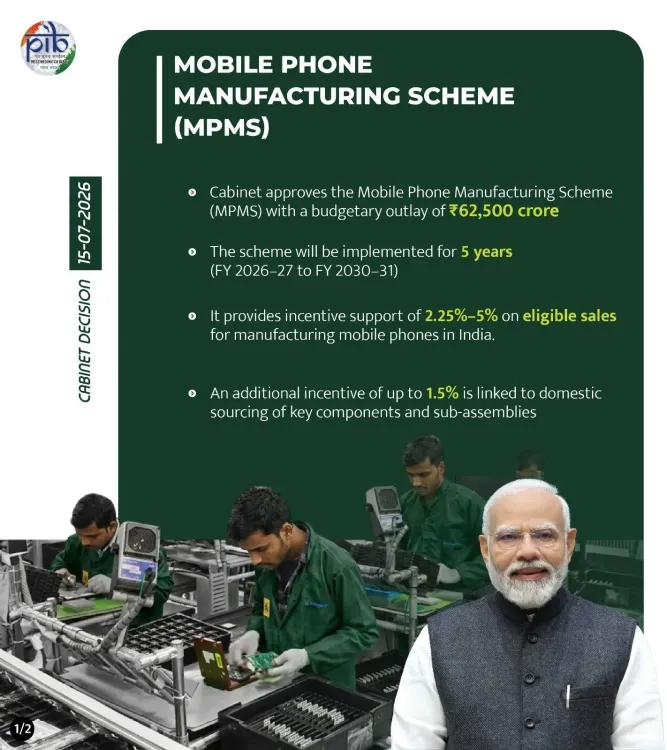
The Union Cabinet has approved the Mobile Phone Manufacturing Scheme with a ₹62,500 crore outlay. Defence Minister Rajnath Singh hailed the decision as a defining milestone for India's electronics sector, citing goals of domestic value addition, brand promotion, R&D, employment, and export growth.
Key Takeaways
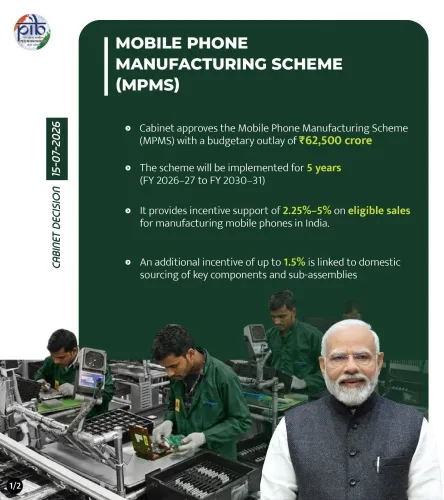
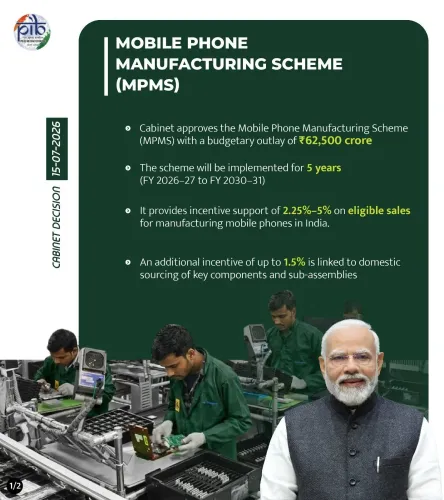
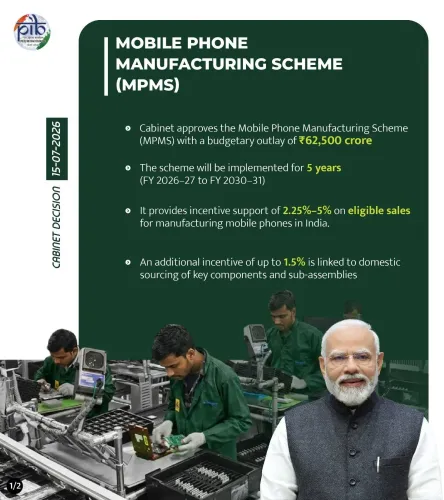
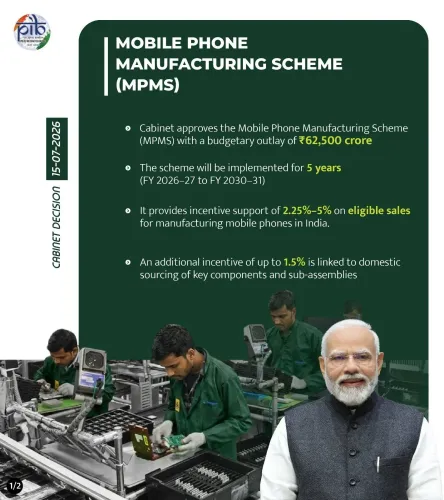
The Union Cabinet approved the Mobile Phone Manufacturing Scheme (MPMS) with an outlay of ₹62,500 crore .
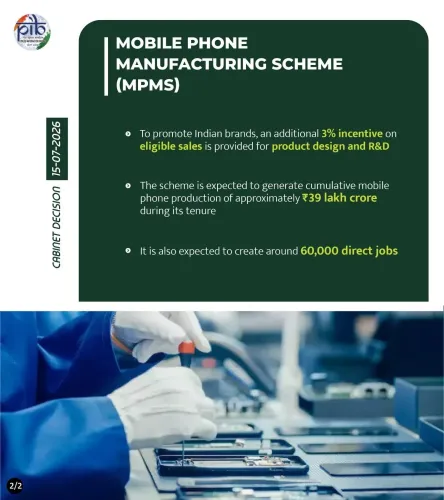
The scheme targets domestic value addition, Indian brand promotion, design and R&D acceleration, quality employment, and export growth.
The MPMS outlay is significantly larger than the ₹38,325 crore PLI scheme for Large Scale Electronics Manufacturing approved in 2020 .
Union Defence Minister Rajnath Singh publicly welcomed the decision and thanked PM Modi for approving it.
Detailed scheme guidelines, beneficiary selection criteria, and possible customs duty changes are yet to be announced.
The scheme is part of a broader policy arc spanning Make in India and Atmanirbhar Bharat aimed at reducing import dependence in electronics.
Union Defence Minister Rajnath Singh on Wednesday, 15 July 2026 welcomed the Union Cabinet's approval of the Mobile Phone Manufacturing Scheme (MPMS), calling it 'a defining milestone in India's journey towards becoming a global electronics manufacturing powerhouse.' The scheme carries an outlay of ₹62,500 crore and is designed to strengthen domestic production, supply chains, and export competitiveness in the mobile phone sector.
Context
In his post on X, Rajnath Singh outlined the scheme's stated objectives: deepening domestic value addition, promoting Indian brands, accelerating design and research and development, generating quality employment, boosting exports, and enhancing India's position in global value chains. He concluded by thanking Prime Minister Narendra Modi for the decision, signalling Cabinet-level endorsement of the initiative.
The MPMS represents a significant escalation in financial commitment compared to earlier electronics incentive programmes. Its ₹62,500 crore outlay is notably larger than the ₹38,325 crore allocated under the Production Linked Incentive (PLI) scheme for Large Scale Electronics Manufacturing approved in 2020, which had similarly targeted mobile phone and component production.
Policy Backdrop
India's push to build a domestic electronics manufacturing base has been a consistent policy thread since the mid-2010s, running through the Make in India and Atmanirbhar Bharat programmes championed by PM Modi. The 2020 PLI scheme was a direct response to global supply-chain disruptions and a stated ambition to reduce dependence on a single source country for components — widely understood to mean China.
The new MPMS appears to build on that foundation, with an explicit focus on R&D and design — areas where India has historically lagged behind East Asian competitors — alongside the manufacturing incentives that characterised earlier schemes. The combination of brand promotion and supply-chain resilience signals a shift from pure assembly to deeper industrial integration.
Stakeholders and Impact
The primary beneficiaries of the scheme are expected to include domestic and foreign electronics manufacturers, mobile phone exporters, and component suppliers operating within India. Quality employment generation is listed as a core objective, suggesting the scheme will include conditions tied to job creation, a feature common to PLI-style programmes.
Indian consumer electronics brands stand to gain from the explicit 'promote Indian brands' objective, which could translate into preferential incentive tiers or procurement advantages. Export-oriented units may benefit from improved supply-chain depth, making India-assembled devices more competitive on global markets.
What's Next
Detailed scheme guidelines, eligibility criteria, and the selection process for beneficiary firms are yet to be released publicly. Analysts and industry bodies will watch closely for any linked changes to customs duty structures — a lever the government has used previously to make domestic production more attractive relative to imports.
The MPMS's success will ultimately be measured by its ability to move India up the electronics value chain, from final assembly toward component manufacturing and original design. Budget allocations in subsequent fiscal announcements and the pace of firm approvals will be early indicators of implementation momentum.
Point of View
With senior ministers amplifying decisions to broaden political ownership. The ₹62,500 crore MPMS is the largest single commitment India has made to mobile phone manufacturing, representing a clear escalation beyond the 2020 PLI architecture. The explicit inclusion of R&D, design, and Indian brand promotion suggests the government is attempting to move the narrative from 'assembly hub' to 'innovation economy' — a harder target with a longer horizon. Whether the scheme delivers on that ambition will depend on implementation quality and the willingness of global component makers to deepen their India footprint.
NationPress
14 Oct 2026
Frequently Asked Questions
What is the Mobile Phone Manufacturing Scheme (MPMS)?
The Mobile Phone Manufacturing Scheme (MPMS) is a Union Cabinet-approved programme with a ₹62,500 crore outlay aimed at boosting India's mobile phone manufacturing sector through incentives for domestic value addition, R&D, brand promotion, employment generation, and export growth.
What is the outlay of the Mobile Phone Manufacturing Scheme?
The MPMS carries a total outlay of ₹62,500 crore, making it the largest single financial commitment India has announced for mobile phone manufacturing, exceeding the ₹38,325 crore PLI scheme for electronics approved in 2020.
Why did Rajnath Singh comment on a manufacturing scheme?
As a senior Cabinet minister and BJP leader, Rajnath Singh routinely welcomes major Cabinet decisions. His post reflects collective Cabinet ownership of the policy and serves to amplify the government's economic agenda.
How does MPMS differ from the earlier PLI scheme for electronics?
While the 2020 PLI scheme focused primarily on production-linked financial incentives for mobile phones and components, the MPMS explicitly adds objectives around design, R&D acceleration, and Indian brand promotion, indicating a broader industrial ambition beyond assembly.
What happens next after the Cabinet approves the MPMS?
The government is expected to release detailed scheme guidelines, eligibility criteria, and a process for selecting beneficiary firms. Possible changes to customs duties on imported components may also follow in subsequent fiscal announcements.