Cabinet clears ₹62,500 crore Mobile Phone Manufacturing Scheme, targets ₹39 lakh crore output
Synopsis
India's Cabinet has committed ₹62,500 crore to a new five-year mobile phone scheme that targets ₹39 lakh crore in cumulative production — and goes further than its PLI predecessor by explicitly incentivising R&D and domestic component sourcing. With smartphones already India's top export category in 2025, this is a bet on moving from assembly giant to design powerhouse.
Key Takeaways
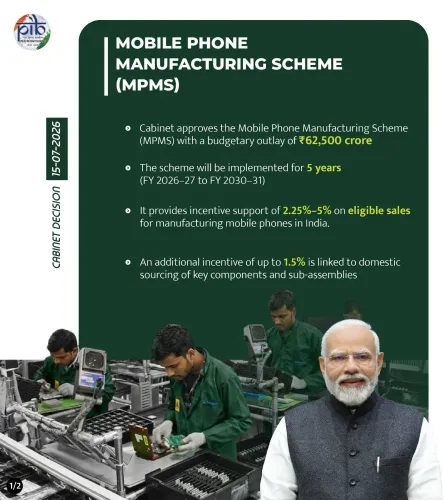
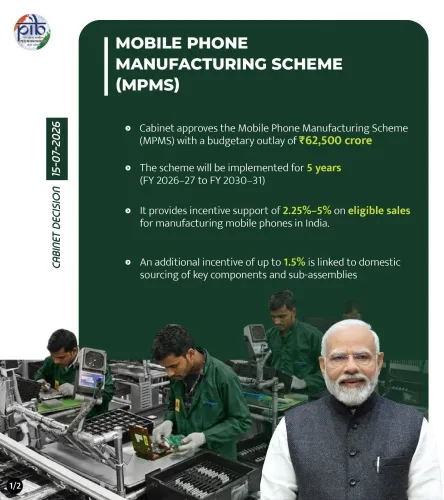
The Union Cabinet approved the Mobile Phone Manufacturing Scheme (MPMS) on 15 July with an outlay of ₹62,500 crore .
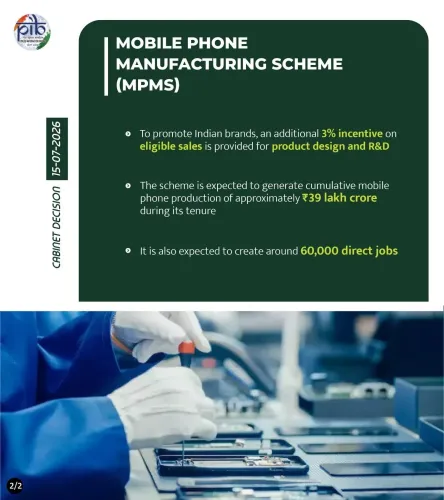
The scheme runs from FY2026-27 to FY2030-31 , offering incentives of 2.25% to 5% on eligible sales, plus up to 1.5% for domestic component sourcing and 3% for R&D.
Cumulative mobile phone production of ₹39 lakh crore and around 60,000 direct jobs are projected over the scheme's tenure.
India is already the world's second-largest mobile phone manufacturer by volume , with 99.2% of handsets consumed domestically now made in India.
Smartphones became India's single largest exported product category in 2025 , ahead of diesel fuel and cut diamonds.
The MPMS succeeds the PLI-LSEM scheme, whose tenure ended on 31 March .
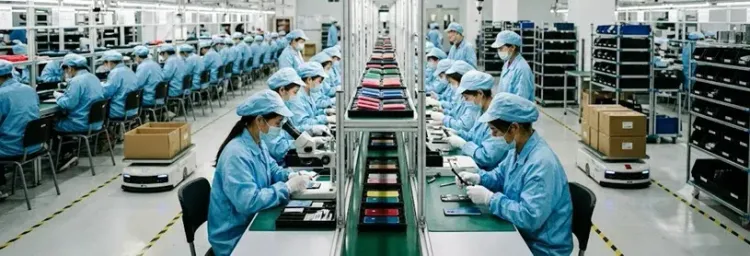
The Union Cabinet, chaired by Prime Minister Narendra Modi, on Wednesday, 15 July approved the Mobile Phone Manufacturing Scheme (MPMS) with a budgetary outlay of ₹62,500 crore, aimed at scaling up domestic production, accelerating exports, and cementing India's standing as a global electronics manufacturing hub.
What the Scheme Covers
The MPMS will run for five years from FY2026-27 to FY2030-31, offering manufacturers incentive support on eligible sales of India-made mobile phones at differentiated rates ranging from 2.25% to 5%. An additional incentive of up to 1.5% is linked to domestic sourcing of key components and sub-assemblies, while manufacturers investing in product design and research and development (R&D) can claim a further 3% incentive on eligible sales — a provision explicitly aimed at nurturing Indian mobile phone brands.
Scale of Expected Output and Jobs
According to the Cabinet, the scheme is projected to generate cumulative mobile phone production worth approximately ₹39 lakh crore over its tenure, alongside a significant increase in handset exports. The MPMS is also expected to create around 60,000 direct jobs, contributing to employment generation and broader economic growth.
Building on Make in India Gains
The Cabinet noted that the initiative builds on the momentum of the Make in India programme, under which electronics manufacturing has grown seven-fold and exports have surged 11-fold since FY2014-15. India is currently the world's second-largest mobile phone manufacturer by volume, with 99.2% of mobile phones used domestically now manufactured within the country. Notably, smartphones emerged as India's single largest exported product category in 2025, surpassing traditional export leaders such as diesel fuel and cut diamonds.
Successor to PLI-LSEM
The MPMS succeeds the Production Linked Incentive Scheme for Large Scale Electronics Manufacturing (PLI-LSEM), whose tenure concluded on 31 March. The government credited the outgoing PLI scheme with playing a transformative role in establishing India as a global hub for mobile phone manufacturing and exports, framing the new scheme as a natural and more ambitious continuation of that trajectory.
What Comes Next
With the incentive structure now approved, industry stakeholders will watch for implementation guidelines and eligible-sales definitions that will determine how quickly manufacturers can begin claiming benefits. The scheme's emphasis on R&D and domestic component sourcing signals a policy intent to move India up the value chain — from assembly to design — a shift that analysts and industry bodies have long advocated.
Point of View
000 direct jobs target is modest relative to the ₹62,500 crore outlay and the scale of ₹39 lakh crore in projected output, raising questions about labour intensity in an increasingly automated assembly ecosystem. India's smartphone export surge is real, but the bulk of value addition — chip design, operating systems, advanced components — still flows overseas. Whether the 3% R&D incentive is sufficient to seed a genuine Indian design industry, or merely subsidises incremental tweaks, will be the scheme's defining test.
NationPress
14 Oct 2026
Frequently Asked Questions
What is the Mobile Phone Manufacturing Scheme (MPMS)?
The MPMS is a five-year government scheme approved by the Union Cabinet on 15 July, with a budgetary outlay of ₹62,500 crore. It offers tiered production incentives to mobile phone manufacturers in India and succeeds the earlier PLI-LSEM scheme, which ended on 31 March.
What incentives does the MPMS offer manufacturers?
Manufacturers can receive incentives of 2.25% to 5% on eligible sales of India-made phones, an additional 1.5% for domestic sourcing of key components, and a further 3% for investments in product design and R&D.
How many jobs is the MPMS expected to create?
The scheme is projected to generate around 60,000 direct jobs over its five-year tenure from FY2026-27 to FY2030-31, alongside cumulative mobile phone production worth approximately ₹39 lakh crore.
How does the MPMS differ from the previous PLI-LSEM scheme?
The MPMS explicitly adds incentives for domestic component sourcing and R&D — areas the PLI-LSEM did not specifically target. This reflects a policy intent to push India up the electronics value chain, from large-scale assembly toward design and component development.
Why does this scheme matter for India's export ambitions?
Smartphones became India's single largest exported product category in 2025, surpassing diesel fuel and cut diamonds. The MPMS aims to sustain and accelerate that momentum, building on an 11-fold increase in electronics exports since FY2014-15 under the Make in India programme.