Kishan Reddy Launches 8th Tranche of Critical Mineral Block Auctions
Synopsis
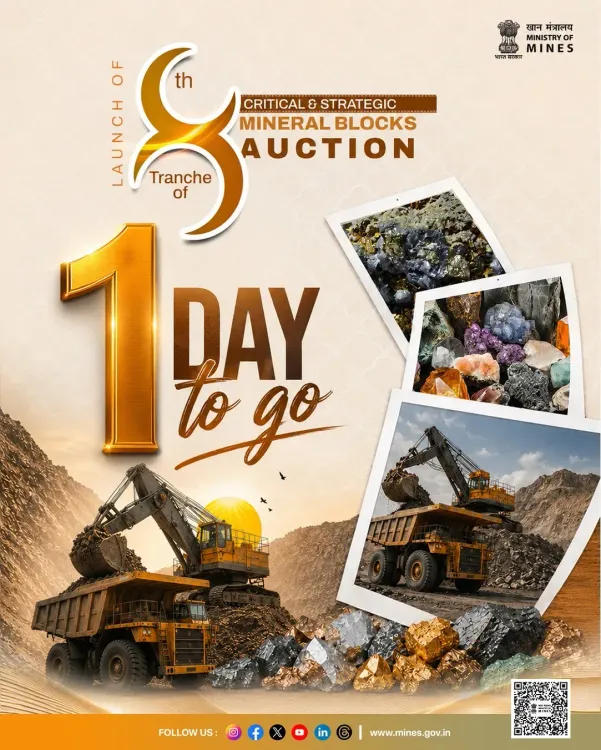
Union Mines Minister G. Kishan Reddy launched the 8th Tranche of Critical and Strategic Mineral Block Auctions in New Delhi on 15 July 2026, advancing India's push for domestic mineral security under the Aatmanirbhar Bharat framework amid growing demand from the clean-energy and defence sectors.
Key Takeaways
Union Mines Minister G.
Kishan Reddy launched the 8th Tranche of Auction of Critical and Strategic Mineral Blocks in New Delhi on 15 July 2026 .
Minister of State Satish Dubey and senior Ministry of Mines officials were present at the launch.
The auction series is grounded in the Mines and Minerals (Development and Regulation) Amendment Act, 2023 , which opened 30 critical minerals to private-sector bidding.
Critical minerals targeted include lithium, graphite, cobalt, and rare earth elements essential for EV batteries , solar energy, and defence applications.
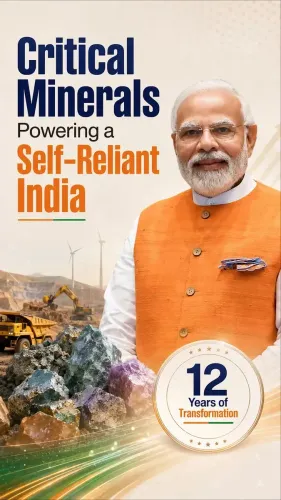
The programme is part of the Aatmanirbhar Bharat policy to reduce India's import dependence in strategic sectors.
Operationalisation of blocks from earlier tranches and potential downstream processing incentives remain key items to watch.
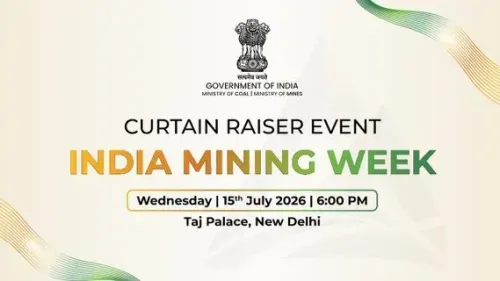
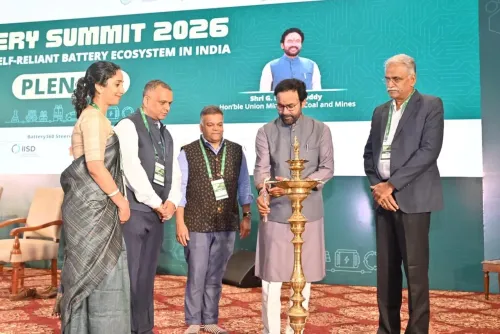
Union Coal and Mines Minister G. Kishan Reddy launched the 8th Tranche of Auction of Critical and Strategic Mineral Blocks in New Delhi on Wednesday, 15 July 2026, in the presence of Minister of State for Coal and Mines Satish Dubey, senior officials of the Ministry of Mines, and other dignitaries. The auction round marks the latest in a series of tranches designed to accelerate domestic sourcing of minerals critical to India's clean-energy and defence supply chains.
Context
Announcing the event on social media, Kishan Reddy described the launch as 'another important step towards strengthening India's critical mineral security, boosting investor confidence, and advancing the vision of an Aatmanirbhar Bharat [self-reliant India]' under Prime Minister Narendra Modi. The minister's post flagged the presence of Satish Dubey and senior Ministry of Mines officials, signalling high-level institutional weight behind the auction round.
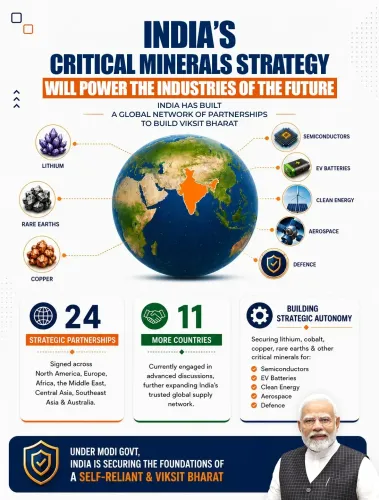
Critical and strategic minerals — including lithium, graphite, cobalt, and rare earth elements — are essential inputs for electric vehicle batteries, solar panels, and advanced defence systems. India currently imports a significant share of these minerals, making domestic auction rounds a strategic priority.
Policy Backdrop
The auction series draws its legal foundation from the Mines and Minerals (Development and Regulation) Amendment Act, 2023, which opened private-sector participation in the auction of 30 critical minerals previously reserved for government-owned entities. This legislative shift, combined with the National Mineral Policy 2019, moved India away from exclusive public-sector mining toward transparent, competitive auctions designed to attract domestic and foreign investment.
The broader Aatmanirbhar Bharat framework, which underpins the auction programme, seeks to reduce India's dependence on imports — particularly from geopolitically concentrated sources — across sectors ranging from electronics to energy. India's approach mirrors resource-security strategies pursued by Australia, the United States, and the European Union, all of which have launched parallel programmes to diversify critical mineral supply chains.
Stakeholders and Impact
The auction tranches are closely watched by private mining companies, electric vehicle manufacturers, and battery producers, for whom domestic mineral availability directly affects production costs and supply-chain resilience. Investor confidence in the auction mechanism has been a stated government priority, with each successive tranche building on the procedural and contractual frameworks established in earlier rounds.
Environmental safeguards and revenue-sharing arrangements embedded in the auction design are intended to balance commercial development with ecological obligations. Time-bound production clauses are also part of the framework, aimed at converting awarded blocks into active output rather than speculative holdings.
What's Next
Attention will now shift to the operationalisation timelines for blocks awarded in the 7th Tranche and earlier rounds, as well as any follow-up policy measures on exploration licences or downstream processing incentives. The government's ability to translate auctioned blocks into actual mineral production will be the key metric by which the programme's success is judged. Further tranches are widely anticipated as India works toward a comprehensive critical mineral security framework ahead of its clean-energy transition targets.
Point of View
However, lies in converting auctioned blocks into producing mines — a gap that has historically plagued Indian mineral policy.
NationPress
15 Jul 2026
Frequently Asked Questions
What is the 8th Tranche of Critical Mineral Block Auction in India?
It is the eighth round of government-conducted auctions of critical and strategic mineral blocks in India, launched by Union Mines Minister G. Kishan Reddy in New Delhi on 15 July 2026 to attract private investment in minerals such as lithium, graphite, and rare earths.
Which minerals are covered under India's critical mineral auctions?
India's critical mineral auction programme covers minerals including lithium, graphite, cobalt, nickel, and rare earth elements, which are essential for electric vehicle batteries, solar panels, and defence equipment.
What is the legal basis for India's critical mineral auctions?
The auctions are enabled by the Mines and Minerals (Development and Regulation) Amendment Act, 2023, which allowed private companies to bid for 30 critical minerals previously reserved for state-owned entities.
Who is G. Kishan Reddy?
G. Kishan Reddy is India's Union Minister of Coal and Mines and the BJP's Telangana state president. He has overseen successive tranches of critical mineral block auctions as part of the Aatmanirbhar Bharat programme.
How does India's critical mineral auction programme relate to Aatmanirbhar Bharat?
The auction programme is a core component of Aatmanirbhar Bharat, Prime Minister Modi's self-reliance initiative, aimed at reducing India's dependence on imports of strategic minerals by developing domestic mining and processing capacity.