CM Dhami: Double Engine Govt Driving Unprecedented Development in Uttarakhand
Synopsis
Chief Minister Pushkar Singh Dhami on 16 July 2026 said Uttarakhand is witnessing unprecedented decisions under the BJP's double engine government, directly rebutting claims that mountainous terrain precludes rapid development, and pointed to government data as evidence.
Key Takeaways
CM Pushkar Singh Dhami stated on 16 July 2026 that Uttarakhand is witnessing unprecedented decisions under the double engine government.
He directly challenged the long-held view that hill regions cannot be developed rapidly.
The Chief Minister referenced government data and figures as evidence of progress, though specific statistics were not itemised in the post.
The 'double engine' model describes simultaneous BJP governance at the Centre and in Uttarakhand , a framework the party has promoted since 2014 .
Uttarakhand's next economic survey or state budget is the expected vehicle for substantiating the development claims.
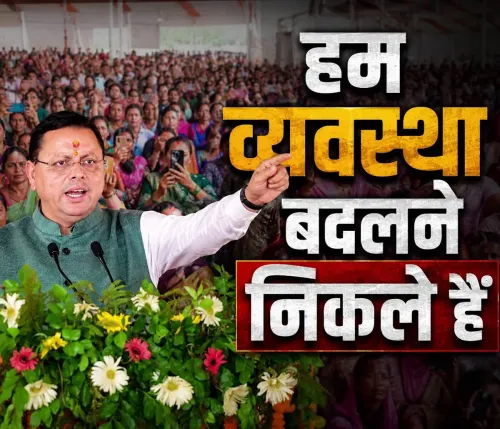
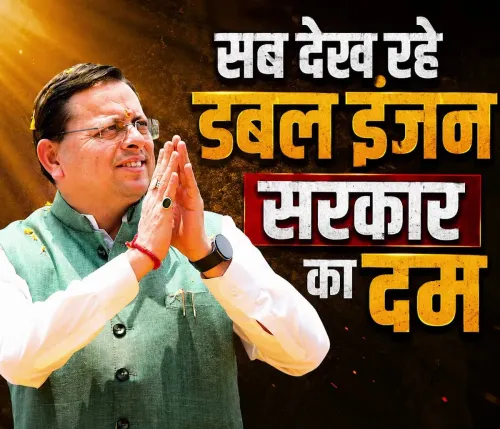
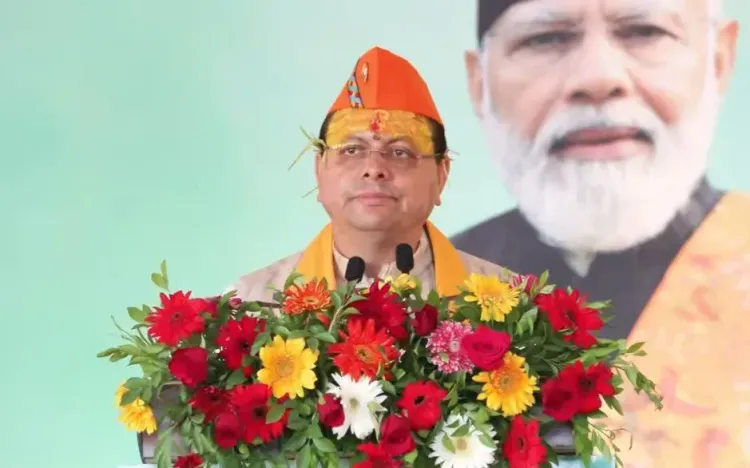
The Chief Minister's Office of Uttarakhand on Thursday, 16 July 2026, quoted Chief Minister Pushkar Singh Dhami asserting that the state is witnessing unprecedented decisions under the 'double engine' government, directly challenging the long-held perception that mountain regions cannot be developed rapidly.
Context
Speaking on the state's development trajectory, CM Dhami stated: 'डबल इंजन सरकार के प्रयासों से उत्तराखण्ड अभूतपूर्व निर्णयों का साक्षी बन रहा है' ('Uttarakhand is witnessing unprecedented decisions through the efforts of the double engine government'). He added that people who once claimed hill development was impossible should now look at the government's data and figures.
The remarks reflect a pointed rebuttal of critics who historically argued that Uttarakhand's rugged Himalayan terrain made large-scale infrastructure and economic progress structurally difficult to achieve.
Policy Backdrop
The 'double engine' governance model has been a central plank of the Bharatiya Janata Party's political messaging since its 2014 general election victory, describing the strategic advantage of the same party governing both the Centre and a state simultaneously. The argument holds that policy alignment between New Delhi and state capitals removes bureaucratic friction and accelerates fund flows.
Uttarakhand, which became a separate state in 2000, has seen successive governments highlight road connectivity projects, hydropower expansion, and tourism infrastructure as markers of progress. The BJP has governed the state since 2017, with Dhami assuming the Chief Ministership in 2021 and returning to office after the 2022 assembly elections.
Stakeholders and Impact
The primary stakeholders in this narrative are Uttarakhand's hill communities, who have historically faced limited economic opportunity, outmigration, and inadequate connectivity. Any substantive improvement in state development indicators would directly affect livelihoods in districts such as Pithoragarh, Chamoli, and Tehri, where terrain has traditionally constrained growth.
The Chief Minister's reference to 'our figures' signals that the government intends to anchor its development claims in measurable data — though the specific statistics were not itemised in the post. Opposition parties and independent policy observers are likely to scrutinise those figures when released through official documents such as the state's economic survey or budget.
What's Next
The immediate watch point is the release of Uttarakhand's next economic survey or state budget, which would be the natural vehicle for the government to substantiate the 'unprecedented' development claims made by CM Dhami. A formal data presentation would allow independent verification of progress on infrastructure, employment, and investment metrics. The political significance of such a release would be amplified given the BJP's broader national narrative linking central-state coordination to accelerated state-level growth.
Point of View
Timed to reinforce the party's governance credentials in a state where outmigration and terrain-linked underdevelopment have long been electoral pressure points. By invoking 'our figures' without specifying them, the Chief Minister signals a forthcoming data-driven communication push — likely pegged to a budget or survey release. The framing also serves a dual purpose: consolidating the base in hill constituencies while pre-empting opposition critiques ahead of any policy announcement. Whether the data, when released, matches the rhetorical weight of 'unprecedented' will determine how durable this narrative proves.
NationPress
16 Jul 2026
Frequently Asked Questions
What did CM Pushkar Singh Dhami say about Uttarakhand development?
CM Dhami said on 16 July 2026 that Uttarakhand is witnessing unprecedented decisions under the double engine government and challenged critics to examine the government's development figures.
What is the double engine government model in India?
The double engine government model refers to the BJP governing both the Central government and a state simultaneously, with the argument that policy alignment between the two accelerates development and fund flows.
Why has Uttarakhand's development historically been considered difficult?
Uttarakhand's rugged Himalayan terrain has historically constrained road connectivity, infrastructure investment, and economic activity, leading to high outmigration from hill districts.
What data is CM Dhami referring to in his development claims?
CM Dhami referenced government figures without specifying them in the post; the state's economic survey or budget documents are expected to detail the statistics underpinning his claims.
When did Pushkar Singh Dhami become Chief Minister of Uttarakhand?
Pushkar Singh Dhami first became Chief Minister of Uttarakhand in 2021 and returned to office after the BJP's victory in the 2022 state assembly elections.