ECMS: 106 approved projects to create 75,000 direct jobs, says Vaishnaw
Synopsis
India's Electronics Components Manufacturing Scheme has quietly outrun its own targets — 106 companies approved against an initial plan of 60, and ₹69,000 crore in investment proposals against a ₹59,000 crore goal. With 75,000 direct jobs and 2.5 lakh ecosystem jobs projected, the ECMS is shaping up as one of the more credible execution stories in India's manufacturing push — if the gap between approvals and actual production can be closed fast enough.
Key Takeaways
106 projects approved under the Electronics Components Manufacturing Scheme (ECMS) , projected to create 75,000 direct jobs .
Total ecosystem job potential estimated at 2.5 lakh persons once units reach full production.
31 new approvals granted on 17 August , bringing in ₹7,877 crore in additional investment and 9,500 fresh jobs .
Cumulative investment proposals under ECMS have reached ₹69,000 crore , surpassing the original target of ₹59,000 crore .
38 projects have already started manufacturing; another 16 are under construction.
Minister Vaishnaw called for deeper supply chain localisation, Six Sigma quality standards, and faster project execution.
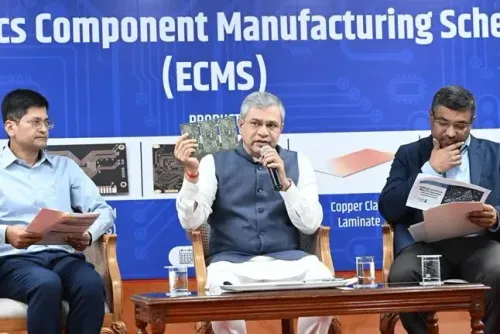
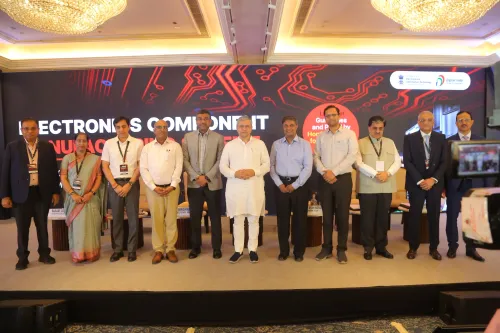
Union Electronics and Information Technology Minister Ashwini Vaishnaw on Monday, 17 August announced that 106 projects approved under the Electronics Components Manufacturing Scheme (ECMS) are set to generate direct employment for 75,000 persons. Once these units reach full production, the total job potential across the broader electronics ecosystem is projected to rise to 2.5 lakh persons.
Latest Approvals and Investment Push
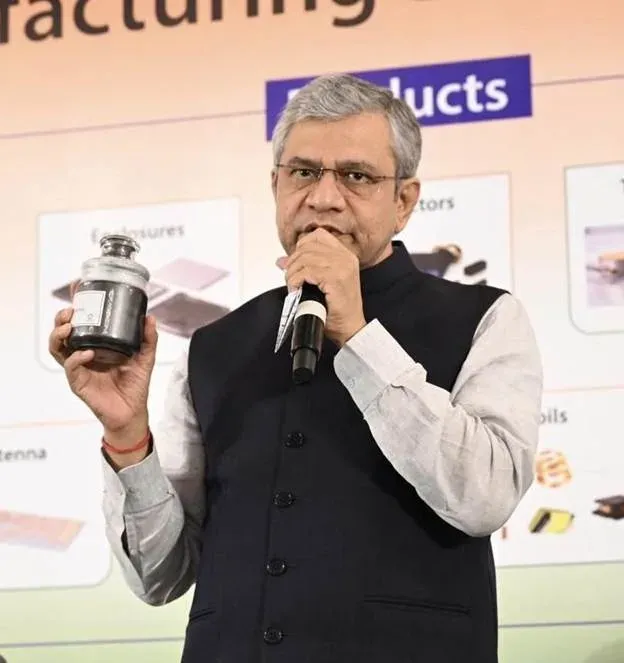
The minister on Monday handed over approvals for 31 new applications under the ECMS, expected to attract an additional investment of ₹7,877 crore and create 9,500 fresh jobs. The newly approved applications cover manufacturing of products including Acetylene Black, speakers and microphones, optical transceivers, capacitors, and coils.
Cumulatively, the scheme has drawn investment proposals worth ₹69,000 crore — surpassing the government's original target of ₹59,000 crore. 'Both in terms of investment and output, we have exceeded the original target,' said MeitY Secretary S. Krishnan, noting that approval meetings are now held almost every week to keep pace with industry demand.
What the Government Said
Vaishnaw said the scheme's scale had already exceeded initial expectations. 'When we brought in the ECMS scheme, there was a clear thought process that we were planning 60 companies initially to be approved. Now we have 106 companies already approved under the project,' he said.
He urged companies to examine their bill of materials, identify components still being imported, and work with Indian industry to bring their production onshore. Industry-specific workshops to map localisation potential, alongside Six Sigma quality standards and talent development, were listed as key next priorities.
Progress on the Ground
Of the 106 approved projects, 38 have already commenced manufacturing, while another 16 are under active construction. The minister stressed the need to accelerate the transition from approvals to actual production, flagging execution speed as a critical variable for the scheme's success.
Deepening the Supply Chain
Vaishnaw called on the industry to move beyond assembly and achieve full design capabilities within India, building a domestic supply chain for both components and sub-components. This comes amid a broader government push to reduce India's dependence on imported electronics inputs — a structural vulnerability that became acute during global supply chain disruptions in recent years.
With ₹69,000 crore in investment proposals already in the pipeline and manufacturing underway at dozens of units, the ECMS is emerging as one of the faster-executing schemes in India's electronics policy landscape. Whether momentum translates into verified employment at scale will be closely watched.
Point of View
000 projected jobs are verified and time-bound, versus aspirational? With 38 of 106 projects manufacturing and 16 under construction, nearly half the approved pipeline has yet to break ground. India has a long history of schemes that look strong at the approval stage and thin out at execution. The minister's own emphasis on moving 'quickly from approvals to actual manufacturing' signals that the gap is real. The next milestone to watch is not the investment number — it is the jobs count once the remaining units go live.
NationPress
2 Oct 2026
Frequently Asked Questions
What is the Electronics Components Manufacturing Scheme (ECMS)?
The ECMS is a government scheme designed to boost domestic manufacturing of electronics components in India by offering approvals and incentives to companies setting up production units. As of 17 August, 106 projects have been approved under the scheme, with a total investment pipeline of ₹69,000 crore.
How many jobs will the ECMS create?
The 106 approved projects are expected to generate direct employment for 75,000 persons. Once all units reach full production, the total job potential across the broader electronics ecosystem is projected at 2.5 lakh persons, according to Minister Ashwini Vaishnaw.
What was announced on 17 August under the ECMS?
Minister Vaishnaw handed over approvals for 31 new applications on 17 August, covering products such as Acetylene Black, speakers, microphones, optical transceivers, capacitors, and coils. These approvals are expected to bring in ₹7,877 crore in additional investment and create 9,500 fresh jobs.
How does the ECMS performance compare to its original targets?
The scheme has exceeded its initial targets on both counts. The government originally planned to approve 60 companies; 106 have now been approved. Investment proposals have reached ₹69,000 crore, surpassing the original ₹59,000 crore goal.
How many ECMS projects are currently operational?
Of the 106 approved projects, 38 have already commenced manufacturing and 16 are under active construction, according to the ministry. The government has flagged faster execution as a priority for the remaining units.