India targets $500 bn electronics ecosystem by 2030 as ECMS scales up
Synopsis
India's electronics ambition has moved well beyond smartphones and assembly lines. With ECMS outlay nearly doubled to ₹40,000 crore, 106 projects approved, 38 plants already running, and a $500 billion ecosystem target for 2030, the Centre is betting that component-level manufacturing — not just finished-goods exports — is the key to supply-chain sovereignty.
Key Takeaways
India targets a $500 billion domestic electronics manufacturing ecosystem and $150 billion in exports by 2030 , per an official factsheet dated 17 September 2026 .
Electronics production grew from ₹1.9 lakh crore in 2014–15 to ₹13.11 lakh crore in 2025–26 ; exports rose from ₹38,000 crore to ₹4.24 lakh crore in the same period.
The ECMS outlay was raised from ₹22,919 crore to ₹40,000 crore in the Union Budget 2026–27 .
As of August 2026 , 106 projects approved across 15 states , covering 30 product domains , with an approved investment of ₹69,548 crore .
Approved projects projected to generate ₹5.34 lakh crore in output and create 74,628 direct and 2.5 lakh indirect jobs .
Production is already live at 38 plants ; another 16 projects are in advanced construction or machinery installation.
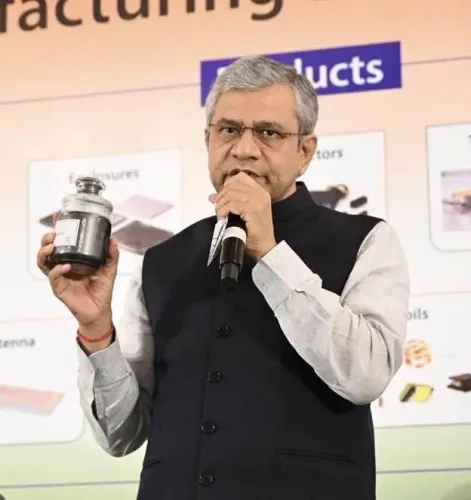
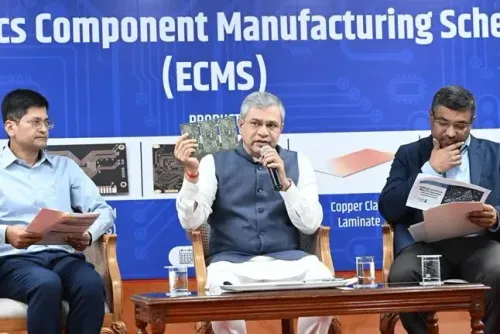
India is targeting a $500 billion domestic electronics manufacturing ecosystem and $150 billion in electronics exports by 2030, according to an official factsheet released on Thursday, 17 September 2026. The ambition is backed by a sharply scaled-up Electronics Component Manufacturing Scheme (ECMS), which has already approved 106 projects across 15 states as of August 2026.
A Decade of Growth Sets the Stage
India's electronics production has surged from ₹1.9 lakh crore in 2014–15 to ₹13.11 lakh crore in 2025–26 — a nearly seven-fold rise in a decade. Over the same period, electronics exports climbed from roughly ₹38,000 crore to ₹4.24 lakh crore, establishing electronics as one of India's fastest-growing export categories.
According to the official statement, 'This sustained growth has established a strong foundation for India's electronics manufacturing ambitions. The next priority is to deepen this ecosystem through domestic component manufacturing, higher value addition and stronger supply-chain resilience.'
ECMS: From ₹22,919 Crore to ₹40,000 Crore
The ECMS, notified on 8 April 2025, was originally launched with an outlay of ₹22,919 crore over a six-year tenure with an optional one-year gestation period. The Union Budget 2026–27 substantially enhanced this allocation to ₹40,000 crore, a move described as aimed at deepening domestic component manufacturing further.
This is a significant budget-cycle escalation — an increase of over ₹17,000 crore within roughly a year of the scheme's notification — underscoring the Centre's prioritisation of component-level self-reliance over finished-goods assembly alone.
On-Ground Progress: 106 Projects, 38 Plants Already Running
As of August 2026, the scheme has approved 106 projects spanning 30 electronic domain products across 15 states, with an approved investment of ₹69,548 crore. Production is already operational at 38 approved plants, while another 16 projects are at advanced stages of construction or machinery installation.
The approved projects are projected to generate ₹5.34 lakh crore in production output and are expected to create 74,628 direct jobs and 2.5 lakh indirect jobs. Notably, production capacity under ECMS now reportedly meets or exceeds domestic demand across several product categories — a milestone that signals a shift from import dependency to indigenous supply in certain segments.
Why Electronics Self-Reliance Matters for India
Electronics today underpin communication networks, healthcare devices, transport systems, financial infrastructure, and industrial automation. For India, a robust domestic component ecosystem is considered critical not just for economic growth but for technological resilience and national security — particularly as global supply chains remain vulnerable to geopolitical disruptions.
This comes amid a broader global realignment of electronics supply chains, with major economies competing aggressively to reduce dependence on single-source manufacturing hubs. India's ECMS push is explicitly designed to capture a larger share of that realignment.
What Comes Next
With 16 more projects nearing completion and the enhanced ₹40,000 crore outlay now in place, the pace of approvals and production ramp-up is expected to accelerate through 2026–27. The $150 billion exports by 2030 target will require sustaining compound growth in value-added manufacturing — a goal that industry observers note is achievable but contingent on resolving component supply gaps and attracting deeper global value-chain integration.
Point of View
But the critical variable is value addition — India has historically been strong at assembling imported components rather than manufacturing them domestically. Raising the ECMS outlay to ₹40,000 crore is meaningful, but the ₹69,548 crore in approved investments must translate into genuine component depth, not just new assembly capacity with a 'Made in India' label. The 74,628 direct jobs figure, while a start, is modest against the scale of the $500 billion ambition. The real test will be whether India can use this window — while global supply chains are still realigning — to climb the electronics value chain before that window closes.
NationPress
17 Sept 2026
Frequently Asked Questions
What is India's $500 billion electronics ecosystem target?
India is aiming to build a $500 billion domestic electronics manufacturing ecosystem and achieve $150 billion in electronics exports by 2030, according to an official government factsheet released on 17 September 2026. The target is supported by the Electronics Component Manufacturing Scheme (ECMS), which has been scaled up significantly in recent months.
What is the Electronics Component Manufacturing Scheme (ECMS)?
The ECMS is a government scheme notified on 8 April 2025 to boost domestic manufacturing of electronics components. It was initially allocated ₹22,919 crore over six years; the Union Budget 2026–27 enhanced this to ₹40,000 crore to deepen component-level self-reliance across 30 product domains.
How many projects have been approved under ECMS so far?
As of August 2026, 106 projects have been approved across 15 states, with an approved investment of ₹69,548 crore. Of these, 38 plants are already in production and 16 more are at advanced stages of construction or machinery installation.
How many jobs will ECMS create?
Approved ECMS projects are projected to create 74,628 direct jobs and approximately 2.5 lakh indirect jobs. They are also expected to generate ₹5.34 lakh crore in total production output.
How has India's electronics production grown over the past decade?
India's electronics production grew nearly seven-fold, from ₹1.9 lakh crore in 2014–15 to ₹13.11 lakh crore in 2025–26. Electronics exports rose even more sharply, from roughly ₹38,000 crore to ₹4.24 lakh crore over the same period, making electronics one of India's leading export sectors.