Legislative Council polls 2026: Ballot voting begins in UP, Bihar; BJP and SP clash
Synopsis
With ballot papers replacing EVMs for these legislative council seats, the vote across UP, Bihar, Karnataka and Maharashtra has become an accidental referendum on India's EVM debate — and both the BJP and SP know it. The results will be read as a direct measure of party machinery, not just seat math.
Key Takeaways
Voting for 28 Legislative Council seats across Uttar Pradesh , Bihar , Karnataka , and Maharashtra began at 8 am on 23 October .
BJP MLA Nandkishor Gurjar argued the ballot-paper election would test opposition claims about EVM manipulation .
Gurjar targeted Rahul Gandhi and Akhilesh Yadav , alleging they raised EVM concerns selectively when the BJP won.
SP MLA Ragini Sonkar in Varanasi accused the BJP of harming students and youth employment, urging an anti-BJP vote.
In UP , polling covers 5 graduate and 6 teacher constituencies ; Bihar holds elections for 4 graduate and 4 teacher constituencies .
Voting for Legislative Council elections got underway at 8 am on Friday, 23 October across multiple states, with Ghaziabad among the districts seeing voters arrive at polling stations amid security arrangements. Polling is being conducted across 28 Legislative Council seats spanning Uttar Pradesh, Bihar, Karnataka, and Maharashtra — and the use of ballot papers instead of electronic voting machines (EVMs) has already sharpened the political rhetoric on both sides.
Key Developments on Polling Day
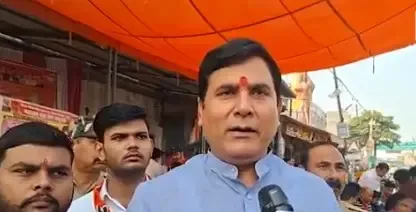
Bharatiya Janata Party (BJP) MLA Nandkishor Gurjar, present at a booth in Ghaziabad, framed the ballot-paper exercise as a direct test of the opposition's long-standing EVM grievances. He argued that Leader of Opposition Rahul Gandhi, Samajwadi Party (SP) chief Akhilesh Yadav, and allied leaders raised doubts about electronic machines only when the BJP won, staying silent on similar devices when their own parties prevailed elsewhere.
'This election is very important,' Gurjar said, adding that BJP workers had put in sustained grassroots effort ahead of polling day. He further contended that allegations of EVM manipulation and vote theft amounted to an insult to ordinary voters who elect their representatives through the democratic process.
What the BJP Is Claiming
Gurjar said the ballot-based election would offer the BJP a platform to demonstrate its ground-level support independent of any EVM controversy. He expressed confidence in the party's leadership at both the state and regional levels, asserting that a BJP win here would compel opponents to revisit their criticism. He described the contest as marking 'a new chapter' in the country's electoral history — a claim that critics are likely to contest depending on the outcome.
Samajwadi Party Strikes Back
In Varanasi, SP MLA Ragini Sonkar made a direct appeal to voters, calling for a decisive mandate in favour of the party's candidates. Sonkar accused the BJP of fostering 'an atmosphere of hooliganism', particularly in the education sector, alleging that the ruling party's policies were harming students and young people. She claimed children were being denied educational opportunities and that youth unemployment had worsened under the current dispensation, urging voters to use the election to register their dissatisfaction.
Seats at Stake Across States
In Uttar Pradesh, polling is being held for five graduate constituencies and six teacher constituencies. Bihar is conducting elections for four graduate and four teacher constituencies. Karnataka and Maharashtra account for the remaining seats. These elections, which involve a more limited and specialised electorate compared to general assembly polls, have historically attracted significant political attention as they shape the composition of upper houses at the state level.
Why This Election Matters
Legislative Council elections — fought through ballot papers rather than EVMs for these categories — have become a rare flashpoint in India's ongoing EVM debate. The outcome in states like Uttar Pradesh, where the BJP and SP are locked in sustained rivalry, will be read as a barometer of ground-level influence. This comes amid a broader national conversation about electoral integrity, with opposition parties having repeatedly called for a return to paper ballots. The results will be closely watched not just for seat tallies but for what they signal about party machinery ahead of future state and general elections.
Point of View
It blunts a key opposition talking point that has survived multiple cycles. But the argument has limits: legislative council electorates are narrow and specialised, hardly a proxy for a general election. The SP's education and employment pitch in Varanasi reflects an awareness that bread-and-butter grievances, not procedural debates, move voters. Mainstream coverage tends to reduce these elections to seat tallies; the more consequential story is whether the result reshapes the EVM narrative ahead of the 2027 UP assembly cycle.
NationPress
23 Oct 2026
Frequently Asked Questions
What are the Legislative Council elections being held on 23 October 2026?
These are elections for 28 Legislative Council (Vidhan Parishad) seats across Uttar Pradesh, Bihar, Karnataka, and Maharashtra, conducted through ballot papers rather than EVMs. In UP, the polls cover five graduate and six teacher constituencies; Bihar is voting on four graduate and four teacher constituencies.
Why is the BJP calling this election significant?
BJP MLA Nandkishor Gurjar argues that since these elections use ballot papers, a BJP victory would directly counter opposition claims that the party benefits from EVM manipulation. He has said the result will put the opposition's electoral fraud allegations to a practical test.
What allegations has the Samajwadi Party made ahead of voting?
SP MLA Ragini Sonkar in Varanasi has accused the BJP of creating hooliganism in the education sector and alleged that the ruling party's policies are denying children educational opportunities and leaving youth unemployed. She has called on voters to use the election to express dissatisfaction with the BJP's governance.
Who can vote in Legislative Council elections?
Legislative Council elections for graduate and teacher constituencies are restricted to registered graduates and recognised teachers respectively — a far narrower electorate than general assembly elections. This makes them less a mass mandate and more a reflection of educated, institutionally connected voter sentiment.
How do these results fit into the broader political picture in UP?
Uttar Pradesh is heading into an assembly election cycle in 2027, making any contest between the BJP and SP a closely watched indicator of grassroots strength. The outcome here — especially given the ballot-paper format — will be cited by both sides to support their narratives on electoral credibility and governance.