CM Revanth Reddy pitches Telangana ICCC for South India policing grid
Synopsis
Chief Minister Revanth Anumula inaugurated the SRPCC summit at Hyderabad's ICCC on 23 October 2026, offering Telangana's technology infrastructure to southern states and calling for a unified regional framework to fight cyber crime, narcotics, and cross-border crime.
Key Takeaways
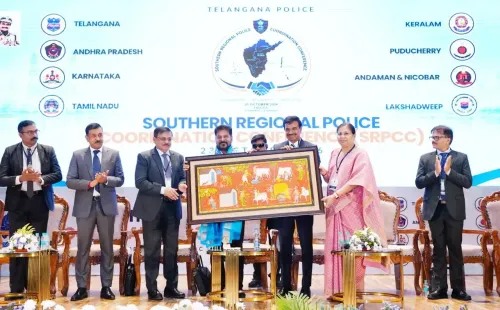
CM Revanth Anumula inaugurated the SRPCC conference at Hyderabad's ICCC on 23 October 2026 , attended by police chiefs from Andhra Pradesh, Karnataka, Kerala, Tamil Nadu, Puducherry and Lakshadweep .
Telangana offered its ICCC technology infrastructure for coordination with neighbouring southern states to build a regional policing grid.
Three specialised units — HYDRAA, EAGLE and TG-SAFE — were highlighted as models; EAGLE received above 80 per cent marks from the Union Government.
Families of police personnel killed on duty receive ex-gratia of ₹1 crore to ₹2 crore based on rank, along with a plot and compassionate employment.
Telangana was cited as the first state to appoint transgender persons as traffic assistants in the Hyderabad Traffic Police.
The Young India Police School in Hyderabad was established to provide quality education to children of police personnel at all ranks.
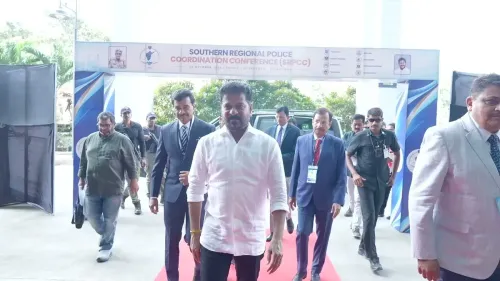
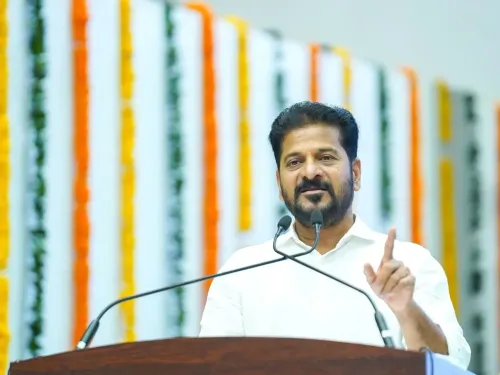
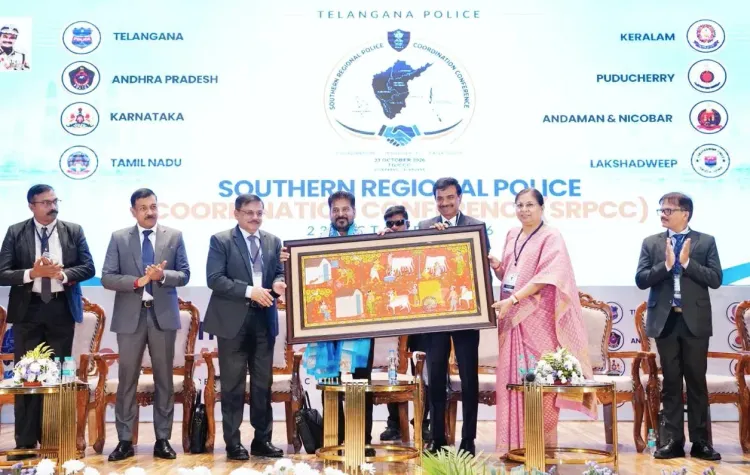
A single command-and-control room in Hyderabad could become the backbone of a pan-South India crime-fighting network — that was the bold proposition Chief Minister Revanth Anumula laid before police chiefs of five southern states and two union territories on Friday, 23 October 2026. Inaugurating the South Region Police Coordination Committee (SRPCC) conference at Hyderabad's Integrated Command and Control Centre (ICCC), he called on every southern state to move beyond its own borders and build a collective safety architecture the region has never attempted before.
Why one state's war on crime can never be enough
The argument CM Revanth pressed hardest was structural: no state, however well-resourced, can plug the gaps that open at its own border. Cyber fraud syndicates, narcotics pipelines, and cross-state trafficking networks operate precisely in those gaps. 'It is not possible for states to become crime-free using only their own resources and efforts,' he told the gathering. 'Coordination among the police departments of all states is absolutely essential.'
The answer he offered was Telangana's own ICCC — an integrated surveillance and response hub in Hyderabad — as a shared platform the state is 'ready to coordinate' with its neighbours. The offer signals Telangana's ambition to anchor the region's technology-driven policing model, inviting Karnataka, Kerala, Tamil Nadu, Andhra Pradesh, Puducherry, and Lakshadweep into a common operational framework.
Telangana's policing overhaul — the template on the table
Hyderabad's metropolitan policing was split into three separate commissionerates — Hyderabad, Cyberabad, and the newly carved Malkajgiri — to sharpen geographic accountability. Alongside that restructuring, three specialised units were stood up: HYDRAA for protecting and restoring water bodies and public assets; EAGLE for narcotics enforcement, which the Union Government reportedly scored above 80 per cent in performance assessment; and TG-SAFE, a new inter-departmental unit modelled on the lines of the US Food and Drug Administration (FDA) to curb food adulteration and strengthen drug regulation.
The Chief Minister also pointed to Telangana Cyber Security Bureau as a benchmark: the state, he said, has set new standards in recovering money lost by cyber-crime victims. He added that Prime Minister Narendra Modi had specifically cited Telangana's cyber-crime performance during a PRAGATI review, and that the Union Home Minister had publicly commended Telangana Police for effectively eliminating Naxal violence from the state — two external validations the Chief Minister used to strengthen his case for Telangana as a model worth replicating.
Transgender traffic assistants, a police school, and ex-gratia up to ₹2 crore
CM Revanth used the platform to highlight welfare and inclusion milestones as well. Telangana became the first state in the country to appoint transgender persons as traffic assistants in the Hyderabad Traffic Police, he said. On officer welfare, he framed government spending on police as an 'investment in building a better society' rather than a cost — and backed that framing with numbers: families of personnel killed in the line of duty receive ex-gratia ranging from a minimum of ₹1 crore to a maximum of ₹2 crore, scaled by rank from constable to IPS officer, along with a residential plot and a compassionate appointment for one eligible family member.
To serve children of police personnel across all ranks — from Home Guards to the DGP — the government established the Young India Police School in Hyderabad, benchmarked against the country's top Sainik schools.
Who was in the room — and what comes next
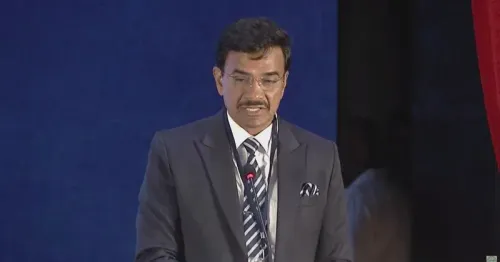
The SRPCC summit brought together a high-powered roster: Telangana DGP CV Anand, Karnataka DGP Dr M A Saleem, Tamil Nadu DGP Mahesh, Puducherry DGP Shalini Singh, Lakshadweep ADG B Shankar Jaiswal, Kerala IG Ajeeta Begum, and Andhra Pradesh IGP Ravi Krishna. Also present were the directors of EAGLE, TG Cyber Bureau, TG Police Academy, CID Telangana, and the Hyderabad City Police Commissioner.
CM Revanth asked delegates to move beyond discussion and draft a 'strong action plan' — including robust cross-border coordination systems between state police headquarters — before the conference concludes. The real test of the SRPCC summit will be whether those cross-border protocols turn into shared databases, joint task forces, or a formal interoperability agreement between the ICCC and its counterparts in neighbouring states.
Policing reform is rarely glamorous, but a unified southern security grid — if it materialises — would be the most consequential regional law-enforcement architecture India has built outside the federal intelligence apparatus. The summit has set the ambition; the action plan will reveal the substance.
Point of View
CM Revanth Anumula is effectively proposing a sub-national coordination layer that complements but operates independently of central federal structures. This aligns with a wider pattern in which larger southern states have sought to assert regional leadership on policy issues where Union-level responses have been seen as slow or insufficient. The durability of any framework agreed at the SRPCC will depend on whether follow-through protocols, joint databases, or interoperability agreements are formalised — or whether the summit remains a high-profile expression of intent.
NationPress
23 Oct 2026
Frequently Asked Questions
What is the SRPCC meeting held in Hyderabad in 2026?
The South Region Police Coordination Committee (SRPCC) is a forum of senior police officers from southern Indian states and union territories. The 2026 summit was held at Hyderabad's Integrated Command and Control Centre on 23 October 2026 and was inaugurated by CM Revanth Anumula to discuss cross-border crime coordination.
What is the ICCC in Hyderabad used for?
The Integrated Command and Control Centre (ICCC) in Hyderabad is a centralised hub that integrates surveillance, emergency response, and real-time data for the Telangana police. CM Revanth offered it as a shared platform for coordination with neighbouring southern states.
What are HYDRAA, EAGLE and TG-SAFE in Telangana?
HYDRAA is a specialised unit that protects and restores lakes and public assets. EAGLE focuses on narcotics enforcement and received above 80 per cent in a Union Government performance assessment. TG-SAFE is a new inter-departmental unit modelled on the US FDA to curb food adulteration and strengthen drug regulation in Telangana.
How much ex-gratia does Telangana give to families of police martyrs?
The Telangana government provides ex-gratia ranging from a minimum of ₹1 crore to a maximum of ₹2 crore to families of police personnel killed in the line of duty, scaled by rank from constable to IPS officer, along with a residential plot and a compassionate appointment for one eligible family member.
Which states attended the SRPCC summit in Hyderabad 2026?
Senior police officers from Telangana, Karnataka, Kerala, Tamil Nadu, Andhra Pradesh, Puducherry and Lakshadweep attended the SRPCC 2026 summit in Hyderabad, including DGPs and IGs from each state or territory.