Punjab CM Mann: Gujarat is biggest drug supplier, counters Amit Shah's AAP ouster claim
Synopsis
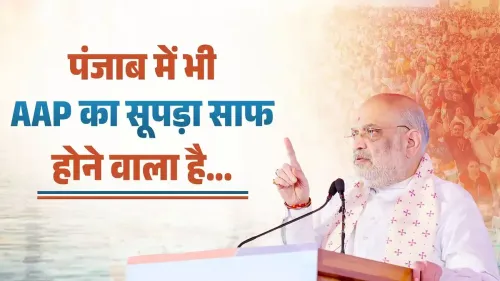
Punjab CM Bhagwant Mann turned the drug war political on Friday, alleging that Gujarat — the BJP's home turf — has become India's biggest drug supplier, pointing to the state's own admission of ₹20,000 crore in drug seizures. The broadside directly counters Home Minister Amit Shah's warning that AAP will be 'wiped out' in the next Punjab elections, turning a governance debate into an election-season flashpoint.
Key Takeaways
Punjab CM Bhagwant Mann on 23 October alleged that Gujarat has become India's 'biggest supplier' of drugs, citing ₹20,000 crore in drug seizures admitted by the state.
He rejected Home Minister Amit Shah's claim that AAP will be 'wiped out' in upcoming Punjab Assembly polls, saying the outcome will be decided by 3.25 crore Punjabis.
Mann alleged that Punjab's drug problem was rooted in the Akali Dal-BJP government's tenure from 2007 to 2017 , during which he claimed senior ministers were named by smugglers.
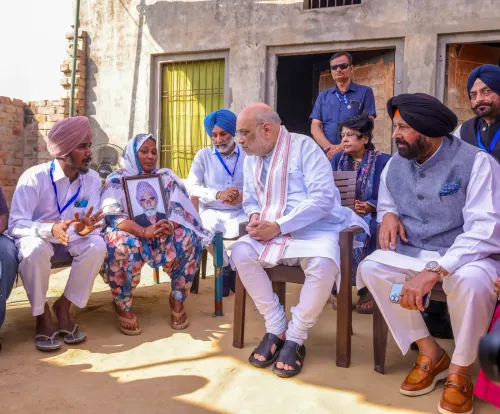
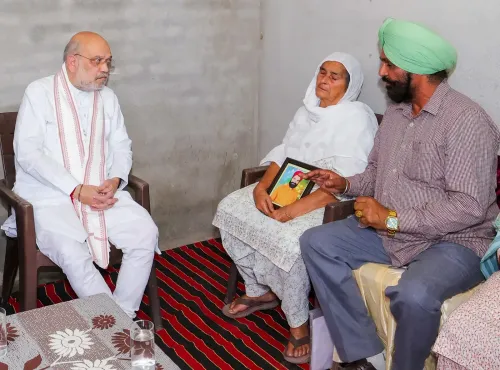
Shah had on Tuesday visited Mansa and met the family of slain anti-drug activist Parvinder Singh Jhota , promising justice in a meeting lasting 20 minutes .
The Opposition boycotted the Punjab Assembly session in protest over the Jhota killing ; Mann dismissed the walkout as an attempt to 'create a ruckus'.
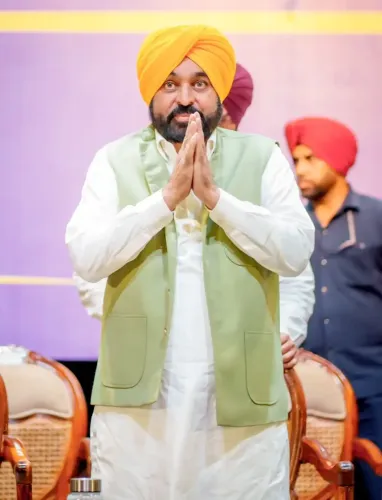
Punjab Chief Minister Bhagwant Mann on Friday, 23 October fired back at Union Home Minister Amit Shah, rejecting Shah's assertion that the Aam Aadmi Party (AAP) would be voted out of Punjab in upcoming Assembly elections, while making the incendiary claim that Gujarat has become the country's 'biggest supplier' of drugs. The remarks, made to reporters in Chandigarh, escalated an already charged political exchange between the Centre and Punjab's AAP government over the state's drug crisis.
Mann's Counter-Strike on Shah's Ouster Remarks
Home Minister Shah had, on Thursday, targeted the Punjab government and AAP national convener Arvind Kejriwal, declaring that the party would be 'wiped out' of the state in the next elections and that the National Democratic Alliance (NDA) would form government and eradicate Punjab's drug menace by 2029. Mann was unequivocal in his rebuttal. 'The government will not be formed according to Amit Shah's wishes. It will be formed according to the wishes of the 3.25 crore people of Punjab,' he said.
The Gujarat Drug Supplier Allegation
Mann's sharpest salvo was directed at Gujarat — the political home base of both Prime Minister Narendra Modi and Home Minister Shah. He alleged that drug consignments of 3,000 kg had been arriving at ports, pointing to the Gujarat government's own admission of seizing drugs worth ₹20,000 crore as evidence. 'They themselves have admitted that they seized drugs worth ₹20,000 crore. So why are drugs coming from there?' he said. Mann acknowledged that drones are used for cross-border drug trafficking into Punjab from across the border, but questioned how narcotics were reaching Indian ports in such volumes, arguing that customs procedures and port security should have intercepted them. 'If consignments of 3,000 kg are arriving at the ports, it means Gujarat has become the biggest supplier today,' he alleged.
Akali Dal-BJP Cited for Punjab's Drug Roots
Mann further alleged that the foundations of Punjab's drug crisis were laid during the Akali Dal-BJP coalition government that ruled the state from 2007 to 2017. He claimed that 'big smugglers had named several senior ministers' from that era, and that conversations about compromise were reportedly ongoing. The allegation is part of a long-standing AAP narrative seeking to pin the origins of Punjab's drug problem on its predecessors rather than its own tenure.
Jhota Murder Case and Assembly Opposition Protest
Responding to questions about the Opposition's protest inside the Punjab Assembly over the killing of anti-drug activist Parvinder Singh Jhota, Mann dismissed the walkout as political theatre. 'They have no other issues. They only want to create a ruckus. First, they say the Assembly is not convened, and when it is convened, they boycott it,' he said, adding that democratic debate required participation, not disruption. Home Minister Shah had earlier, on Tuesday, visited Mansa — where Jhota was allegedly murdered for raising his voice against drugs — and met the family for approximately 20 minutes, assuring them that justice would be delivered. The Jhota case has added a charged human dimension to what is otherwise a high-voltage political confrontation.
What Comes Next
The exchange signals that the drug issue will be a central battleground in the next Punjab Assembly elections. With both the AAP government and the BJP-led Centre trading accusations of complicity or negligence, the political stakes around policing, port security, and cross-border trafficking are set to intensify. How Punjab's electorate weighs these competing narratives could shape the state's political trajectory heading into the next poll cycle.
Point of View
Just as Shah escalates his Punjab offensive ahead of elections. The ₹20,000 crore seizure figure Mann cites is real, but attributing it as proof of supply-side complicity rather than enforcement success is a rhetorical stretch that will need substantiation. More significantly, this exchange reveals that the Punjab drug crisis has been almost entirely absorbed into electoral politics, with both sides deploying it as a weapon rather than treating it as a governance emergency. The Jhota murder — a genuine human tragedy — risks becoming collateral in a blame game neither side is in a hurry to resolve.
NationPress
23 Oct 2026
Frequently Asked Questions
What did Punjab CM Bhagwant Mann say about Gujarat and drugs?
CM Mann alleged on 23 October that Gujarat has become the country's 'biggest supplier' of drugs, pointing to the state's own admission of seizing drugs worth ₹20,000 crore. He questioned how 3,000-kg consignments were arriving at ports despite customs checks, arguing it implicated Gujarat as a supply source.
What did Amit Shah say about AAP in Punjab before Mann's remarks?
Home Minister Amit Shah on Thursday said AAP would be 'wiped out' of Punjab in the upcoming Assembly elections and that the NDA would form government and eradicate the state's drug problem by 2029. His remarks prompted the sharp counter from Chief Minister Mann.
Who is Parvinder Singh Jhota and why is he at the centre of the Punjab politics row?
Parvinder Singh Jhota was an anti-drug activist from Punjab's Mansa district who was allegedly murdered for raising his voice against narcotics. Home Minister Shah visited Mansa on Tuesday and met Jhota's family for about 20 minutes, promising justice. The Opposition has been protesting in the Punjab Assembly over the case.
What did CM Mann say about the previous Akali Dal-BJP government and drugs?
Mann alleged that the biggest drug cartel in Punjab flourished during the Akali Dal-BJP coalition government that ruled the state from 2007 to 2017. He claimed large smugglers had named several senior ministers from that era and that compromise talks were reportedly ongoing.
How does this political exchange affect the upcoming Punjab Assembly elections?
The drug issue has become a central electoral battleground, with AAP and BJP trading accusations over supply chains, past governance, and the Jhota killing. Both sides are using the crisis to frame their rival as responsible, making it likely that narcotics policy and accountability will feature prominently in Punjab's next election campaign.