CM Bhupendra Patel hails Naxal-free milestone ahead of Ekta Diwas
Synopsis
Gujarat Chief Minister Bhupendra Patel marked the reported end of armed Naxalism as a national milestone on Rashtriya Ekta Diwas eve, crediting PM Modi, Home Minister Amit Shah, and security forces, while Gujarat prepares to host celebrations at Ekta Nagar.
Key Takeaways
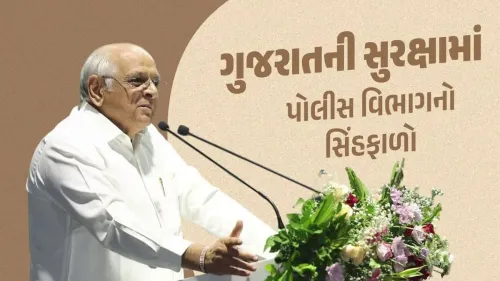
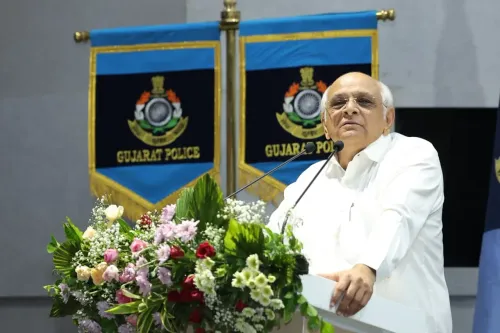
CM Bhupendra Patel on 23 October 2026 described the end of armed Naxalism as a 'new dawn of peace, hope and national pride.' He saluted the Central Armed Police Forces and state police for decades of sacrifice in anti-Naxal operations.
Credit was attributed to PM Narendra Modi's leadership and Home Minister Amit Shah's resolute internal-security efforts.
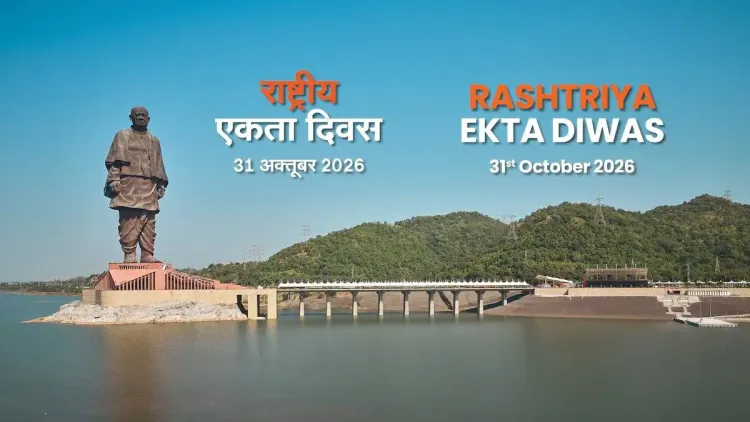
Gujarat is hosting Rashtriya Ekta Diwas 2026 at Ekta Nagar on 31 October , Sardar Patel's birth anniversary.
Patel linked the Naxal-free milestone to Sardar Vallabhbhai Patel's vision of a united and strong Bharat.
India's red corridor conflict dates to the late 1960s and at peak affected districts across Chhattisgarh, Jharkhand, Odisha, Maharashtra and beyond.
Decades of armed conflict in India's heartland forests are giving way to something quieter — and more durable. Gujarat Chief Minister Bhupendra Patel on Friday, 23 October 2026, called the reported end of armed Naxalism a 'new dawn of peace, hope and national pride,' saluting the Central Armed Police Forces and state police for what he described as a historic turning point.
A salute to the forces who held the line
Patel's post offered an unambiguous tribute to the personnel on the ground. 'Salute to our Central Armed Police Forces and Police forces, whose courage and sacrifice have brought an end to armed Naxalism after decades,' he wrote. The Central Armed Police Forces (CAPFs) — including the CRPF, BSF, and allied paramilitary units — have operated alongside state police in the densely forested corridors of central and eastern India for over two decades, absorbing significant casualties across hundreds of operations.
The Union Home Ministry has, in recent years, periodically reported declining violence figures and shrinking 'red corridor' districts. Patel attributed the breakthrough directly to the political stewardship of Prime Minister Narendra Modi and the operational resolve of Union Home Minister Amit Shah, who has treated left-wing extremism as a top internal-security priority since taking charge of the ministry.
Why Ekta Nagar and Sardar Patel are woven into this moment
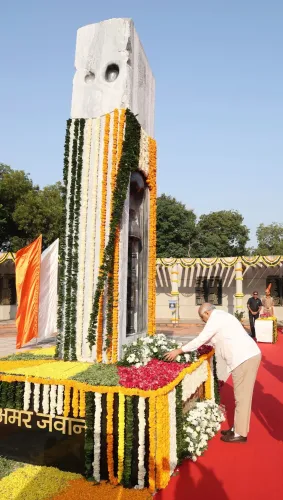
The timing of Patel's statement is deliberate. Rashtriya Ekta Diwas — 31 October — marks the birth anniversary of Sardar Vallabhbhai Patel, India's first Deputy Prime Minister and the man who integrated over 560 princely states into the Indian Union. Gujarat is preparing to host the national celebrations at Ekta Nagar, the riverside complex in the state's Narmada district that is home to the Statue of Unity, the world's tallest statue built in Sardar Patel's honour.
Rashtriya Ekta Diwas was instituted in 2014 to commemorate Patel's legacy and reinforce national integration. By framing the Naxal-free milestone alongside this observance, the Chief Minister draws a direct line between Sardar Patel's original act of unification — stitching together a fragmented subcontinent — and what the government presents as the final absorption of insurgency-held territories into the national mainstream.
The long arc from insurgency to mainstream
India's engagement with left-wing extremism stretches back to the late 1960s, when the Naxalbari uprising in West Bengal sparked an ideology that eventually spread across a 'red corridor' running through Chhattisgarh, Jharkhand, Odisha, Maharashtra, Telangana and parts of several other states. At its peak in the 2000s, the movement controlled significant swathes of forest territory and posed a challenge successive governments described as the country's gravest internal security threat.
The shift has come through a combination of sustained security pressure, infrastructure push into previously inaccessible areas, and targeted development schemes in tribal regions. Whether a complete, verifiable end to armed Naxalism has been formally declared across all districts is subject to ongoing official assessment — but the political signal from Gandhinagar is clear: the government considers this chapter closed.
As Gujarat lights up Ekta Nagar on 31 October and the nation observes Rashtriya Ekta Diwas, the moment carries weight beyond ceremony — it is being positioned as proof that Sardar Patel's unfinished business of a truly unified Bharat is, at last, closer to complete.
Point of View
The BJP government casts a security outcome as the fulfilment of Sardar Patel's integrationist legacy — ground it has long claimed as its own ideological terrain. Home Minister Amit Shah has systematically used district-level Naxal-free declarations as measurable governance deliverables, giving the Centre a concrete metric to anchor a broader law-and-order mandate. For Gujarat specifically, hosting the national Ekta Diwas event elevates the state's profile as a BJP model state at a moment when the party wants to underscore administrative competence. The framing also pre-empts opposition questions about tribal welfare by shifting the lens from displacement to 'mainstream development' — a narrative the government will likely sustain into the Ekta Diwas programme.
NationPress
23 Oct 2026
Frequently Asked Questions
What is Rashtriya Ekta Diwas and when is it celebrated?
Rashtriya Ekta Diwas, or National Unity Day, is observed on 31 October every year to mark the birth anniversary of Sardar Vallabhbhai Patel. It was instituted in 2014 to honour his role in unifying India and to promote national integration.
Where is Ekta Nagar located and why is it significant?
Ekta Nagar is in Gujarat's Narmada district and is home to the Statue of Unity , the world's tallest statue, built in honour of Sardar Vallabhbhai Patel. It serves as the national venue for Rashtriya Ekta Diwas celebrations.
What did CM Bhupendra Patel say about the end of Naxalism?
CM Patel called it a 'new dawn of peace, hope and national pride,' saluting the Central Armed Police Forces and state police for ending armed Naxalism after decades. He credited PM Narendra Modi and Home Minister Amit Shah for the political and operational leadership that made it possible.
What is India's red corridor and which states were affected?
The 'red corridor' refers to the belt of states historically affected by Naxal or Maoist left-wing extremism, primarily Chhattisgarh, Jharkhand, Odisha, Maharashtra and Telangana . At its peak in the 2000s it was described by the government as India's gravest internal security threat.
What is the role of Sardar Vallabhbhai Patel in Indian history?
Sardar Vallabhbhai Patel was India's first Deputy Prime Minister and Home Minister, credited with integrating over 560 princely states into the Indian Union after independence in 1947. He is widely regarded as the architect of modern India's territorial unity.