CM Bhupendra Patel Marks Bardoli Diwas, Salutes 1928 Satyagraha
Synopsis
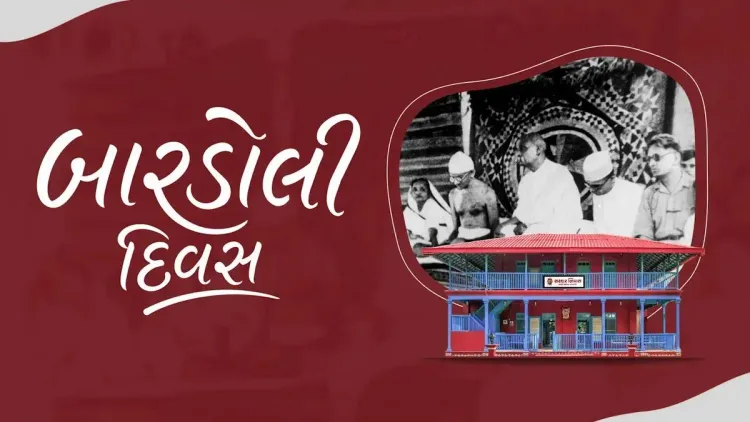
Gujarat CM Bhupendra Patel marked Bardoli Diwas on 12 June 2026 by saluting the 1928 Satyagraha — a non-violent farmers' revolt under Sardar Patel that won a 30% British revenue cut and gave India the title 'Sardar' for Vallabhbhai Patel.
Key Takeaways
Gujarat CM Bhupendra Patel posted a Bardoli Diwas tribute on 12 June 2026 , marking the anniversary of the 1928 Bardoli Satyagraha .
The 1928 Satyagraha was a non-violent protest by farmers in Bardoli, Surat district, Gujarat against a British colonial land revenue hike.
The movement, led by Vallabhbhai Patel with Mahatma Gandhi's backing, secured approximately a 30 percent reduction in the contested revenue demand.
The women of Bardoli conferred the title ' Sardar ' on Vallabhbhai Patel following the movement's success — a title that defined his legacy.
CM Patel described Bardoli as the birthplace of Sardar Patel's nationalist thinking and organisational strength.
No new policy or scheme was announced; the post was a ceremonial annual tribute with the hashtag #BardoliDiwas .
Gujarat Chief Minister Bhupendra Patel on Friday, 12 June 2026, paid tribute to the participants of the 1928 Bardoli Satyagraha, marking Bardoli Diwas with a post on X that honoured the farmers, women, and leaders who shaped one of India's most consequential non-violent protests against British colonial rule.
Posting in Gujarati, CM Patel described the Bardoli Satyagraha as 'not merely a struggle against the unjust revenue of the British, but an unparalleled example of farmer power and non-violent resistance.' He offered a 'hundredfold salute' (shat shat vandan) to all freedom fighters on the occasion.
Context
The Bardoli Satyagraha of 1928 was a landmark peasant uprising in what is now Surat district, Gujarat. Farmers in Bardoli refused to pay a steep hike in land revenue imposed by the British colonial administration. The movement, conducted entirely through non-violent means, lasted several months and drew national attention.
CM Patel specifically noted the role of Mahatma Gandhi's blessings (Pujya Bapu na ashirvad) and the 'unwavering leadership' of Vallabhbhai Patel in delivering victory to the movement. He also highlighted the resolve shown by the women of Bardoli — the mothers and sisters — as central to the campaign's success.
Policy Backdrop
The 1928 Bardoli Satyagraha secured a roughly 30 percent reduction in the contested revenue demand and demonstrated a scalable model of peasant mobilisation that was later replicated in other parts of colonial India. The campaign's success earned Vallabhbhai Patel the title 'Sardar' — leader — bestowed by the women of Bardoli, as CM Patel acknowledged in his post.
CM Patel described Bardoli as the sacred soil from which Sardar Patel's nationalist thinking and organisational strength rose 'like a sunrise' (suryoday). The framing links the regional protest directly to Sardar Patel's later role in unifying independent India.
Stakeholders and Impact
Annual observances of Bardoli Diwas on 12 June have become a consistent feature of Gujarat's state calendar, used to reinforce a narrative that positions the state as the cradle of key independence strategies. The commemoration resonates particularly with Gujarati farming communities and historians of the independence movement.
By centring the tribute on both farmer agency and women's participation, CM Patel's message broadens the symbolic scope beyond political leadership alone. The post carries the hashtag #BardoliDiwas, signalling an effort to amplify the occasion on social media.
What's Next
Gujarat administrations have historically used heritage anniversaries such as Bardoli Diwas as anchors for longer-term projects — including potential curriculum updates, heritage site development in Bardoli, and cultural programming tied to upcoming independence anniversaries. No specific new policy or scheme was announced in CM Patel's 12 June post. Observers will watch whether the state government accompanies the commemoration with concrete heritage or farmer-welfare announcements in the days ahead.
Point of View
The messaging broadens its appeal beyond historical commemoration into contemporary resonances around rural welfare and women's empowerment. The framing of Bardoli as the 'sunrise' of Sardar Patel's nationalist rise also reinforces Gujarat's claim as the ideological and organisational cradle of Indian unity — a narrative that carries significant weight in the BJP's broader political communication. Such commemorations rarely introduce new policy but consistently prime the ground for heritage-linked governance announcements.
NationPress
27 Oct 2026
Frequently Asked Questions
What is Bardoli Diwas and why is it celebrated on June 12?
Bardoli Diwas is observed on 12 June to mark the successful conclusion of the 1928 Bardoli Satyagraha , a non-violent farmers' revolt in Gujarat against a British colonial land revenue hike. The movement, led by Vallabhbhai Patel , ended with the British agreeing to reduce the contested revenue demand by approximately 30 percent .
Why was Vallabhbhai Patel called Sardar?
The title ' Sardar ' — meaning leader or chief — was conferred on Vallabhbhai Patel by the women of Bardoli after he successfully led the 1928 Satyagraha . The title recognised his organisational leadership in uniting farmers against British revenue policy through entirely non-violent means.
What was the Bardoli Satyagraha of 1928?
The Bardoli Satyagraha of 1928 was a peasant uprising in Bardoli, Surat district, Gujarat , in which farmers refused to pay a steep British-imposed hike in land revenue. Led by Vallabhbhai Patel and supported by Mahatma Gandhi , the non-violent campaign succeeded in winning a significant rollback of the revenue increase.
What did Gujarat CM Bhupendra Patel say on Bardoli Diwas 2026?
On 12 June 2026 , Gujarat CM Bhupendra Patel posted a tribute in Gujarati describing the 1928 Bardoli Satyagraha as an 'unparalleled example of farmer power and non-violent resistance.' He saluted all freedom fighters and described Bardoli as the sacred soil from which Sardar Patel's nationalist thinking rose.
What role did women play in the Bardoli Satyagraha?
Women — referred to as 'mata-bahenon' (mothers and sisters) in CM Patel's post — played a central role in sustaining the 1928 Bardoli Satyagraha through their resolve and participation in the non-violent campaign. It was the women of Bardoli who gave Vallabhbhai Patel the honorary title ' Sardar ' after the movement's success.