Giriraj Singh Hails India's Mobile Export Surge to ₹2.6 Lakh Crore
Synopsis
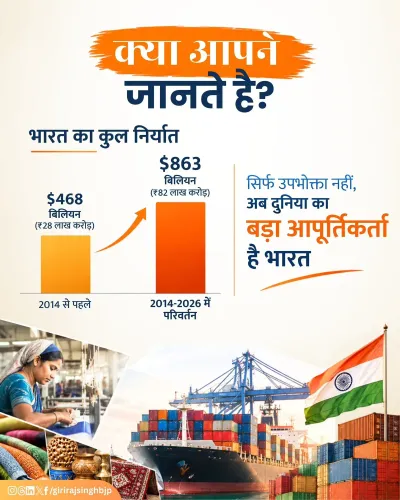
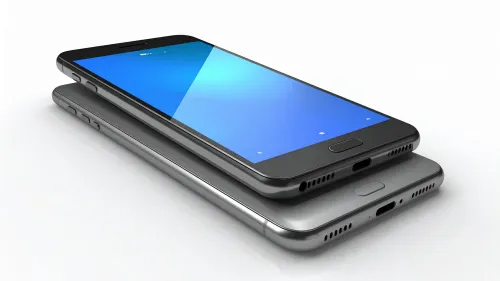
Union Textiles Minister Giriraj Singh has highlighted India's mobile manufacturing leap: exports have grown from ₹1,600 crore before 2014 to ₹2.6 lakh crore, while production has surged from ₹18,900 crore to ₹6.27 lakh crore — crediting the Make in India initiative.
Key Takeaways
India's mobile phone exports surged from ₹1,600 crore (pre-2014) to ₹2.6 lakh crore — a roughly 162-fold increase.
Domestic mobile production jumped from ₹18,900 crore to ₹6.27 lakh crore , a 33-fold rise.
Union Textiles Minister Giriraj Singh attributed the growth to the Make in India initiative launched in 2014.
The mobile sector is the flagship success story of India's Production Linked Incentive (PLI) scheme for electronics.
Export performance signals India's growing global competitiveness in smartphone manufacturing, beyond just serving domestic demand.
From a near-invisible export line of ₹1,600 crore to a commanding ₹2.6 lakh crore — India's mobile manufacturing story is one of the sharpest industrial reversals of the past decade. Union Textiles Minister Giriraj Singh took to X on Tuesday, 27 October 2026 to spotlight the transformation, framing it as direct proof of the Make in India mission's industrial muscle.
In his post, Singh wrote: 'मोबाइल विनिर्माण में भारत ने अभूतपूर्व प्रगति की है' — 'India has made unprecedented progress in mobile manufacturing.' The numbers he cited are stark: exports have surged from roughly ₹1,600 crore before 2014 to ₹2.6 lakh crore today, while domestic production has leapt from ₹18,900 crore to ₹6.27 lakh crore — a jump of roughly 33 times on the production side alone.
From import dependency to export powerhouse
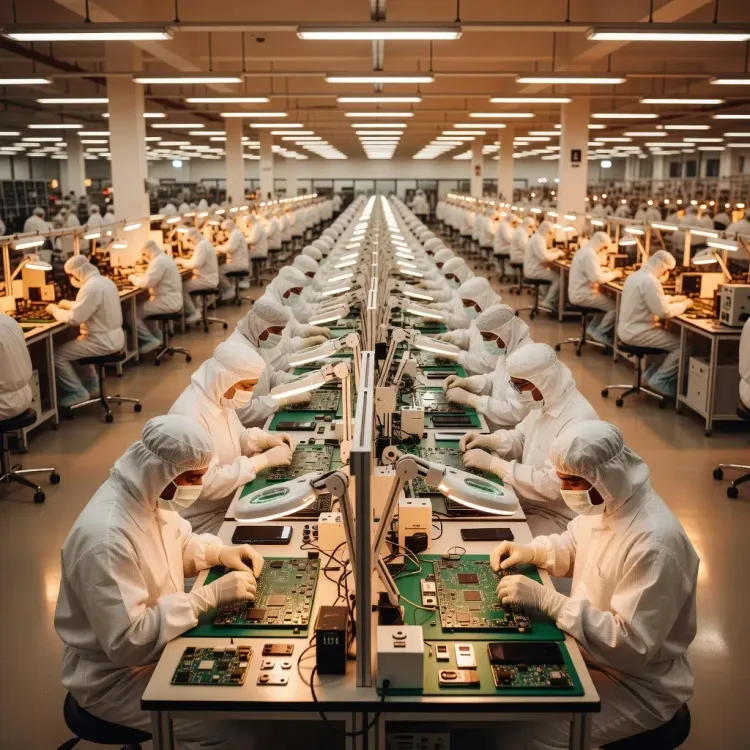
Before 2014, India was overwhelmingly dependent on imported handsets. The country had only a handful of assembly units and virtually no component ecosystem. That changed as successive policy interventions — including phased manufacturing programmes, import tariffs on finished devices, and eventually the Production Linked Incentive (PLI) scheme for mobile phones — created incentives for global brands to shift production to Indian soil.
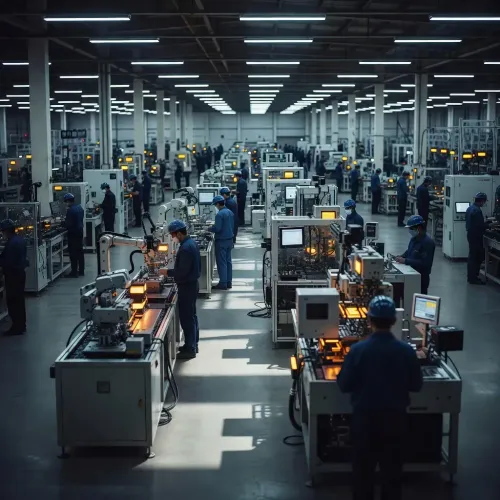
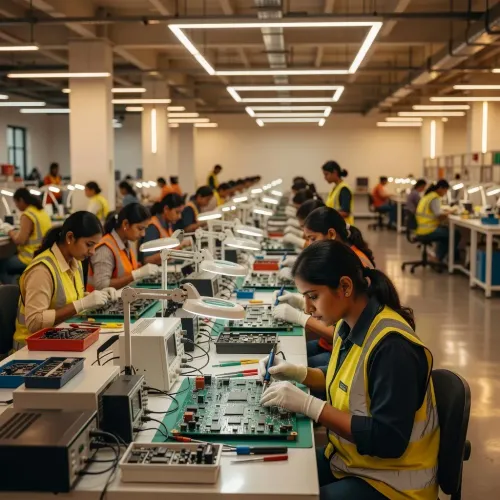
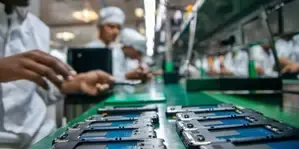
The result is visible in both production volumes and the export basket. India today manufactures devices for global markets, with major technology brands running large-scale assembly and, increasingly, component operations within the country. The ₹6.27 lakh crore production figure reflects that scale: India is now among the top smartphone manufacturing nations globally.
The ₹2.6 lakh crore export figure and what it signals
The export number is arguably the more consequential data point. Production for domestic consumption was always a lower bar — India's own demand is enormous. Exports, by contrast, demand global competitiveness on quality, cost, and supply-chain reliability. A jump from ₹1,600 crore to ₹2.6 lakh crore in exports signals that Indian-made devices are clearing that bar at scale.
The milestone also carries significance for India's broader electronics ambitions. Mobile phones have been the flagship category under the PLI framework, and their success has been cited repeatedly as the template for expanding incentive-linked manufacturing to components, semiconductors, and other high-value electronics segments.
Make in India's most cited success story
Singh's post lands the mobile sector squarely in the Make in India column — the government's flagship manufacturing push launched in September 2014. Of all the sectors targeted by that initiative, mobile electronics has produced the most widely cited numbers, and ministers across portfolios have pointed to the handset industry as evidence that the policy framework works when incentives, tariffs, and ease-of-doing-business reforms align.
Whether the momentum extends to deeper parts of the value chain — displays, chipsets, camera modules — remains the next frontier India's policymakers are watching.
Point of View
Making them the government's most reliable exhibit for the Make in India thesis. However, the deeper policy challenge — whether India can move up the value chain into components and semiconductor fabrication — remains unaddressed by the production and export figures alone. The next inflection point will be whether PLI-style incentives can replicate the handset story in higher-complexity electronics.
NationPress
27 Oct 2026
Frequently Asked Questions
What is India's current mobile phone export figure?
India's mobile phone exports stand at approximately ₹2.6 lakh crore , up from just around ₹1,600 crore before 2014, according to data cited by Union Textiles Minister Giriraj Singh.
How much has India's mobile phone production grown since 2014?
India's mobile phone production has grown from ₹18,900 crore to ₹6.27 lakh crore — a roughly 33-fold increase since 2014, reflecting the impact of Make in India and PLI incentives.
What is the Make in India initiative?
Make in India is a flagship government initiative launched in September 2014 to encourage domestic manufacturing across sectors, reduce import dependence, and position India as a global manufacturing hub.
What is the PLI scheme for mobile phones?
The Production Linked Incentive (PLI) scheme for mobile phones offers financial incentives to manufacturers based on incremental production, and has been credited with attracting global smartphone brands to manufacture in India at scale.
Why did Giriraj Singh post about mobile manufacturing?
As a senior BJP leader, Giriraj Singh cited mobile manufacturing data to highlight the economic impact of government policies since 2014, framing the export and production surge as evidence of Make in India's success.