White House Rallies Around MAHA, Borders, and Tax Relief
Synopsis
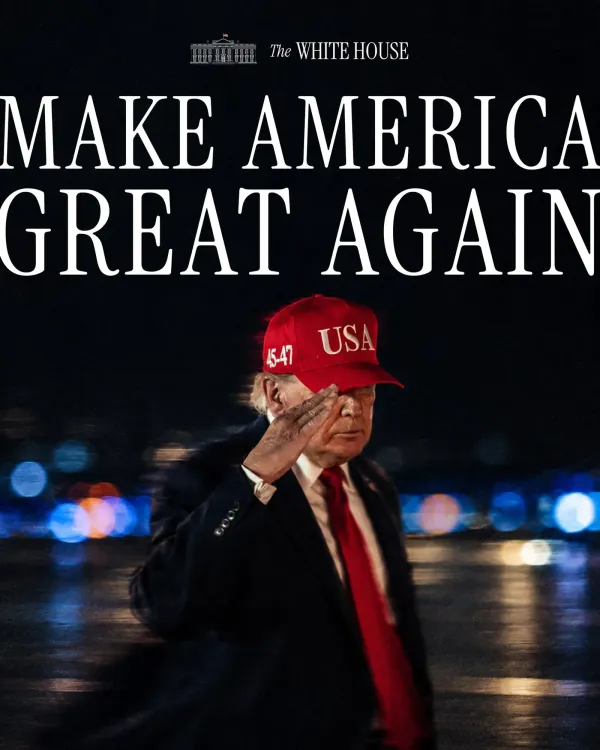
The White House on 27 October 2026 posted a sweeping eight-point governance manifesto invoking MAHA, secure borders, record markets, lower drug prices, and bigger tax returns under a single-mission framing — projecting a legacy argument aimed at the next generation.
Key Takeaways
The White House posted a condensed governance manifesto on 27 October 2026 under the banner 'ONE MISSION.
ONE GOAL.' MAHA , a health-and-governance initiative from the 2024 presidential campaign , was placed at the centre of the message alongside border security and market performance.
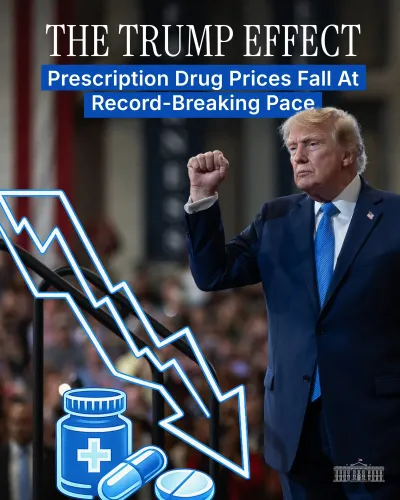
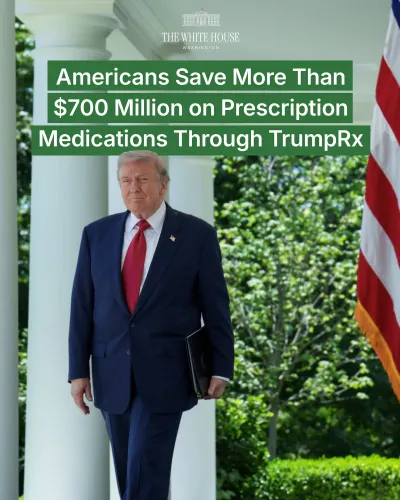
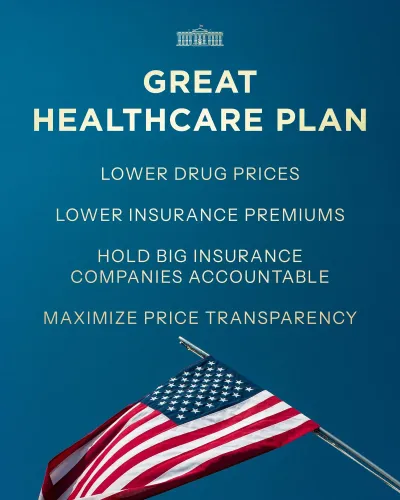
Drug pricing reform references trace back to the Most Favored Nation model pursued since 2020 .
The 'bigger tax returns' phrase links to the 2017 Tax Cuts and Jobs Act , the administration's foundational tax-policy legacy.
The post's 'next generation' closing signals a deliberate pivot from record-defence to legacy-projection ahead of the next legislative session.
Congressional action on drug-pricing reform and tax-code adjustments remains the key policy variable to watch.
With a single charged post on Tuesday, 27 October 2026, The White House compressed its entire governing philosophy into eight bullet-point ambitions — from hardened borders to lower drug prices — capping it all with the rallying cry 'MAHA' and a lightning-bolt declaration of 'ONE MISSION. ONE GOAL.'
What MAHA means — and why it sits at the centre of this message
MAHA — a health-and-governance slogan that gained traction during the 2024 presidential campaign — frames public health reform, pharmaceutical cost reduction, and chronic-disease prevention as pillars of national strength, not just social policy. Placing it alongside border security and stock-market performance is a deliberate rhetorical move: it signals that the administration sees wellness as an economic and security issue, not a silo.
The post reads, in full: 'Secure borders. Safer streets. Record markets. Global strength. Lower drug prices. Bigger tax returns. MAHA. Building a stronger future for the next generation.' The sequencing matters — hard security leads, prosperity follows, health anchors the vision, and generational legacy closes it.
Drug prices, tax cuts, and the legislative thread connecting them
Two policy pillars in the post carry real legislative histories. On drug pricing, the administration has pursued a Most Favored Nation model since at least 2020, seeking to tie what American patients pay to the lower prices negotiated by peer nations. On taxes, the lineage runs back to the 2017 Tax Cuts and Jobs Act, which reduced individual and corporate rates — 'bigger tax returns' is the campaign-tested shorthand for that inheritance.
Congressional action on both fronts — potential drug-pricing reform and any adjustment to the tax code — is the live variable heading into the next legislative session. Taxpayers, patients, and border communities are the three constituencies the post is simultaneously speaking to.
A pattern of aggregated themes — and what it signals now
The aggregation of immigration enforcement, crime reduction, market performance, foreign policy posture, pharmaceutical costs, and tax relief into a single post is not new. This exact cluster of themes has powered Republican White House communications since 2016, refined through two election cycles into a near-liturgical shorthand. What MAHA adds in 2026 is a public-health layer — an acknowledgement that the electorate's anxiety about prescription costs and chronic illness now belongs in the same sentence as border walls and Dow Jones records.
The 'next generation' framing at the close is the sharpest signal of all: the administration is not just defending a record, it is projecting a legacy argument.
Point of View
The 'ONE MISSION' framing also serves as a pre-negotiation discipline message to Congressional allies: no dealmaking that fractures the bundle. The generational-legacy close suggests the administration is already writing its historical brief.
NationPress
27 Oct 2026
Frequently Asked Questions
What is MAHA and what does it stand for in US politics?
MAHA is a governance and public-health slogan promoted during the 2024 US presidential campaign, focused on reducing chronic disease and pharmaceutical industry influence over drug pricing.
What is the Most Favored Nation drug pricing model the White House supports?
The Most Favored Nation model, pursued by executive action since 2020, seeks to tie prescription drug prices paid by American patients to the lower prices negotiated by other wealthy nations.
How do 'bigger tax returns' connect to the 2017 Tax Cuts and Jobs Act?
The 2017 Tax Cuts and Jobs Act reduced individual and corporate tax rates; 'bigger tax returns' is the campaign shorthand the administration uses to credit that law for increased take-home pay.
Why does the White House combine border security and drug prices in one post?
Aggregating immigration enforcement, market performance, health reform, and tax relief into a single frame is a longstanding Republican communications strategy that presents these as a unified governing vision rather than separate policies.
What should Indians and global observers watch for after this White House post?
The key variable is Congressional action in the next legislative session on drug-pricing reform and potential tax-code adjustments, both of which could have downstream effects on US trade and pharmaceutical supply chains that affect India.