Pralhad Joshi Inaugurates CBSE Experience Centre in Dwarka
Synopsis
Union Minister Pralhad Joshi inaugurated the CBSE Experience Centre at Dwarka, New Delhi on 27 October 2026, a facility combining AI, AR and VR to shift school learning toward NEP 2020's experiential model and support the Viksit Bharat 2047 vision.
Key Takeaways
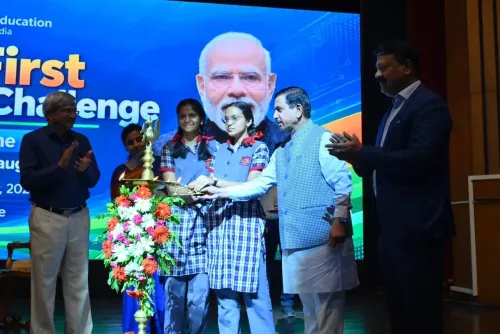
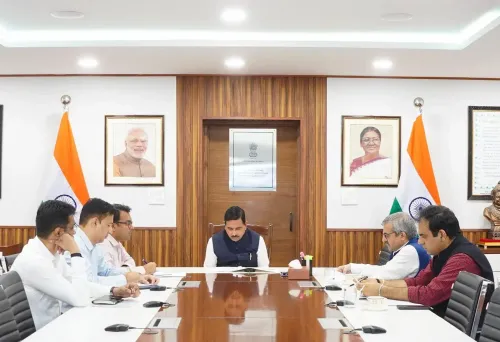
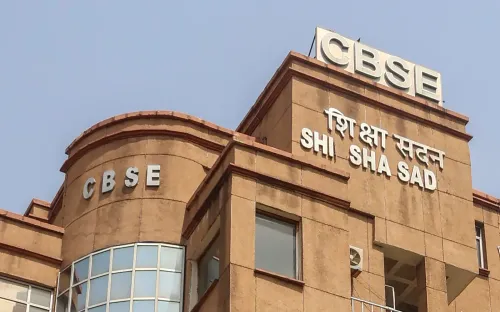
Union Minister Pralhad Joshi inaugurated the CBSE Experience Centre at CBSE headquarters, Dwarka, New Delhi , on 27 October 2026 .
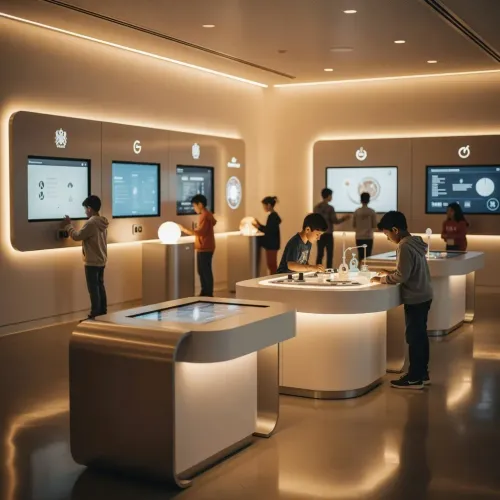
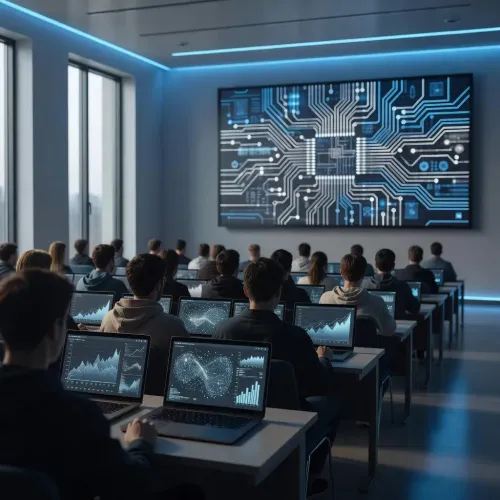
The centre offers students an immersive environment featuring Artificial Intelligence, Augmented Reality and Virtual Reality .
It is explicitly aligned with NEP 2020 , which replaced India's 1986 education policy and prioritised experiential, technology-integrated learning.
The initiative is linked to the Viksit Bharat 2047 vision, framing education reform as central to India's development centenary goals.
The centre is designed to foster curiosity, creativity, critical thinking and problem-solving while connecting students to emerging career pathways.
Policy watchers will track whether the model scales to CBSE regional offices nationwide.
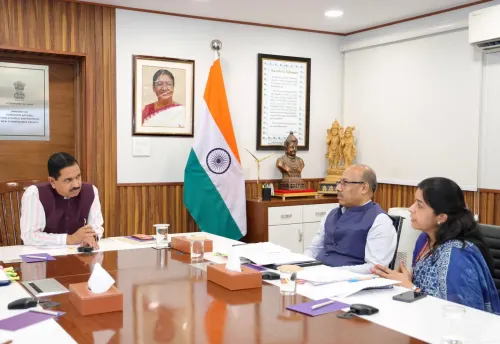
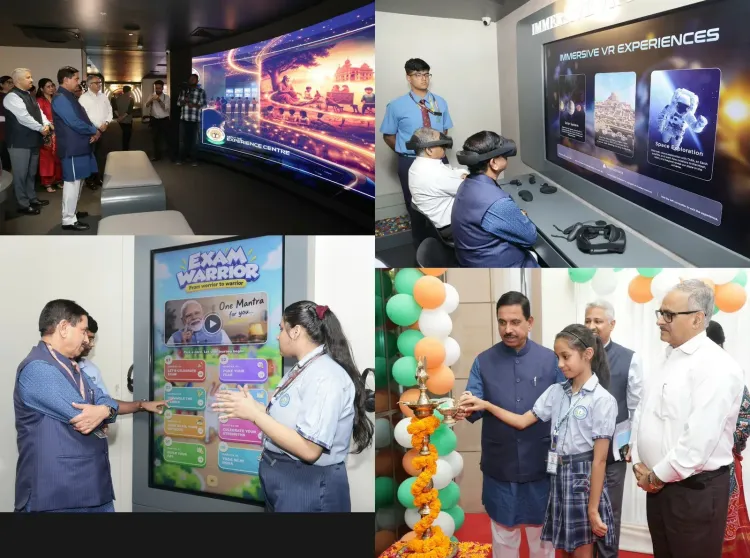
A classroom is no longer just four walls and a blackboard — at least not at CBSE's headquarters in Dwarka, New Delhi, where Union Consumer Affairs Minister Pralhad Joshi inaugurated a first-of-its-kind CBSE Experience Centre on Tuesday, 27 October 2026, designed to pull students out of rote learning and into hands-on discovery. The centre blends India's educational heritage with cutting-edge tools — Artificial Intelligence, Augmented Reality and Virtual Reality — in what the government is positioning as a living proof-of-concept for NEP 2020.
What the Experience Centre actually offers
The centre is built around an immersive, interactive learning environment that connects traditional knowledge systems with emerging technologies. According to Joshi, it is designed to 'foster curiosity, creativity, critical thinking and problem-solving skills while exposing students to emerging career opportunities.' Rather than replacing teachers, the facility is conceived as a space where classroom theory meets real-world application — students can engage with AI-driven simulations, AR overlays and VR environments that make abstract concepts tangible.
The explicit goal is to move CBSE-affiliated school students — and by extension, teachers — away from examination-centric instruction toward a model where learning is experiential and self-directed.
NEP 2020's experiential mandate, now in bricks and bytes
The National Education Policy 2020, approved by the Union Cabinet in July 2020, replaced a policy framework that had stood since 1986. Its clearest departure from its predecessor was the insistence on experiential, multidisciplinary, technology-integrated education rather than content delivery and recall. Since 2021, CBSE — India's national school board, operating under the Ministry of Education — has issued multiple circulars promoting AI, AR and VR pilots in affiliated schools. The Dwarka centre takes those circulars off paper and into a physical space.
Joshi framed the inauguration explicitly within the #ViksitBharat2047 vision — the government's roadmap for a fully developed India by 2047, the centenary of independence — casting education reform as foundational, not supplementary, to long-term national ambition.
Why Dwarka, and what comes next
The CBSE headquarters in Dwarka is a natural anchor point — it is the administrative nerve centre of a board that oversees thousands of affiliated schools across India and abroad. Situating the experience centre here signals intent, but the real test will be whether the model scales. Watchers of education policy will be looking for announcements on replicating similar centres at CBSE's regional offices and on embedding NEP 2020 recommendations formally into the CBSE curriculum framework.
For now, a minister who oversees consumer affairs and renewable energy — not education — cutting the ribbon underscores the cross-ministry, whole-of-government framing the BJP has adopted for its Viksit Bharat agenda. Every launch, from every ministry, is being stitched into the same 2047 narrative.
Point of View
Demonstrable infrastructure. The choice to have a non-education minister inaugurate it reinforces the BJP government's habit of stitching every sectoral initiative into the pan-government Viksit Bharat 2047 narrative, broadening political ownership of the reform agenda beyond the Ministry of Education. The immediate question is scalability: a single flagship centre at CBSE headquarters is a proof-of-concept, not a system transformation. If regional centres follow with measurable curriculum integration, this marks genuine institutional momentum; if not, it risks remaining a high-profile ribbon-cutting.
NationPress
27 Oct 2026
Frequently Asked Questions
What is the CBSE Experience Centre in Dwarka?
The CBSE Experience Centre at CBSE's headquarters in Dwarka, New Delhi is an immersive learning facility that integrates Artificial Intelligence, Augmented Reality and Virtual Reality to give school students hands-on, experiential learning aligned with NEP 2020.
Who inaugurated the CBSE Experience Centre?
Union Minister Pralhad Joshi, who holds the Consumer Affairs, Food and Public Distribution and New and Renewable Energy portfolios, inaugurated the centre on 27 October 2026.
What is NEP 2020 and how does it relate to this centre?
The National Education Policy 2020, approved by the Union Cabinet in July 2020, replaced India's 1986 policy and mandated experiential, multidisciplinary and technology-integrated education. The CBSE Experience Centre is a direct implementation of those goals.
What is Viksit Bharat 2047?
Viksit Bharat 2047 is the Indian government's vision for a fully developed nation by 2047, marking 100 years of independence. Education and skilling reforms are positioned as foundational to achieving that goal.
Will more CBSE Experience Centres open across India?
No official announcement on additional centres has been made yet, but policy observers are watching for plans to replicate the Dwarka model at CBSE's regional offices across the country.