CBSE three-language policy NEP 2020: exemptions, rules, and who is affected
Synopsis
CBSE has drawn a careful line between who gets a pass and who doesn't under NEP 2020's three-language mandate. Current Class 9 students won't face a Board exam in their third language — but students entering Class 6 from 2026-27 will. The staggered rollout, with 22 Bhartiya Bhashas now in play and NCERT textbooks being readied, signals this is a policy shift being built to last.
Key Takeaways
CBSE issued three-language policy implementation guidelines on 29 June 2026 under NEP 2020 .
Current Class 9 students (2026-27) will not face a CBSE Board exam in their third language (R3) in Class 10 — only internal school assessment applies.
Students in Classes 7 and 8 (2026-27) who already study two non-native languages need to add only one Bhartiya Bhasha as a transitional relaxation.
Students entering Class 6 from 2026-27 onward must take the CBSE Board exam in R3 at Class 10, with two of three languages being Bhartiya Bhashas.
NCERT is preparing R3 textbooks for Class 6 in all 22 scheduled Bhartiya Bhashas .
CwSN , students in CBSE schools abroad, and foreign students returning to India are exempt from the native-language R3 requirement.
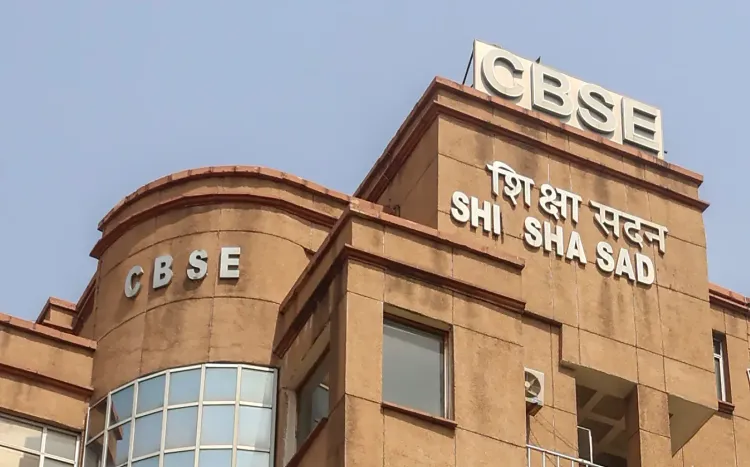
The Central Board of Secondary Education (CBSE) on Monday, 29 June 2026, released comprehensive implementation guidelines for the three-language policy under the National Education Policy (NEP) 2020, specifying assessment patterns, phased rollout timelines, and a set of exemptions for different student cohorts across New Delhi-governed schools and CBSE-affiliated institutions nationwide.
What the Current Class 9 Batch Needs to Know
Students enrolled in Class 9 during the 2026-27 academic session will study the third language (R3) but will not face a CBSE Board examination in it when they reach Class 10 in 2027-28. Assessment for R3 will be conducted solely through an internal, school-based evaluation. CBSE, in coordination with the National Council of Educational Research and Training (NCERT), will supply grade-appropriate learning materials to support these students.
Rules for Students Currently in Classes 7 and 8
Students in Classes 7 and 8 during 2026-27 will continue studying three languages when they advance to Classes 9 and 10, with at least two of those languages required to be Bhartiya Bhashas (native Indian languages). As a transitional relaxation, students who have already begun studying two non-native languages will only need to add one Bhartiya Bhasha and continue it through Class 10.
For this cohort as well, the R3 language will be assessed exclusively through internal school-based assessment — no Board examination will be held for it in Class 10.
The Full Policy Kicks In for Class 6 Entrants
Students entering Class 6 from the 2026-27 session onward will face the complete three-language requirement, with two of the three languages mandatorily being Bhartiya Bhashas. Unlike transitional batches, these students will be required to sit for the CBSE Board examination in R3 when they reach Class 10. Dedicated R3 textbooks for Class 6 in all 22 scheduled Bhartiya Bhashas are being made available through NCERT.
Exemptions and Special Provisions
Children with Special Needs (CwSN) will continue to receive relaxations from the compulsory third-language requirement under the Rights of Persons with Disabilities (RPwD) Act, 2016. CBSE schools located outside India have been granted full exemption from offering a native Indian language as R3, and foreign students returning to India are similarly exempted from the Bhartiya Bhasha requirement for R3.
Students whose parents or guardians migrate to another state may retain their existing R3 language combination while studying in Class 9. Schools have been directed to make adequate arrangements to accommodate such students without disrupting their learning continuity.
Context and What Comes Next
This announcement follows the CBSE's declaration in April 2026 of a phased rollout of the three-language formula from Class 6, alongside the introduction of a two-level system for mathematics and science for Class 9 from the same academic session. The detailed guidelines issued on Monday come more than a month after the Board first announced — in late May — that studying three languages, including at least two native Indian languages, would be compulsory for Class 9 students beginning 1 July 2026. The staggered implementation and tiered exemptions suggest the Board is attempting to balance policy ambition with ground-level readiness across its diverse school network.
Point of View
Non-English medium schools will determine whether this becomes a genuine multilingual push or another policy that fades in implementation. The migration-state provision and the CwSN exemptions show the Board is aware of the policy's fault lines — but awareness and execution are different things.
NationPress
28 Sept 2026
Frequently Asked Questions
What is the CBSE three-language policy under NEP 2020?
Under NEP 2020, CBSE has made it compulsory for students from Class 6 onward to study three languages, with at least two being native Indian languages (Bhartiya Bhashas). The policy is being rolled out in phases, with different rules applying to students already in Classes 7-9 during 2026-27 versus those freshly entering Class 6.
Will Class 10 students in 2027-28 have to appear for a Board exam in their third language?
No. Students who are in Class 9 during the 2026-27 session will not face a CBSE Board examination in their third language (R3) when they reach Class 10 in 2027-28. Their R3 will be assessed only through internal school-based evaluation.
Who is exempt from the Bhartiya Bhasha requirement under the new CBSE policy?
Children with Special Needs (CwSN) are exempt under the RPwD Act, 2016. CBSE schools located outside India are fully exempt from offering a native Indian language as R3, and foreign students returning to India are also exempt from the Bhartiya Bhasha requirement for R3.
When does the full three-language Board exam requirement come into effect?
Students entering Class 6 from the 2026-27 academic session onward will face the complete policy, including a CBSE Board examination in their third language when they reach Class 10. This is the first cohort for whom no transitional relaxation applies on the Board exam front.
What happens to students whose families move to a different state mid-study?
Students whose parents or guardians migrate to another state are allowed to continue with the R3 language combination they had already chosen during the middle stage while in Class 9. Schools have been directed to make adequate arrangements to support such students.