SC seeks Centre, CBSE response on three-language mandate for Class IX
Synopsis
The Supreme Court has stepped in to examine whether CBSE's rushed three-language mandate for Class IX — effective this academic session — is constitutionally sound. With textbooks unavailable, teachers in short supply, and Tamil Nadu already on edge over language politics, the case could become a defining test of how NEP 2020's language framework is implemented across India's diverse states.
Key Takeaways
The Supreme Court issued notice to the Centre , CBSE , and NCERT on a petition challenging the three-language mandate for Class IX students.
A bench led by CJI Surya Kant declined to stay the policy; the matter will be heard in the second week of July 2025 .
The CBSE circular of 15 May 2025 requires Class IX students to study at least two native Indian languages under the NEP 2020 alignment.
Senior advocates Mukul Rohatgi and Kapil Sibal flagged practical unpreparedness and constitutional concerns around federalism and language rights.
Former Tamil Nadu BJP president K.
Annamalai has called on CBSE to withdraw the circular, citing anxiety among parents and a claimed earlier assurance that the mandate would apply only from 2029-30 .
Until dedicated textbooks are ready, Class VI language textbooks will be used for Class IX ; no Board exam will be held for the third language at Class X.
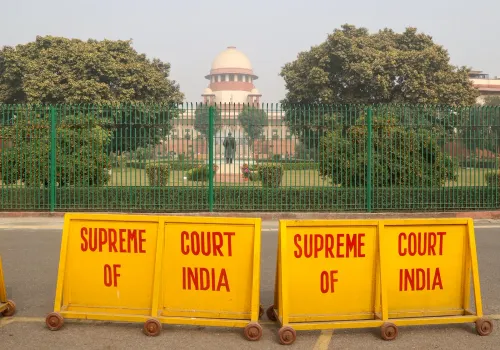
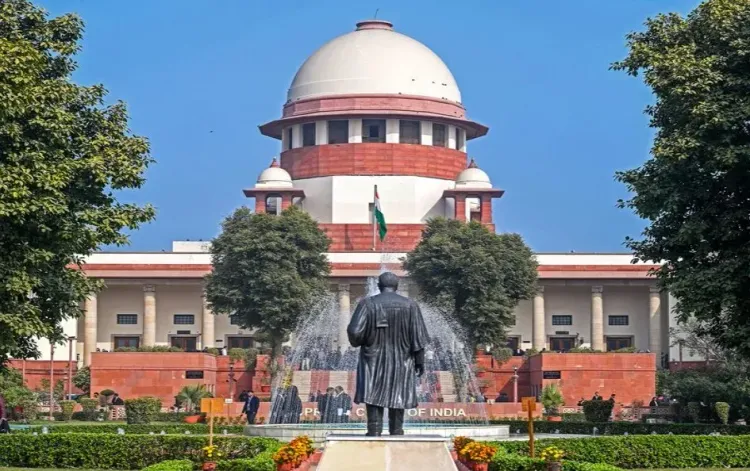
The Supreme Court on Wednesday, 28 May 2025, agreed to examine the constitutional validity of a Central Board of Secondary Education (CBSE) circular mandating Class IX students to study three languages — including at least two native Indian languages — from the current academic session. A bench led by Chief Justice of India (CJI) Surya Kant, along with Justices Joymalya Bagchi and Vipul M. Pancholi, issued notices to the Centre, CBSE, and the National Council of Educational Research and Training (NCERT), seeking a comprehensive reply.
What the Court Said
The bench declined to grant an interim stay on the policy's implementation. CJI Kant indicated the court would take up the matter for a final hearing in the second week of July, after the apex court reopens following its summer recess. At this stage, the bench clarified it was focused on implementation concerns — such as the availability of teachers and study material — rather than the broader federal dimension of the dispute.
Arguments Before the Court
Senior advocate Mukul Rohatgi, appearing for the petitioner, contended that the CBSE circular effectively requires students to begin studying three languages from 1 July, despite inadequate ground-level preparedness. 'Even textbooks are not available,' he submitted.
Senior advocate Kapil Sibal, appearing in a connected matter, argued the policy raised significant constitutional questions touching on federalism and individual language rights. 'Language is a matter of choice and cannot be imposed,' Sibal submitted, describing the circular as having federal implications.
Additional Solicitor General Aishwarya Bhati, appearing for the Centre, opposed the request for urgent interim relief, submitting that the matter could be heard in detail later since implementation would remain subject to the court's final orders.
What the CBSE Circular Says
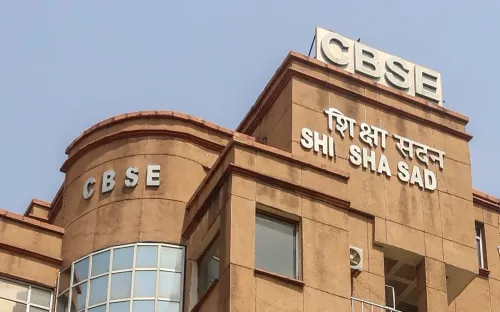
The CBSE issued the circular on 15 May 2025 as part of a transitional alignment with the National Education Policy (NEP) 2020 and the National Curriculum Framework for School Education (NCF-SE) 2023. Under the revised framework, Class IX students must study three languages — designated R1, R2, and R3 — with at least two being native Indian languages. A foreign language may be chosen only as the third language, provided the other two are Indian, or as an optional fourth language.
To address the textbook gap, CBSE said Class VI textbooks for the third language would serve as interim material until dedicated books are available. The board also confirmed that no Board examination would be held for the third language at the Class X level; assessment will remain internal. Schools facing teacher shortages have been permitted to adopt flexible measures including inter-school resource sharing, hybrid teaching, and engaging retired educators during the transition.
Political Reaction and Regional Concerns
Former Tamil Nadu BJP president K. Annamalai has publicly urged CBSE to withdraw the circular, warning that abrupt implementation would impose unnecessary academic burden on students and parents. In a post on X, Annamalai said that while he had initially welcomed the three-language framework introduced in April 2026, the latest circular — making it compulsory from the current session — had caused anxiety among parents, particularly in Tamil Nadu, where language politics remain deeply sensitive.
Annamalai claimed the earlier notification had indicated the Class IX requirement would come into effect only from the 2029-30 academic year, and argued that students who had already chosen their languages in Class VI should not be compelled to abruptly add another. He called on the board to reconsider.
What Happens Next
The Supreme Court is expected to hear the matter substantively in the second week of July. Until then, the three-language policy remains in force, with implementation subject to whatever final directions the court issues. The case is being watched closely in southern states, where resistance to Hindi imposition has historically been strongest, and its outcome could shape the rollout of NEP 2020 language provisions nationwide.
Point of View
Even as it acknowledges the ground-level chaos. The deeper tension, however, is being deliberately deferred: the court explicitly sidestepped the federalism argument, which is precisely what makes this case combustible in states like Tamil Nadu and Karnataka. CBSE's own admission that textbooks are unavailable and teacher shortages are real undermines the government's claim of readiness. If the July hearing produces a stay or a rollback, it will be a significant setback for the NEP 2020 rollout — and a signal that ambition without infrastructure is a recurring failure mode in Indian education policy.
NationPress
10 Oct 2026
Frequently Asked Questions
Why has the Supreme Court issued notice on the CBSE three-language circular?
The Supreme Court issued notice to the Centre, CBSE, and NCERT after a petition challenged the constitutional validity of a CBSE circular mandating Class IX students to study three languages — including at least two native Indian languages — from the current academic session. The bench will hear the matter in the second week of July 2025.
What does the CBSE three-language circular require?
The CBSE circular of 15 May 2025, issued as part of NEP 2020 alignment, requires Class IX students to study three languages (R1, R2, R3), with at least two being native Indian languages. A foreign language can only be chosen as the third language, or as an optional fourth, if the first two are Indian languages.
Has the Supreme Court stayed the three-language policy?
No. The Supreme Court declined to grant an interim stay on the circular's implementation. The policy remains in force while the court examines the petition, with a substantive hearing scheduled for the second week of July 2025.
Why is Tamil Nadu particularly concerned about the three-language mandate?
Tamil Nadu has historically resisted any policy perceived as imposing Hindi or additional language requirements, making language politics especially sensitive in the state. Former Tamil Nadu BJP president K. Annamalai has urged CBSE to withdraw the circular, citing parental anxiety and a claimed earlier assurance that the Class IX requirement would only apply from the 2029-30 academic year.
How is CBSE addressing the lack of textbooks for the third language?
CBSE has said that until dedicated textbooks are released, Class VI textbooks for the third language will be used for Class IX students. The board has also permitted schools to use inter-school resource sharing, hybrid teaching, and retired educators to manage teacher shortages during the transition.