CBSE adds Maithili to curriculum from 2026-27; Bihar CM hails historic move
Synopsis
CBSE has formally added Maithili — a constitutionally recognised scheduled language — to its curriculum from 2026-27, spanning Class 1 to the secondary level. Backed by NEP 2020 and NCERT primers already in place, the move is the most concrete step yet toward bringing the Mithila region's mother tongue into mainstream schooling.
Key Takeaways
CBSE has included Maithili as a subject from Class 1 to secondary level starting the 2026-27 academic session .
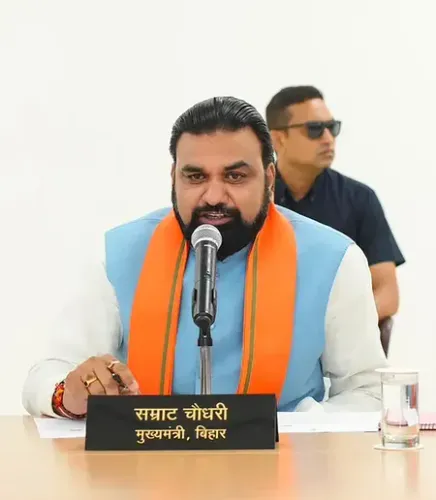
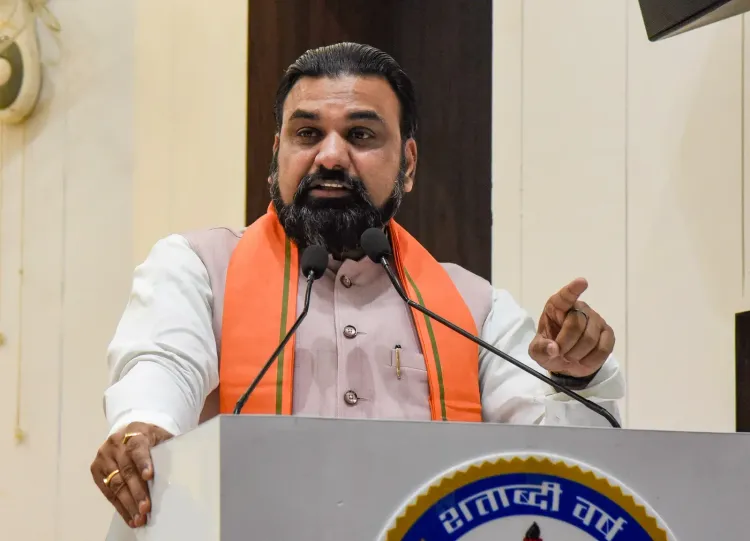
Bihar CM Samrat Choudhary called the decision historic for the cultural and linguistic identity of the Mithila region.
The inclusion follows a 19 May letter from Union Minister Jayant Chaudhary's office to Darbhanga MP Gopal Ji Thakur .
The move aligns with NEP 2020 recommendations on mother-tongue instruction up to Class 5 and beyond.
Maithili is one of 22 languages in the Eighth Schedule of the Indian Constitution; NCERT has prepared primers in 121 languages including Maithili.
The syllabus is already available on the CBSE academic portal ahead of the 2026-27 rollout.
The Central Board of Secondary Education (CBSE) has formally incorporated Maithili into its curriculum beginning the 2026-27 academic session, covering classes from Class 1 through the secondary level — a decision that Bihar Chief Minister Samrat Choudhary has described as historic for the Mithila region's cultural and linguistic identity.
Key Developments
In a social media post on Monday, Chief Minister Choudhary said the inclusion of Maithili as a mother-tongue subject would give greater recognition to Mithila's cultural heritage within the formal education system. He also praised Prime Minister Narendra Modi for advancing Indian languages through policy reform.
The move follows a 19 May letter from the office of Union Minister Jayant Chaudhary to Darbhanga MP Gopal Ji Thakur, confirming that the matter had been examined in consultation with the National Council of Educational Research and Training (NCERT). Thakur had earlier written to the Union Education Ministry requesting Maithili's inclusion as a CBSE subject.
Policy Backing and Constitutional Status
Union Minister Chaudhary noted that the decision aligns with the National Education Policy (NEP) 2020, which recommends mother-tongue instruction up to Class 5 and, wherever feasible, up to Class 8. Maithili holds constitutional recognition as one of the 22 languages listed in the Eighth Schedule of the Indian Constitution.
NCERT has already prepared primers in 121 Indian languages, including Maithili, and is in the process of translating textbooks into all 22 scheduled languages. The syllabus for Maithili has reportedly been made available on the CBSE academic portal.
What It Means for Students
The inclusion gives students from the Mithila belt — spread across northern Bihar and parts of Nepal — the formal option to study their mother tongue within the CBSE framework. According to Chief Minister Choudhary, the decision will help future generations maintain a connection to their linguistic and cultural roots while pursuing mainstream education.
This is a significant step in a broader national shift: since NEP 2020, the Centre has systematically worked to bring regional and scheduled languages into the formal schooling structure, with Maithili's CBSE entry among the more prominent such inclusions.
What Happens Next
With the syllabus already uploaded on the CBSE portal, schools affiliated with the board can begin preparation for the 2026-27 rollout. Implementation will depend on teacher availability and training in Maithili-medium instruction, areas that stakeholders are expected to flag in the months ahead.
Point of View
But the harder work begins after the notification. NEP 2020's mother-tongue mandate has been on the books since 2020, yet most CBSE schools still lack trained teachers in scheduled languages — and Maithili is no exception. The syllabus being on the portal is a start, not an outcome. Whether this translates into classrooms in Darbhanga and Madhubani, or remains a policy footnote, will depend entirely on teacher training pipelines and school-level uptake that no circular can guarantee.
NationPress
10 Oct 2026
Frequently Asked Questions
What is the CBSE decision on Maithili language?
CBSE has formally included Maithili as a subject in its curriculum from the 2026-27 academic session, covering Class 1 through the secondary level. The syllabus has already been uploaded to the CBSE academic portal.
Why is Maithili's inclusion in CBSE significant?
Maithili is one of the 22 languages listed in the Eighth Schedule of the Indian Constitution, giving it constitutional recognition. Its inclusion in CBSE brings the mother tongue of the Mithila region — spoken by millions across northern Bihar — into the formal schooling mainstream for the first time under the board.
How does this relate to the National Education Policy 2020?
NEP 2020 recommends using students' mother tongues as the medium of instruction up to Class 5, and wherever possible up to Class 8. The CBSE's Maithili inclusion directly implements this recommendation for a scheduled language.
Who pushed for Maithili's inclusion in CBSE?
Darbhanga MP Gopal Ji Thakur had written to the Union Education Ministry requesting Maithili's inclusion as a CBSE subject. Union Minister Jayant Chaudhary's office confirmed the decision in a letter dated 19 May, noting it had been examined in consultation with NCERT.
What has NCERT done to support Maithili in schools?
NCERT has prepared primers in 121 Indian languages, including Maithili, and is translating textbooks into all 22 constitutionally scheduled languages. This groundwork supports the practical rollout of Maithili as a CBSE subject from 2026-27.